

Empowering Wellness Through Nutrition and Self-Care
By Miranda Dorta
A profound shift is underway in healthcare, one that focuses on the transformative power of nutrition and self-care. This shift is not just a trend but an important movement towards holistic, patient-focused care. Medical providers stand at the forefront of this shift, playing a vital role in guiding patients toward a path of wellness through nutrition and self-care. By incorporating nutritional or health coaching services, not only can you enhance your patients' well-being, but you can also create a profitable income source for your practice.

A profound shift is underway in healthcare, one that focuses on the transformative power of nutrition and self-care. This shift is not just a trend but an important movement toward holistic, patient-focused care. Medical providers stand at the forefront of this shift, playing a vital role in guiding patients toward a path of wellness through nutrition and self-care. By incorporating nutritional or health coaching services, not only can you enhance your patients' well-being, but you can also create a profitable income source for your practice.
Throughout March, Thriving Practice podcast is focusing on the important role nutrition plays in patient well-being. Our host, Tracy, welcomes guests Hally Brooke, Founder & CEO of Live Nourished Coaching, and Jillian Greaves, a Functional Dietitian and women's health specialist.
Nutrition, though often underestimated in its impact, is a foundation of health. By embracing the concept of food as medicine, you can empower your patients to take control of their well-being. Encouraging a diet rich in whole foods, abundant in nutrients, and tailored to individual needs fosters not only physical health but also mental clarity and emotional balance.
Self-care goes beyond pampering; it is an act of self-love and care. By advocating for practices that nurture the body, mind, and spirit, you can equip your patients with the tools to thrive through life's challenges.
In her interview with Tracy, Hally shares her journey of battling Shingles and exploring functional medicine to address gut health issues. Her story highlights the power of lifestyle changes in achieving holistic wellness and emphasizes the significance of mental health in treating chronic illnesses.
Jillian talks with Tracy about her journey from working in a busy hospital system serving patients in endocrinology, and how she moved away from the traditional hospital model to starting her practice. Within her practice, she practices as a Functional Dietitian who helps women reclaim their health through hormone balancing, lifestyle changes, and nutrition.
Both guests bring a great deal of knowledge, wisdom, and compelling stories from similar niches; though, offering unique experiences and perspectives from personal experiences.
Similarly, both episodes discuss strategies for professionals looking to transition to private pay models, emphasizing the importance of understanding one's worth, educating patients on the benefits of personalized care, mastering marketing techniques to stand out in a competitive market, and providing flexible payment options to ensure accessibility to services.
By incorporating these insights into your practice, you can enhance patient care, drive business growth, and help create a system that's more connected and aware of patient needs.
As the healthcare landscape continues to evolve, embracing personalized nutrition, emotional well-being, and innovative business models is key to transforming patient care and practitioner success.
To learn how to begin incorporating these insights into your healthcare practice, schedule a consultation with our founder, Tracy Cherpeski, MBA, CPSC. Experience the transformative power of clear, empathetic communication for collective growth and success.
Are you a healthcare provider facing the challenges of managing your practice while aiming to deliver exceptional care? Do you aspire to expand your practice sustainably without succumbing to burnout? You are not alone.
Join Thriving Practice Community, designed for practice leaders. Together, we break barriers and unlock your practice's potential. Engage in discussions, learn from experts, and connect with peers who share your drive for success. Access coaching, consulting, and master classes to grow your practice without sacrificing your well-being. Join us in a collaborative community that nurtures ambitions and equips you to overcome obstacles: ThrivingPracticeCommunity.com

The Importance of Clear Communication in a Healthcare Practice
By Tracy Cherpeski
In a healthcare practice, clear communication is not just a nicety, but a necessity. As a business consultant, I have witnessed firsthand the significant impact that effective communication can have on the overall operations and success of a healthcare practice. In this blog post, we will explore the importance of clear communication in a healthcare setting and provide practical insights for provider-owners to enhance communication with their teams.

In a healthcare practice, clear communication is not just a nicety, but a necessity. As a business consultant, I have witnessed firsthand the significant impact that effective communication can have on the overall operations and success of a healthcare practice. In this blog post, we will explore the importance of clear communication in a healthcare setting and provide practical insights for provider-owners to enhance communication with their teams.
When we talk about why effective communication is so important in a healthcare practice, it’s always helpful to look at some communication faux pas that leaders make (and hopefully learn from). I am pretty certain you’ll see yourself in some of these, and you'll see how you’re doing better now. I’ve certainly made many-a-blunder over the years from my corporate career, to parenting, to leading the team in my own company.
The good news is that as fallible human beings, if we’re willing to embrace our mistakes and learn from them, we can master effective communication with some practice.
Read on to learn more, starting with some communication mistakes:
Lack of clarity. When instructions or information are unclear, it can lead to confusion and mistakes. If you give vague directions for completing a task, your employees may struggle to understand your expectations of them.
Listening to respond, rather than to learn. When team members don't actively listen to each other, important information can be missed or misunderstood. If a colleague shares feedback and others are distracted or interject before the speaker is finished, it can hinder collaboration and problem-solving.
Withholding information. When the provider fails to share important information with the team, it can create a culture of secrecy and mistrust, even if withholding isn’t the intention. Let’s say the provider-owner neglects to communicate updates about strategic planning to their admin team. It can lead to delays in implementation and impede growth and progress. Lack of transparency can compromise business growth and hinder the team's ability to take action.
Negative tone or attitude. Communication delivered in a disrespectful, or confrontational manner can create tension and undermine teamwork. Sometimes in a busy practice, communication is rushed and can be perceived as curt or disrespectful. If not addressed, it can erode morale and damage relationships.
Lack of feedback. When feedback is not provided regularly or constructively, it can hinder personal and professional growth. If an employee's performance issues are not addressed in a timely manner, they may continue to repeat mistakes without realizing the need for improvement. This is a common issue we see with our clients, who are often juggling the multiple jobs of being a practitioner and CEO.
Now that we have an idea of where communication can go astray, what do we do about it?
In rowing, the coxswain (captain/leader) is responsible for providing the strength of command, and effective leadership will ensure that all team members are aligned with the end goal. In this case, the goal is to move at an identical pace and synchronize movements to propel the boat forward and cross the finish line ahead of other teams.
A rower’s attentiveness, focus and non-verbal cues for pace change can be likened to the need for active listening, concentration and awareness of non-verbal communication in your practice. It’s essential for healthcare teams to work in harmony towards a common goal.
Recognizing the challenges we've identified, we can now explore practical steps to cultivate clear, empathetic, and efficient communication among healthcare professionals and their teams.
We hear from our clients that they’re under-resourced as business leaders, juggling clinical responsibilities with the demands of running a successful practice. This unique position can lead to communication challenges within the team, impacting everything from patient care to operational efficiency.
It's imperative that we acknowledge the difficulties provider-owners face and work collaboratively to devise a comprehensive plan of action. Rather than overwhelming our clients with sweeping transformations, we emphasize the importance of incremental changes, each one contributing to a more cohesive and effective communication framework within their healthcare practice.
Practical Strategies for Enhancing Communication
Establishing Clear Protocols. Implementing standardized communication protocols for both clinical and administrative tasks can reduce errors and misunderstandings. This could look like the creation of the front office and clinical area “Bibles” (operations and procedural manuals), with regular reviews and revisions.
Encouraging Feedback. Creating an environment where all team members feel comfortable providing feedback and sharing ideas is essential for continuous improvement. For the practice leader, this means you might try the Jeff Bezos approach to feedback and input in meetings: invite the most junior team member to speak first (and fully hear them out). You might be surprised by what you learn.
Utilizing Technology. Leveraging communication tools such as secure messaging platforms can facilitate quick and efficient information exchange among the team.
Regular Team Huddles. Scheduling brief but regular team huddles can ensure that everyone is on the same page regarding patient care, operational updates, and any potential issues. We recommend our clients have two daily huddles - one to preview the day and address any potential challenges (e.g., a patient who requires a particular type of care that may require team support), and the second to review what went well, what didn’t go well, and how they can improve going forward.
Clear communication is vital for the success of a healthcare practice. There are many ways to go about improving your communication with your team. Our recommendation is to try one or two methods and stick to it for a few weeks. Watch how your team responds to you, and invite their feedback and input. This is an opportunity to share vulnerably that you’re testing different ways to communicate in an effort to improve office communications.
By prioritizing and investing in clear communication strategies, you can overcome many of the challenges you face and pave the way for a thriving and successful healthcare practice.
To unlock the benefits of improved communication and cultivate sustainable growth in your healthcare practice, schedule a consultation with our founder, Tracy Cherpeski, MBA, MA, CPSC. Experience the transformative power of clear, empathetic communication for collective growth and success.

Navigating Winter Blues as a Provider Owner
By Miranda Dorta
As we find ourselves amid the winter season, many find themselves caught in the aftermath exhausted from the previous month of festivities, family gatherings, and the hustle and bustle. Not to mention, the looming task of crafting New Year’s resolutions to kickstart the “new year, new you” mentality. However, for practice owners and those managing private practices, the winter season can bring about particular challenges that contribute to what is commonly known as the "winter blues."

Protect yourself from winter burnout.
The significance of time management for practice owners during this season, alongside the importance of self-care, is crucial to ensure a healthy and balanced professional and personal life all the while enjoying the joys of the season.
As we find ourselves amid the winter season, many find themselves caught in the aftermath exhausted from the previous month of festivities, family gatherings, and the hustle and bustle. Not to mention, the looming task of crafting New Year’s resolutions to kickstart the “new year, new you” mentality. However, for practice owners and those managing private practices, the winter season can bring about particular challenges that contribute to what is commonly known as the "winter blues."
The significance of time management for practice owners during this season, alongside the importance of self-care, is crucial to ensure a healthy and balanced professional and personal life all the while enjoying the joys of the season.
The Seasonal Blues in Healthcare:
Private practitioners often face increased demands during the winter season. Patients may be dealing with heightened stress coming off the holidays, battling Seasonal Affective Disorder (SAD), or seeking help for new concerns. As a result, practice owners may work longer hours to accommodate the influx of appointments and urgent cases. This surge in activity can contribute to burnout, fatigue, and an overall sense of overwhelm, giving rise to the seasonal blues. Especially with those who struggle with time management.
Time Management in Private Healthcare Practices:
Effective time management is a cornerstone of maintaining a successful and sustainable healthcare practice. Even more so throughout the winter season. Furthermore, at time of publication, we are experiencing a surge of Covid-19 around the US. In the last 14-days, there has been a 20% increase in cases, specifically in the ages 70 plus.
Here are some strategies to help practice owners navigate their schedules:
Prioritize Patient Appointments:
Identify urgent cases and prioritize appointments accordingly.
Consider extending clinic hours or hiring additional staff to aid the additional demand.
Set Realistic Boundaries:
Communicate clearly with patients about new hours and availability.
Establish boundaries for responding to non-urgent inquiries to avoid unnecessary stress.
Utilize Technology:
Implement telehealth services for routine follow-ups and non-emergency consultations.
Leverage scheduling software to streamline appointment bookings and reminders.
Delegate Responsibilities:
Delegate administrative tasks to support staff to free up valuable time.
Collaborate with colleagues to share the workload and ensure comprehensive patient care.
Self-Care Throughout the Winter Season:
Throughout the demands of a healthcare practice during the winter season, practice owners must prioritize their well-being. Here are some self-care strategies to foster a healthy work-life balance:
Schedule Breaks:
Block out time for short breaks throughout the day to recharge and prevent burnout.
Use breaks to engage in mindfulness exercises or take a short walk to clear the mind.
Celebrate Achievements:
Reflect on professional accomplishments and personal growth throughout the year.
Share success stories with colleagues to foster a positive and supportive work environment.
Connect with Peers:
Attend industry events or virtual meet-ups to connect with other healthcare professionals.
Share experiences and insights to gain new perspectives and support.
Plan Personal Time:
Block out time for personal activities, celebrations, and relaxation.
Prioritize family and personal commitments to maintain a healthy work-life balance.
The winter season can be a challenging time for practice owners, but with effective time management and a commitment to self-care, it is possible to navigate this period successfully. By prioritizing patient needs, setting realistic boundaries, and embracing self-care practices, practice owners can provide exceptional care to their patients and ensure their well-being during this season.
If you are a practice owner looking for support to lower your stress levels and fall (back) in love with your practice in the New Year, schedule a strategy call to see how we can help you take back your time, grow your practice, and elevate your leadership.

A Path to Equitable Patient Care
By Tracy Cherpeski
When the healer's hand unknowingly carries the weight of bias, the very essence of medicine is at stake.
Healthcare is a realm where science and compassion ought to be the norm. However, healthcare providers are not immune to the subtle, yet impactful presence of bias. This blogpost will illuminate the hidden facets of implicit bias in medical care and explore potential paths to a more just and equitable patient experience.
When the healer's hand unknowingly carries the weight of bias, the very essence of medicine is at stake.
Healthcare is a realm where science and compassion ought to be the norm. However, healthcare providers are not immune to the subtle, yet impactful presence of bias. This blogpost will illuminate the hidden facets of implicit bias in medical care and explore potential paths to a more just and equitable patient experience.
The purpose of this blog is to raise awareness, share data, and support providers in finding the right resources to continue the inner work of identifying and dismantling implicit bias. Doing this confronting and sometimes uncomfortable work is hugely rewarding for your patients, team, community, and for your own humanity.
“Of all forms of inequity, injustice in health care is the most shocking and inhuman.”
The National Institutes of Health define implicit biases as, “...unconscious mental processes that lead to associations and reactions that are automatic and without intention; actors have no awareness of the associations with a stimulus maintain that social status is relational and people unconsciously hold more negative attitudes or feelings about membership of an outgroup (people with whom they do not share identities) than about membership of an ingroup (people with whom they share identities).”
The American Psychological Association describes implicit bias as such, “...people may hold negative unconscious or automatic feelings and beliefs about others that can differ from their conscious attitudes.”
Implicit bias develops early in life from repeated reinforcement of social stereotypes. Implicit pro-white bias occurs among children as young as 3-5 years of age.
Between 1998 and 2006, more than 4.5 million Implicit Association Tests were completed, and the results showed the following:
Implicit bias is pervasive
People are often unaware of their implicit biases
Implicit biases predict behavior
People differ in levels of implicit bias
The impact of implicit bias in healthcare is glaring. Non-white patients receive fewer interventions, Black women face higher mortality rates after breast cancer diagnosis, and patients of color are less likely to be prescribed pain medications. This bias even extends to more invasive treatments, such as Black men being less likely to receive chemotherapy and radiation for prostate cancer and more likely to undergo testicle removal.
Patients of color are often unfairly blamed for being passive about their healthcare. Additionally, patients who perceive bias from their providers have more difficulty remembering what their physicians told them, have less confidence in their treatment plans, and believe it would be more difficult to follow recommended treatments.
It’s important to note that while many implicit bias studies in healthcare have been conducted with Black patients and non-black providers, other researchers are studying implicit bias in relation to other ethnic groups, people with obesity, sexual and gender minorities, people with mental health and substance use disorders, older adults, and people with various health conditions.
To combat implicit bias, healthcare providers must adopt skills and strategies to break their thought patterns and habits. These include perspective-taking, emotional regulation, and partnership-building. Empathy, in particular, plays a crucial role in patient satisfaction, self-efficacy, and overall health outcomes. When providers view themselves as part of a larger group, it becomes easier to empathize with others, thereby reducing bias.
At the organizational level, healthcare facilities can play a significant role in addressing implicit bias. To create an equitable environment, organizations should evaluate the racial climate, investigate and address discrimination reports, and establish monitoring systems to track disparities in care. Promoting racial diversity at all levels of the organization hierarchy can help reduce bias, and organizations should implement training to equip clinicians with the knowledge and skills to prevent racial biases from affecting patient care.
Additionally, healthcare organizations can implement work policies and clinical procedures that protect clinicians from high cognitive load and promote positive emotions. When clinicians’ cognitive capacity is low or overtaxed, memory is biased toward information that is consistent with stereotypes. High cognitive load can be created by productivity pressures, time pressure, high noise levels, inadequate staffing, poor feedback, inadequate supervision, inadequate training, high communication load, and overcrowding.
Healthcare providers must also take proactive steps to combat implicit bias. This includes gaining an understanding of the various cultures their patients come from, avoiding stereotyping, recognizing the impact of unconscious bias, and following National Standards for Culturally and Linguistically Appropriate Services*. Techniques like "teach-back" and practicing evidence-based medicine can also help reduce bias in patient care.
Studies have shown that implicit bias is deeply ingrained in the healthcare system, causing devastating health inequities. The only intervention found to reduce implicit bias involved a prejudice-habit-breaking approach, which was effective for undergraduate students.
The learning and training environments for healthcare professionals are crucial in addressing implicit bias. Formal diversity training in medical school has little or no effect on students’ levels of implicit bias over time. Implementing and psychological methods to address psychological problems of bias have proven effective over the longer term.
Transformative Learning Theory (TLT) can help disrupt existing paradigms by challenging assumptions and promoting critical reflection. Increasing interaction with underrepresented groups, faculty, and patients, along with the perceived quality of that contact, can reduce bias and encourage healthcare professionals to actively address their biases.
Prejudice habit-breaking intervention, based on theory developed by Patricia G. Devine, PhD, and William T.L. Cox, PhD, of the University of Wisconsin–Madison adopts the premise that bias, whether implicit or explicit, is a habit that can be overcome with motivation, awareness and effort, includes experiential, educational and training components. Michelle van Ryn’s company, Diversity Science - helps organizations apply the best findings and interventions on implicit bias to creative inclusive cultures.
Other suggestions include seeing the patient as an individual rather than a stereotyped member of a group and Individualizing patients to encourage medical students to question stereotypes about a patient's ethnic group. This can help patients become more engaged with their treatment and fostering patients' sense of being “on the same team” as their provider. Ultimately, it’s about how to improve your skills as a doctor or nurse. It requires commitment and practice.
Implicit bias remains a persistent challenge in healthcare, perpetuating disparities in patient care. To create a more equitable healthcare system, raising awareness about implicit bias is vital. Healthcare organizations and providers must actively work to address these biases through training, awareness, and policy changes. By doing so, we can take significant steps towards ensuring that every patient receives the equitable care they deserve.
If you are a practice owner looking for support to lower your stress levels and fall (back) in love with your practice, schedule a strategy call to see how we can help you take back your time, grow your practice and elevate your leadership.
Sources:
Tackling Implicit Bias in Healthcare NEJM 2022
https://www.nejm.org/doi/full/10.1056/NEJMp2201180
Eliminating explicit and implicit biases in health care: evidence and research needs
https://www.ncbi.nlm.nih.gov/pmc/articles/PMC9172268/
Quick Safety 23: Implicit Bias in Healthcare
How does implicit bias affect patients’ healthcare? APA
https://www.apa.org/monitor/2019/03/ce-corner
Implicit Bias and Racial Disparities in healthcare ABA
With implicit bias hurting patients, some states train doctors
https://stateline.org/2022/04/21/with-implicit-bias-hurting-patients-some-states-train-doctors/
Additional Resources:
Anti-Oppression Leadership Academy https://nadifantastic.com/
Black Women’s Maternal Health
https://nationalpartnership.org/report/black-womens-maternal-health/
Mandated Implicit Bias Training for Health Professionals—A Step Toward Equity in Health Care
https://jamanetwork.com/journals/jama-health-forum/fullarticle/2795358
National Institutes of Health Implicit Bias Training
Teach-Back Method
https://www.ahrq.gov/patient-safety/reports/engage/interventions/teachback.html

Thriving Together: Overcoming Professional Isolation in Physician-Owned Practices
By Tracy Cherpeski
Behind many successful physician-owners lies a silent struggle: a deeply-felt sense of professional isolation.
Physician-owned practices have a profound community impact by fostering personalized patient care, promoting local economic growth, and preserving a sense of familiarity and trust within their community. Unlike a hospital or larger practice where social contact and networking is practically built-in, owning a practice, or any business, can feel quite isolating. As a physician-owner, your team is likely made up of just you, possibly a small handful of other providers, and your clinical support and administrative teams.

Behind many successful physician-owners lies a silent struggle: a deeply-felt sense of professional isolation.
Physician-owned practices have a profound community impact by fostering personalized patient care, promoting local economic growth, and preserving a sense of familiarity and trust within their community. Unlike a hospital or larger practice where social contact and networking is practically built-in, owning a practice, or any business, can feel quite isolating. As a physician-owner, your team is likely made up of just you, possibly a small handful of other providers, and your clinical support and administrative teams.
If you’ve been following our blog, listening to our Podcast or have attended our roundtables, you won’t be surprised to learn: isolation and loneliness are major contributors to physician burnout. Over 70% of physicians who attempt suicide are solo providers. We know it’s not healthy to live in isolation. This data seems to support our thesis that there is an urgent need for providers, particularly physician-owners, to actively seek and nurture relationships to help avoid feelings of isolation, and to feel supported professionally.*
It’s important to choose the kinds of social and professional relationships in which you want to invest your most precious resources - your time and energy. This blogpost will explore different ways to expand your professional support network.
First things first: Get clear about the amount of time and energy that you are willing to invest in building relationships. Also ask yourself what kind of relationships and support you would like. Getting clear about what you want and need most will help you find the right kind of support, and it’ll save you a ton of energy in your search. Once you’ve established what will serve your needs, then you can consider what contribution you’ll make.
Do you prefer individualized support, or group networking opportunities? Be honest, and do your best not to censor or judge yourself. If you’re currently lacking in “extra” time and energy, make sure you honor that.
If you’d like to broaden your options and be part of a networking or professional group, how much time and energy are you willing to invest in integrating, building and nurturing those relationships? There’s no wrong answer, and that can change over time.
Next, identify what is missing and what you’d like most from a professional network.
Do you crave the guidance of an experienced mentor who can share their experience so you can learn faster than on your own?
Are you looking to expand your network and connect with other providers in your speciality?
Do you prefer the convenience of an online community that provides flexibility and direct access to peers?
Are you interested in serving on an advisory board or committee?
Whatever you choose, make sure you’re crystal clear about what would serve you best, and if you’re joining a community or a board, make note of what you bring to the table. The key here is to be clear about your needs first. Yes, I’m recommending that you take the “WIFM” (What’s In It For Me?) approach to expanding your network.
Building relationships is like constructing a bridge to professional fulfillment. Without bridges, vast chasms stand between us and our goals, leaving us stranded on one side, longing for progress. Similarly, by actively seeking and nurturing relationships, we build bridges that connect us to opportunities, resources, and a supportive community. These bridges enable us to cross over from isolation to fulfillment, ultimately reaching our professional aspirations.
There are various avenues to network with other physician-owners. Networking can offer opportunities for collaboration, sharing best practices, and building professional relationships.
Below are some ways you can network with your peers:
Medical conferences and seminars: Attend medical conferences, seminars, and workshops focused on your speciality or healthcare management. These events provide opportunities to meet other physician-owners, participate in panel discussions, and engage in networking sessions.
Professional organizations and associations: Join professional organizations and associations that cater to physician-owners.
Online communities and forums: Participate in online communities and forums designed for physician-owners.
Local networking events: Attend local networking events, such as medical meetups, physician roundtables, or business networking groups. These gatherings may be organized by medical societies, healthcare institutions, or physician-led organizations.
Referrals and introductions: Leverage your existing network to seek referrals and introductions to other physician-owners. Reach out to colleagues, mentors, or medical school alumni who may be aware of potential networking opportunities.
Physician-led organizations: Explore joining or collaborating with physician-led organizations or groups that focus on healthcare management, practice ownership, or business development. These organizations often provide platforms for physician-owners to connect and collaborate on various initiatives.
Social media and online platforms: Engage in social media platforms like Twitter, Facebook, and LinkedIn to connect with other physician-owners. Participate in relevant discussions, follow influential individuals or organizations, and share insights to establish connections.
Mentorship programs: Seek out mentorship programs tailored for physician-owners. These programs pair experienced physician-owners with those seeking guidance, providing an opportunity for networking and exchange of knowledge.
Advisory boards and committees: Serve on advisory boards or committees related to healthcare organizations, medical startups, or industry initiatives. These roles can connect you with other physician-owners who are passionate about shaping the future of healthcare.
Building meaningful relationships takes time and effort, but the benefits of a strong physician-owner network can be invaluable for minimizing isolation and maximizing your professional growth and success.
No matter what route you choose, it’s important to be very clear about the resources you’re willing to invest in building your professional network. Get clear about what you need most, then decide whether you’re looking for individualized support or an opportunity to expand your network in a group setting. From there, determine your best fit, and ultimately grow your professional network in a way that provides the right kind of support you need as a provider-owner.
Practice ownership and solo-provider practices are an incredible resource for our communities, and your patients and community need you to be at your best. Make sure you prioritize and support your wellbeing in a robust way by building your bridges and nurturing your professional relationships.
We support provider-owners in decreasing overwhelm, taking back their time and growing their practices without sacrificing. If you would like support from a trusted professional and access to an international community of peers, schedule a strategy call with us to see if working together is a fit for you.
*If you are experiencing suicidal thoughts, contact your local emergency medical facility, or call or text your local suicide prevention number (US and Canada: Call/SMS 9-8-8).

Charting the Course: Innovations Shaping the Future of Healthcare
By Miranda Dorta
The transition from college to the "real world" comes with a whirlwind of challenges, and one that often goes overlooked is the struggle to find trustworthy doctors and manage one's healthcare independently. For many young adults, this can be a daunting task, filled with uncertainties and questions.

The transition from college to the "real world" comes with a whirlwind of challenges, and one that often goes overlooked is the struggle to find trustworthy doctors and manage one's healthcare independently. For many young adults, this can be a daunting task, filled with uncertainties and questions.
In a prior blog post entitled "Navigating Healthcare Challenges for Post-College Individuals: Insights and Solutions," I explored the countless difficulties that young adults face as they transition into the "Real World." Regardless of whether one is employed full-time, part-time, on contract, or freelancing, securing healthcare in the United States is challenging. The task of locating a dependable and suitable provider can often be more daunting than obtaining a healthcare plan itself.
However, companies, such as One Medical, are stepping up to make this transition smoother for the post-college generation.
Need a little background from the previous blog post before we go forth?
Young adults might have relied on the same family doctor they've known for years. I am guilty of going to the same practice for multiple years–even when I went to college out of state. Finding a reputable doctor nearby can be a significant challenge. Additionally, factors like long wait times, rushed appointments, and a lack of personalized care can lead to a disillusioned view of the healthcare system. Especially when your schedule is now confined to a 9-5 with minimal flexibility.
However, read the full blogpost here to catch up.
This is where companies like One Medical enter the scene, reshaping the way young adults approach their healthcare. One Medical, founded in 2007, has gained popularity for its innovative approach to primary care, making it particularly appealing to the post-college generation.
Convenience: One Medical prioritizes convenience. With their user-friendly app, it allows patients to easily schedule appointments, renew prescriptions, and access their medical records. This aligns perfectly with the tech-savvy nature of young adults–definitely beats a phone call that may result in being on hold for over 10 minutes.
Accessible Locations: One Medical has strategically placed its clinics in urban areas, making them accessible to many young adults who often reside in cities post-college. This eliminates the hassle of traveling long distances for medical care.
Mental Health Support: The post-college age can be emotionally challenging, and One Medical recognizes this. They offer comprehensive mental health support, acknowledging the importance of mental well-being. Not into the whole office visit thing? One Medical also provides Live Video Chat (24/7!).
Transparent Pricing: Navigating insurance and healthcare costs can puzzle young adults. One Medical offers transparent pricing, helping patients understand the financial aspect of their healthcare. They also accept (most) insurance plans, which can save you the headache of finding a provider in your area.
The Future of Healthcare for Young Adults
One Medical's approach is not just about providing medical services; it's about making healthcare more manageable for the younger generation. This approach is gaining traction and could potentially set a precedent for the future of healthcare. It’s also important to acknowledge that One Medical is not the only player on the field. Many startups and healthcare providers are recognizing the unique needs of young adults and are tailoring their services to be more accessible.
The transition to independent healthcare management after college can be intimidating, but it doesn't have to be. Companies like One Medical are redefining the healthcare experience for young adults, emphasizing convenience, personalization, and accessibility. As the healthcare landscape continues to evolve, it's crucial for the younger generation to explore these options and take charge of their health with confidence.
If you’re a provider who would like to grow your practice and are passionate about supporting your patients, schedule a complimentary strategy call. We can help you grow your practice, recapture your time, and bring your focus back to providing the highest level of care for your patients.
In this ever-evolving field, it's crucial to prioritize the needs of your patients in order to deliver a high standard of care. This approach not only fosters the growth of your practice but also cultivates meaningful connections.
We are not affiliated or sponsored by One Medical or practices associated with One Medical.
In a world where healthcare can be complex, many people are drawn to simplicity and ease. One Medical is a great example of a healthcare provider that's changing the game. They focus on making things easy for patients and skip the usual insurance hassles. If more healthcare providers follow their lead, we might see a shift towards simpler, patient-friendly healthcare. This approach challenges the old way of doing things and could make healthcare better for all of us.

Why Provider-Owners Should Think Like an Entrepreneur
By Tracy Cherpeski
Life comes at you fast.
In today's fast-evolving healthcare landscape, the role of providers extends beyond the confines of a traditional healthcare practice. With shifting paradigms, emerging technologies and evolving patient needs, it is vital for providers to embrace an entrepreneurial mindset to navigate challenges and harness opportunities.
If you embody an entrepreneurial mindset, you’ll enjoy the fruits of your labor and make your life easier as a provider-owner. Most of our clients don’t think of themselves as entrepreneurs when they start their journey with us. Adopting some of the key mindset differentiators will benefit you, your team, your patients and your bottom line.
A bonus of thinking like an entrepreneur is an openness to seeing opportunities and creating multiple streams of income without a ton more work.

Life comes at you fast.
With shifting paradigms, emerging technologies and evolving patient needs, it is vital for providers to embrace an entrepreneurial mindset to navigate challenges and harness opportunities.
Life comes at you fast.
In today's fast-evolving healthcare landscape, the role of providers extends beyond the confines of a traditional healthcare practice. With shifting paradigms, emerging technologies and evolving patient needs, it is vital for providers to embrace an entrepreneurial mindset to navigate challenges and harness opportunities.
If you embody an entrepreneurial mindset, you’ll enjoy the fruits of your labor and make your life easier as a provider-owner. Most of our clients don’t think of themselves as entrepreneurs when they start their journey with us. Adopting some of the key mindset differentiators will benefit you, your team, your patients and your bottom line.
A bonus of thinking like an entrepreneur is an openness to seeing opportunities and creating multiple streams of income without a ton more work.
“The important thing is not being afraid to take a chance. Remember, the greatest failure is to not try. Once you find something you love to do, be the best at doing it.” – “The important thing is not being afraid to take a chance. Remember, the greatest failure is to not try. Once you find something you love to do, be the best at doing it.”
Below are some entrepreneurial attributes.
Disruption of Norms. Entrepreneurs are willing to disrupt established norms. Most entrepreneurs don’t see work as a means to an end; they view it as an opportunity to challenge the status quo and create innovative solutions to problems. One example is the internet: it’s changed how we communicate, do business and gather information.
Our clients disrupt the status quo in healthcare by committing to a patient-focused approach, bucking against the constraints of insurance companies, employing a revenue share model, or by moving away from allopathic medicine into the complementary realm to address root causes of pain and disease.
Resilience. Resilience is defined as the ability to bounce back from setbacks and persevere in the face of adversity and obstacles. What makes entrepreneurs more resilient is a connection to a strong sense of purpose for their work. Sound familiar?
Support Network. Wise entrepreneurs cultivate a support network that includes mentors, coaches, therapists, peers and family members to provide emotional support and encouragement whenever needed so they’re better equipped to handle the ups and downs of business ownership.
Growth Mindset. If you’re not familiar with the work of Carol Dweck, here’s the quick and dirty: Someone with a growth mindset views intelligence, abilities, and talents as learnable and capable of improvement through effort. On the other hand, someone with a fixed mindset views those same traits as inherently stable and unchangeable over time.
What this means for you as a provider-owner is you’ll see opportunities for learning and growth even when things go sideways, as they occasionally do. Think: global pandemic and the need to switch gears quickly. The willingness to be agile and change with the times during the pandemic helped a lot of businesses through uncertainty and economic downturn.
Failure as Learning. Along the lines of a growth mindset, entrepreneurs see “failure” as learning opportunities. Mistakes are healthy and signal that old ways are being challenged, and new, more efficient ways are emerging.
Seeking perfection is the death of creativity, and guess what? Perfectionism is a fixed mindset. There are always opportunities to learn, so seeking perfection ought not be the goal.
A few more attributes. Understanding that your big results come from your smaller combined efforts; discipline is a prerequisite for sustainable success; adaptability is key to longevity (adaptability is different from resilience in that one is able to adapt and adjust to circumstances and create new solutions to challenges); and finally, having competition means you’ve got great research subjects nearby.
One of our clients, Dr. Andrew Orr, is a women’s health specialist in Brisbane, Australia, and his growth mindset and ability to see problems as opportunities helped him solve a serious challenge and create a lucrative additional stream of income.
Several years back, there was a six month backlog for nutritional supplements. Rather than wring his hands, he seized the opportunity and started his own line of herbal medicine and nutritional supplements. Now he doesn't worry about his patients having access to what they need, he has control over quality and formulation, and he has a steady additional revenue stream.
Entrepreneurship is like gardening. Just as a gardener carefully tends to the soil and their plants, an entrepreneur nurtures ideas, opportunities, and resources to help them grow and flourish. Both require patience, attention to detail and the ability to adapt to changing circumstances. Like a gardener, an entrepreneur must have a long-term vision and be willing to take risks, knowing that with the right care and perseverance, their efforts could yield bountiful rewards.
How can you develop the mindset of an entrepreneur? There’s not one singular way, but we recommend you start by accepting that you are an entrepreneur. A logical next step is to check-in with your network. Are there other practice owners in your circle that you can confide in? It’s easier to thrive as a practice owner when you have the right kind of support.
We also recommend that you consume supportive media like reading articles in Inc.com, Entrepreneur and Harvard Business Review, or books such as just about anything written by Seth Godin, or the book we have all of our clients read, “The Big Leap” by Gay Hendricks. If you like podcasts, check out The Masters of Scale, HBR Idea Cast, or my personal favorite, Anchored Intelligence, hosted by my coach, the amazing Eleanor Beaton. These are a few ideas to get you rolling and to support you in your journey.
I can confidently tell you that owning a practice is an undeniably entrepreneurial endeavor, and Oxford Dictionary backs me up with the definition: “Entrepreneurship is the activity of setting up a business or businesses, taking on financial risks in the hope of profit.”
Embracing an entrepreneurial mindset will complement your medical expertise and help you create a thriving practice that positively impacts the health and well-being of the community you serve. It will also bolster you during difficult times, shore-up your ability to adapt to change, and help you see opportunities for growth where others see obstacles.
Our mission is to support you to take back your time, grow your practice and elevate your leadership so you can make a lasting impact on your patients’ lives and in your community. To learn if working together is a fit, click here to schedule your complimentary 45 minute strategy session.
Listen to Tracy’s solo episode about entrepreneurial mindset on our podcast, Thriving Practice.

Navigating Healthcare Challenges for Post-College Individuals: Insights and Solutions
By Miranda Dorta
Transitioning from college to the professional world brings a range of new responsibilities for young adults, including managing their healthcare. Many individuals encounter difficulties accessing appropriate healthcare services, particularly in finding OB/GYNs, primary care doctors, and affordable care options.
In a perfect world, national healthcare plans would not be dependent upon employment or income; however, in America that is not the case. By sharing the challenges young adults/post-graduates face once stepping out of the cocoon of schooling, we hope to share the importance of affordable and accessible healthcare.
Transitioning from college to the professional world brings a range of new responsibilities for young adults, including managing their healthcare. Many individuals encounter difficulties accessing appropriate healthcare services, particularly in finding OB/GYNs, primary care doctors, and affordable care options.
In a perfect world, national healthcare plans would not be dependent upon employment or income; however, in America that is not the case. By sharing the challenges young adults/post-graduates face once stepping out of the cocoon of schooling, we hope to share the importance of affordable and accessible healthcare.
By discussing issues such as pap smears, cost, finding an appropriate healthcare provider for individual needs, and how to navigate health insurance in the ever-growing freelance age, we aim to shed light on only a few challenges faced by post-college individuals and offer insights and solutions to navigate these obstacles effectively.
The Pap Smear Conundrum: Breaking the Silence
Young women often find themselves at a loss when it comes to pap smears, a vital screening for cervical cancer detection.
Inadequate knowledge about pap smears and the appropriate age to start getting them leads many young females to overlook this crucial test. The silence surrounding this topic in health courses and the lack of discussion by primary care providers leave them in the dark, unaware of the importance of early detection.
A lot of females, like myself, find themselves sitting in the physician's room at twenty-two or twenty-three years old being told they are late with getting their first Pap smear. How could any of us be “late” when we didn’t know twenty-one was the age to begin getting routine Pap smears every few years?
Moreover, primary care providers have a responsibility to proactively discuss pap smears with their young female patients. By initiating these conversations and providing clear guidance on when to start screenings, healthcare professionals can ensure that no woman falls through the cracks and misses out on necessary preventive care.
Breaking the silence surrounding the pap smear conundrum is essential for empowering young women and protecting their health. By raising awareness, promoting ongoing education, and fostering open discussions, we can ensure that every woman receives the necessary information and support to prioritize her reproductive health.
Understanding Abnormal Pap Smear Results
Abnormal Pap smear results can leave women feeling anxious due to unclear explanations from healthcare providers. It is imperative to seek follow-up care and further medical advice to address any potential complications. Only some providers will share that it is completely normal to receive abnormal results the first go-round. What do abnormal results even mean exactly? Abnormal results from a Pap smear mean cell changes were found in your Cervix; however, it does not necessarily mean you have cervical cancer. These changes can be minor or low-grade, and in most cases go back to normal on their own. Though, routine checks are essential for familiarizing females with their bodies and feeling confident to know when something feels off.
The Search for Healthcare Providers
Post-college individuals frequently encounter challenges when searching for suitable primary care doctors, resulting in gaps in their healthcare management. The transition from student health services to independent care can be daunting, and navigating the healthcare landscape can be overwhelming.
The struggle to find a primary care doctor who meets their needs often leaves post-college individuals without a consistent healthcare provider. Post-college and young adult needs vary from finances, racial connection with providers, telehealth options for lack of transportation, and specialty care needs. This can lead to missed preventive care opportunities, delayed diagnoses, and fragmented healthcare experiences.
Closing these gaps in healthcare management requires proactive steps. Exploring online directories, seeking recommendations from trusted sources, and reaching out to local community health centers can help in finding suitable primary care doctors.
In the newfound digital age, our generation relies on healthcare and insurance providers to have an online presence beyond generic search pages. Having accessible information that is easily digestible instills confidence in those who are weary about making appointments. Beyond that, more practices offering telehealth allows the younger and older generations to take appointments in the comfort of their own home.
Building a strong patient-provider relationship is crucial for receiving comprehensive and personalized care, as well as establishing a trusted source for healthcare guidance.
Affordable Healthcare and Birth Control Options
Access to affordable healthcare and birth control remains a significant challenge for many young women and adults, particularly those with unstable employment or inadequate insurance coverage. The cost barrier often prevents them from accessing necessary healthcare services.
It's essential to go beyond traditional birth control options like the Pill and raise awareness about alternative methods that are equally effective, available, and more affordable. From long-acting reversible contraceptives like IUDs and implants to barrier methods like condoms, there are various options to consider based on individual needs and preferences.
Addressing the affordability issue requires a comprehensive approach. Advocacy for accessible healthcare services, including reproductive health, can help ensure that young individuals can access affordable care and necessary birth control methods. Public education campaigns, insurance coverage expansion, and increased availability of low-cost or free clinics are key steps toward bridging the affordability gap.
No person should be denied access to essential, high-quality healthcare due to financial constraints. By acknowledging the cost barrier and promoting awareness about affordable birth control options, we can work toward a more inclusive healthcare system that provides equitable access to reproductive healthcare for all.
Insurance Challenges in the Freelance Economy
In the growing freelance and contract work landscape, obtaining affordable and comprehensive health insurance coverage has become a luxury for many individuals. The absence of employer-provided benefits poses unique challenges, leaving freelancers to navigate the complex world of insurance on their own.
Fortunately, there are alternative options available for freelancers to explore. Professional organizations may offer group health insurance plans or resources to help freelancers find more affordable coverage.
By sharing information about these alternative options, freelancers and others can gain a better understanding of the resources available to them. Accessing affordable healthcare should not be a privilege limited to those with traditional employment. It is important to advocate for policies and initiatives that address the insurance challenges faced by those who lack full-time positions and ensure they have access to the coverage they deserve.
In the freelance economy, insurance challenges are real, but solutions exist. A few places to begin are with the Affordable Care Act, also known as Obama Care, HealthCare.Gov which offers a lot of options for those who are self-employed, and COBRA offers affordable healthcare options to those as well. The majority of self-employed, government-assisted plans are accepted by providers.
Post-college individuals face a multitude of challenges when it comes to accessing general healthcare, understanding their options, and managing their reproductive health. By empowering individuals to advocate for their healthcare needs, we can work towards a more inclusive and supportive healthcare system.
In the grand scheme of everything, healthcare providers are pivotal in advancing accessible care by advocating for policies and practices promoting inclusivity and affordable options. Providers can become allies to help ensure accessible healthcare for all.
For providers looking to engage in advocacy, there are resources available to support their efforts. One example is the "Healthcare Advocacy and Policy" program offered by the National Healthcare Advocacy and Communication Association (NHACA). This program equips healthcare professionals with the knowledge and tools needed to advocate effectively for accessible care at local, regional, and national levels.
If you’re a provider who would like to grow your practice without overworking, and you’re passionate about supporting your patients, schedule a complimentary strategy call. We can help you grow your practice, recapture your time, and bring your focus back to providing the highest level of care for your patients.
Together, we can ensure that every human has access to the healthcare they deserve, regardless of their age, insurance coverage, or employment status.
WE NEED YOUR EXPERTISE
At Tracy Cherpeski International, we are writing a white paper for provider-owners to address the challenges of being a provider and business owner, specifically the challenges of juggling administrative and clinical duties with patient care. We are interviewing 100 practice owners for our research.
We appreciate you sharing your time with us to support our research. Our working thesis is that current research about providers is limited at best, and often does not address the challenges and needs of practice owners.
We will use the results of our survey to write a white paper that will benefit practice owners and their teams from a business operations perspective. We will be delighted to share the white paper with you when it is completed.

Unlocking Business Success: The Power of Combining Business Coaching and Consulting Strategies
By Tracy Cherpeski
Don’t hire a business coach or consultant until you’ve done some soul-searching (and research!) about what you need. You may figure it out along the way, but you’re better off having an idea of what you want to achieve before you look to hire someone.
Don’t hire a business coach or consultant until you’ve done some soul-searching (and research!) about what you need. You may figure it out along the way, but you’re better off having an idea of what you want to achieve before you look to hire someone.
If you’re unsure about what you want, you’ll get mixed results, no matter who you work with - coach or consultant - how good they are, or their past clients’ results.
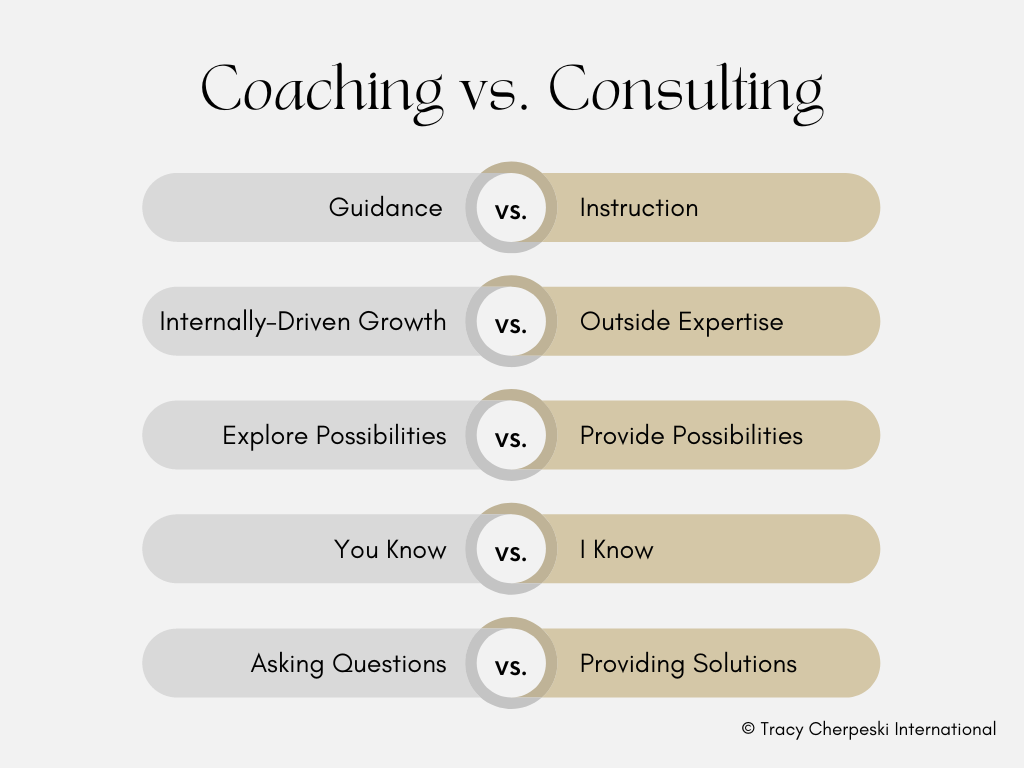
Descriptions of coaching and consulting, according to the International Coaching Federation (ICF) are below:
ICF defines coaching as partnering with clients in a thought-provoking and creative process that inspires them to maximize their personal and professional potential. Coaching is a client-driven process… With coaching, the assumption is that individuals or teams are capable of generating their own solutions, with the coach supplying supportive, discovery-based approaches and frameworks.
Consulting: Individuals or organizations retain consultants for their expertise. While consulting approaches vary widely, the assumption is the consultant will diagnose problems and prescribe and, sometimes implement solutions.
There are some key differences between coaching and consulting:
Focus. Business Coaching focuses on the personal and professional development of the individual or team. Through a process of exploration, the client generates their own solutions with the support of the coach.
Consulting is focused on solving specific business problems or challenges, and providing expert advice. The consultant often provides the solutions and method of implementation, and may support the implementation process, or implement the solutions themselves.
Approach. Business Coaching is collaborative and involves working with the coachee to improve their leadership, communication and decision-making skills, and developing individual abilities.
Consulting tends to be more directive and involves providing analysis, solutions and recommendations to the client.
Timeframe. Business Coaching is an ongoing process with regular meetings over an extended period of time.
Consulting is typically a project-based engagement with a specific timeline and deliverables.
Outcomes. Business Coaching outcomes are generally focused on personal and professional growth, leadership skills, and larger strategic objectives.
Consulting aims to achieve specific business objectives, or to solve particular problems or challenges.
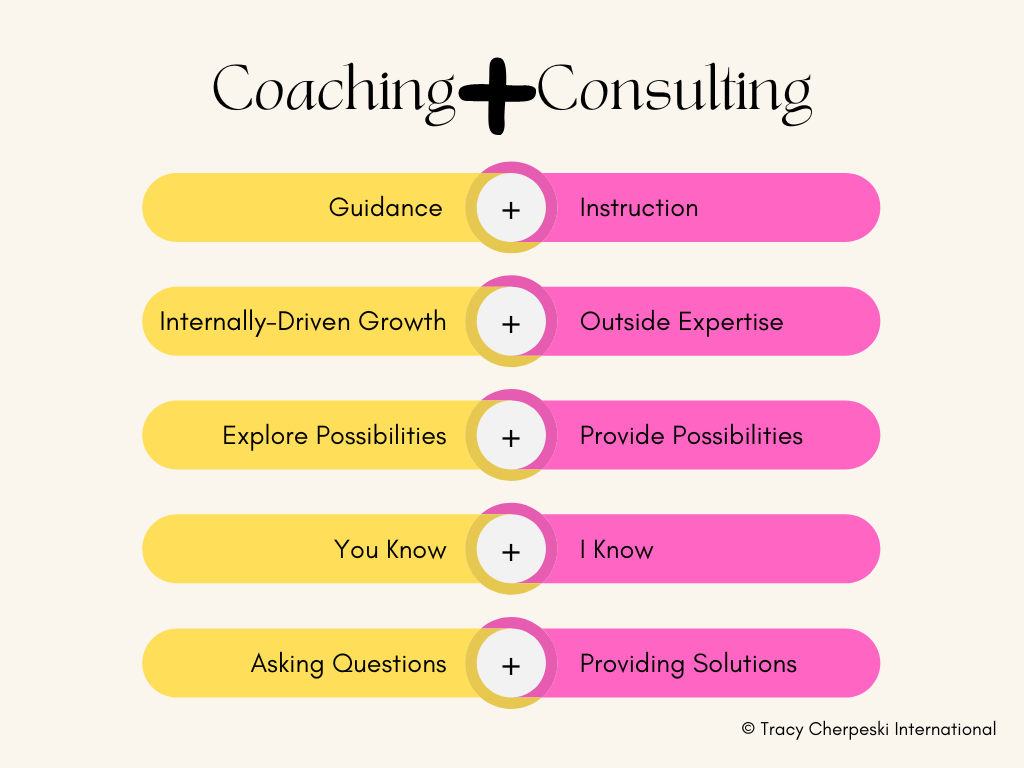
While there are fundamental differences, there are benefits to working with a professional who can combine these two valuable services into one packaged offering.
In our experience, the two can be kept very separate; however, our clients get the best results from a combination of coaching and consulting.
Project-Based Consulting
We worked with a physician who was preparing to open a multi-modality practice where she would be the consulting physician. She engaged us for project-based consulting to open her integrative wellness center.
She had already handled the legal and accounting details, secured a lease, and was beginning the build-out of the space. We worked with her for six months to establish the business model, set the operational flow, and get clear about the pricing structure for elective and ancillary services. We also engaged a medical marketing expert to build a patient base.
This was a fast-paced, challenging and exciting project. As the expert in the role of consultant, I took the lead on research initiatives, making introductions in the community, and was integral to the hiring process. It was incredibly gratifying to support this client from concept to grand opening and beyond.
One of the limitations of a consulting-only relationship is the lack of time and a framework for coaching through challenges or if the client gets stuck when they need to make quick, clear-headed strategic decisions.
The consultant has very specific guardrails, and due to time and other constraints, must stay in their lane. This presents major challenges if the client is lacking clarity or has a tendency toward analysis paralysis.
Business and Executive Coaching
Early in my coaching career, I shied away from giving direct advice or solutions to my clients, even when they would get stuck on a business problem. This presented a dilemma because being a practice owner requires clarity, agility, and quick decision-making. Since I have extensive consulting experience, I started to incorporate opportunities for my clients to ask for solutions to their pressing business issues.
The results were remarkable. My clients implemented the solutions I provided while continuing to work on their personal and professional growth. They reached and exceeded their business and professional goals, often way ahead of schedule, and we attribute this to their dedication to their own growth, and to getting support with specific business challenges.
Coaching + Consulting
Most of our clients now work with us for combined coaching and consulting. One of our clients owns a regenerative medicine practice, and engaged us to work with them and their team to refine operations and patient service. We started with a full-day VIP strategy session to determine their strengths, main business objectives, and to define the scope of work.
We approached consulting in a collaborative manner to ensure the solutions we provided were tailored to fit their specific needs. Deliverables included business operations manuals, scripts for reception, and administrative training manuals.
I coached the owner on communication skills, streamlining aspects of his role to conserve time and energy, and on raising awareness to the signs of burnout so he could head it off at the pass. I coached the head nurse, who is also the practice manager, on developing her leadership and communication skills, and delegating tasks that didn’t belong on her plate.
Over the course of 18 months, what had been a disorganized practice with inconsistent revenues became a calm, spa-like environment with happy staff and patients-turned-repeat-customers, who became their main source of referrals.
The combination of coaching and consulting will support you in strengthening your leadership skills, and can accelerate the pace to reach or surpass your goals.
If you’re uncertain about how to reach your goals, we recommend you speak with several experts to determine fit, and gain the clarity you need to become an agile and exquisitely fulfilled practice leader.
I would be honored to be one of the experts you speak with to see if working with a coach and consultant is right for you.
We provide a proven, impeccably designed method to help you scale your practice while preserving your most precious assets: your time and energy.
Click here to schedule your complimentary 45 minute Practice Assessment Strategy Session.