
Culture is Not a Workshop: How You Show Up Every Moment Matters Featuring Jennifer Raams, EP 187
Jennifer Raams, coach with Practice Freedom U, joins Tracy to discuss the critical role of emotional intelligence (EQ) in healthcare practice management. This conversation explores how self-awareness, stress management, and intentional leadership create thriving practices where both providers and patients flourish.
Episode Overview
Jennifer Raams, coach with Practice Freedom U, joins Tracy to discuss the critical role of emotional intelligence (EQ) in healthcare practice management. This conversation explores how self-awareness, stress management, and intentional leadership create thriving practices where both providers and patients flourish.
Key Highlights
The Inner Game of Practice Management
Stressed practitioners create stressed practices - it shows up in patient interactions, team dynamics, and business performance
The importance of moving from reactive to responsive leadership through self-awareness
How clinical excellence skills can become business liabilities without proper emotional regulation
The Flourishing Zone Framework
Green zone: flourishing state where leaders show up intentionally
Red zone: defensive/attack mode that damages relationships and decision-making
Frozen zone: low energy state that leads to stagnation and burnout
Goal: Spend 80% of time in the green zone using practical tools and awareness
Leadership as Nervous System Regulation
Culture isn't built through workshops - it's created through how you show up moment by moment
The power of presence: being able to "read the room" and respond appropriately to team needs
Switching between clinical and business "hats" to maintain appropriate focus
Practical EQ Tools
Two key questions for fear-based thinking: "Where do I choose to put my attention?" and "Where do I have influence?"
The power of curiosity over defensiveness in difficult situations
Simple physical shifts (changing hands, standing/sitting) to interrupt triggered states
Memorable Quotes
"If you're not okay, your business is going to suffer, period."
"Culture is not a workshop - it's how you show up every single moment."
"The biggest stress contributor is when you feel you have no control and no influence."
"We only have this second. What am I choosing intentionally to do now about it?"
"When your people are flourishing, your business is thriving. There's no way around it."
"Every skill, every behavior is learned - it's a skill you can learn and also unlearn."
Key Takeaways
Start with self-awareness: Recognize your triggers, stress levels, and default responses before trying to manage others
Invest early in leadership development: Building culture, systems, and leadership teams takes time - don't wait until you're scaling
Focus on what you can control: When overwhelmed, return to the basics of where you put your attention and where you have influence
Make coaching a priority: Having a confidential sounding board accelerates growth and prevents costly mistakes
Think beyond the clinical hat: Practice owners must develop the ability to shift between provider and CEO mindsets
This episode emphasizes that sustainable practice success requires more than clinical expertise - it demands emotional intelligence, intentional leadership, and the courage to invest in personal development alongside business growth.
Bio:
Jennifer Raams is an entrepreneur and business coach who arrived in Hawaii with just a suitcase, a physical therapy diploma, and $2,000, ultimately building a thriving PT business that empowers leaders to scale with purpose. As a coach with Practice Freedom U, she specializes in leadership development, strategic growth, and succession planning. With 20 years of COO experience scaling a multi-clinic practice and leading high-performing teams, Jennifer helps practice owners gain clarity, confidence, and the tools to build thriving, sustainable businesses that leave a lasting impact.
Find Jennifer:
Connect With Us:
The $100K Blind Spot: Why Male Patients Are Quietly Leaving Your Practice, EP 186
During Mental Health Awareness Month and Men's Mental Health Awareness Month, we explore a critical business issue affecting healthcare practices nationwide. Male patients with undiagnosed PTSD and mental health challenges are creating hidden operational costs, revenue losses, and staff frustration—all while walking out feeling unheard and unlikely to return. This episode breaks down the business case for recognizing how men's mental health decline presents differently and provides actionable strategies to turn this challenge into a competitive advantage.
Note: We approach this topic from a business and operational perspective, deferring to clinical mental health professionals for diagnosis and treatment guidance.
Episode Overview
During Mental Health Awareness Month and Men's Mental Health Awareness Month, we explore a critical business issue affecting healthcare practices nationwide. Male patients with undiagnosed PTSD and mental health challenges are creating hidden operational costs, revenue losses, and staff frustration—all while walking out feeling unheard and unlikely to return. This episode breaks down the business case for recognizing how men's mental health decline presents differently and provides actionable strategies to turn this challenge into a competitive advantage.
Note: We approach this topic from a business and operational perspective, deferring to clinical mental health professionals for diagnosis and treatment guidance.
Key Highlights
• The Hidden Financial Impact: Unrecognized men's mental health issues cost practices through incomplete care cycles, staff burnout, reputation damage, and missed referral opportunities
• Why Traditional Approaches Fail: Current assessment tools and communication strategies were developed primarily for women, creating systematic blind spots for male presentations
• Different Presentation Patterns: Men with PTSD show anger instead of sadness, risk-taking behaviors, work performance swings, and physical symptoms rather than traditional emotional indicators
• The Competitive Advantage: Practices that adapt first will capture a significantly underserved market segment and become go-to providers for entire families
• Strategic Implementation: Small, targeted modifications create maximum impact—environmental changes, communication training, enhanced screening, and referral network development
• Measurement Matters: Track engagement rates, referral completion, patient satisfaction by gender, and reputation metrics to ensure sustainable change
• Leadership Opportunity: Position your practice as a leader in comprehensive mental wellness during awareness months
Memorable Quotes
"You're looking at undiagnosed PTSD and mental health decline in men, and it's creating a cascade of operational problems that are costing you significantly."
"Your practice was designed around assessment tools and communication strategies developed primarily for women. This isn't anyone's fault—it's just the historical reality of healthcare development. But it's creating a systematic blind spot."
"The practices that thrive in the next decade are going to be the ones that can adapt their operations to meet patients where they are, not where we think they should be."
"Every patient who feels unheard, misunderstood, or inadequately treated represents lost revenue, missed opportunities, and potential reputation damage."
"Thriving practices aren't built on good intentions—they're built on strategic systems that deliver consistent results for both patients and providers."
Action Items for Listeners
✓ Assess your current intake forms for gender-neutral mental health screening ✓ Train staff to ask functional impact questions rather than emotional state questions
✓ Evaluate your waiting room environment and reading materials ✓ Build relationships with mental health providers specializing in men's mental health ✓ Implement tracking systems for male patient engagement and satisfaction ✓ Start with one strategic modification that aligns with your current resources
This episode is part of the Thriving Practice podcast series, focused on helping healthcare provider-owners build sustainable, profitable practices through strategic operations and leadership development.
Tracy’s Bio:
Tracy Cherpeski, MBA, MA, CPSC (she/her/hers) is the Founder of Tracy Cherpeski International and Thriving Practice Community. As a Business Consultant and Executive Coach, Tracy helps healthcare practice owners scale their businesses without sacrificing wellbeing. Through strategic planning, leadership development, and mindset mastery, she empowers clients to reclaim their time and reach their potential. Based in Chapel Hill, NC, Tracy serves clients worldwide and is the Executive Producer and Host of the Thriving Practice podcast. Her guiding philosophy: Survival is not enough; life is meant to be celebrated.
Connect With Us:
Subtract Before You Multiply: Your Growth Roadmap Essentials – A Special Snack Episode, EP 185
In this candid snack episode, Miranda Dorta puts Tracy Cherpeski in the interview seat to explore the essential roadmap from where healthcare practice owners are now to where they want to be. This unscripted conversation dives deep into the systems, strategies, and team-building approaches that create sustainable practice growth. Whether you're taking your first growth step or navigating complex expansion challenges, this episode provides the clarity and confidence needed to move forward strategically.
Episode Overview
In this candid snack episode, Miranda Dorta puts Tracy Cherpeski in the interview seat to explore the essential roadmap from where healthcare practice owners are now to where they want to be. This unscripted conversation dives deep into the systems, strategies, and team-building approaches that create sustainable practice growth. Whether you're taking your first growth step or navigating complex expansion challenges, this episode provides the clarity and confidence needed to move forward strategically.
Key Highlights
• Subtract Before You Multiply - Essential pre-growth evaluation to identify systems that won't scale and operational bottlenecks that need addressing
• Capacity Assessment - How to determine if your current systems can "rinse and repeat" with minimal intervention before expanding
• Sustainable Growth Rates - Understanding the difference between rapid growth (which sometimes just happens) and sustainable 30% year-over-year growth
• Values-Driven Decision Making - Distinguishing between growth opportunities that align with core values versus those that simply increase revenue
• The WAIT Method - Strategic pausing using the acronym "Why Am I Talking?" to ensure thoughtful leadership decisions
• Culture as Foundation - How practice culture extends far beyond pizza parties to include conflict resolution, team unity during challenges, and shared vision alignment
Memorable Quotes
"You need to subtract before you multiply. If you don't take care of your problems, they're gonna grow with you."
"The key is if the systems you have in place can basically rinse, repeat, with minimal intervention, you're probably in a really good place to expand."
"We call it a shiny object and we call that the SOS - the shiny object syndrome."
"Culture isn't a workshop that you attend. If you're the head of practice and you're the practice owner, you set the tone."
"When you come together for a common goal, which would be the vision and mission of the practice, when you have your team on board, that's everything. That really is everything."
Miranda’s Bio:
Miranda Dorta, B.F.A. (she/her/hers) is the Manager of Operations and PR at Tracy Cherpeski International. A graduate of Savannah College of Art and Design with expertise in writing and creative storytelling, Miranda brings her skills in operations, public relations, and communication strategies to the Thriving Practice community. Based in the City of Oaks, she joined the team in 2021 and has been instrumental in streamlining operations while managing the company's public presence since 2022.
Tracy’s Bio:
Tracy Cherpeski, MBA, MA, CPSC (she/her/hers) is the Founder of Tracy Cherpeski International and Thriving Practice Community. As a Business Consultant and Executive Coach, Tracy helps healthcare practice owners scale their businesses without sacrificing wellbeing. Through strategic planning, leadership development, and mindset mastery, she empowers clients to reclaim their time and reach their potential. Based in Chapel Hill, NC, Tracy serves clients worldwide and is the Executive Producer and Host of the Thriving Practice podcast. Her guiding philosophy: Survival is not enough; life is meant to be celebrated.
Connect With Us:
Marketing by the Numbers: Why Data Beats Gut Instinct Every Time Featuring Justin Strong, EP 184
In this refreshing conversation, Justin Strong from Room 118 challenges everything you think you know about marketing. Moving away from the "throw spaghetti at the wall" approach that's given marketing a bad reputation, Justin advocates for a scientific, data-driven methodology that treats marketing like clinical diagnostics - complete with "x-rays" before making recommendations.
Episode Overview
In this refreshing conversation, Justin Strong from Room 118 challenges everything you think you know about marketing. Moving away from the "throw spaghetti at the wall" approach that's given marketing a bad reputation, Justin advocates for a scientific, data-driven methodology that treats marketing like clinical diagnostics - complete with "x-rays" before making recommendations.
Drawing from his analysis of over 4,000 dental practices through the Dental Marketing Index, Justin reveals why traditional marketing approaches often fail and how practice owners can make informed decisions based on hard data rather than gut feelings or sales pitches.
Key Topics Discussed
• The Marketing Trust Problem: Why marketing has earned its bad reputation and how to identify high-integrity marketers who prioritize results over profits
• The Dental Marketing Index: A comprehensive analysis of 4,000+ practices that reveals what actually correlates with success vs. what agencies typically sell
• Market Diagnostics: Why every marketing decision should start with understanding your local market demographics, competition, and patient behavior patterns
• The "Near Me" Revolution: How patient behavior has fundamentally shifted, with "dentist near me" becoming the most searched term and average patient lifetime dropping from 14-17 years to under 5 years
• The Sales Gap: Why great marketing often fails due to poor follow-through - missing online schedulers, unreturned calls, and inadequate patient experience systems
• Competition as Innovation Driver: How high-density markets like DC create exceptional patient experiences through competitive pressure
• The Science of Marketing: Moving from creative guesswork to measurable, forecastable strategies based on data analysis
Memorable Quotes
"Marketing's job should be to tell you, is this possible in your local market? If so, where is our best opportunity for success? And then it should give practical recommendations based on that."
"It's sort of like a patient walked in and said, I have a tooth. Therefore, I need you to pull this tooth. And your response is going to be, why don't we take a look at the tooth? How about that x-ray first?"
"All a brand is is the small bit of space you occupy in your patients' minds. What do they think when they think of your brand?"
"If you think they're doing it, they've been doing it for a while." (on data privacy and corporate surveillance)
"There is a way to reduce complexity... hire good people to solve problems. If you understand where you want to go as a practice owner... recognize what the challenges are you must overcome, and hire good people to solve those problems."
The Bottom Line
Marketing doesn't have to be a guessing game. When approached scientifically - with proper market analysis, competitive benchmarking, and data-driven decision making - it becomes a powerful tool for practice growth. The key is finding marketers who prioritize your success over their service offerings and who can provide the objective "map" you need to navigate from where you are to where you want to go.
Bio:
Justin Strong is the Founder and CEO of Room 118, Inc., a dental research and marketing agency focused on data-driven practice growth. With 25 years of experience in marketing and strategy, he's led multi-billion-dollar initiatives at Verizon Enterprise Solutions and McCann. Recognizing the gap in evidence-based dental marketing, Justin pioneered the Dental Marketing Index, analyzing 4,000+ practices to identify what actually drives results. He specializes in helping practice owners move from random marketing tactics to predictable, high-ROI strategies using Fortune 500-level data insights applied to local dental marketing.
Find Justin:
Connect With Us:
Schedule Strategy Session with Tracy
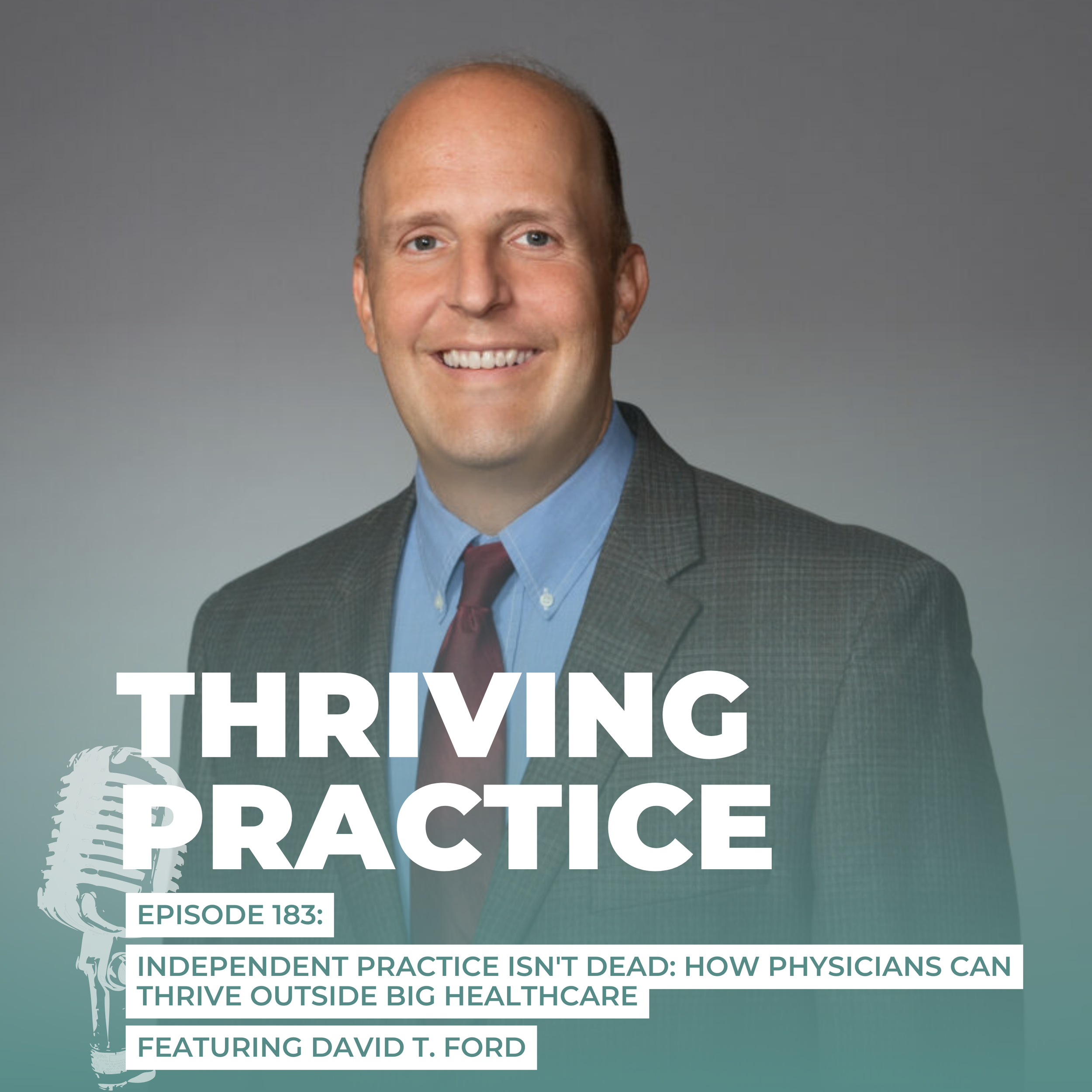
Independent Practice Isn't Dead: How Physicians Can Thrive Outside Big Healthcare Featuring David T. Ford, EP 183
Tracy sits down with David Ford, CEO of CMA Physician Services, to challenge the notion that independent medical practices are becoming obsolete. David shares his passion for supporting private practitioners and unveils Medway, a new subscription-based service designed to lift administrative burdens off physicians' shoulders. Through compelling stories and practical insights, David makes the case that private practice may actually be the wave of the future, with more physicians seeking independence and control over their practice style. This conversation offers hope and practical guidance for healthcare providers considering or currently managing independent practices.
Tracy sits down with David Ford, CEO of CMA Physician Services, to challenge the notion that independent medical practices are becoming obsolete. David shares his passion for supporting private practitioners and unveils Medway, a new subscription-based service designed to lift administrative burdens off physicians' shoulders. Through compelling stories and practical insights, David makes the case that private practice may actually be the wave of the future, with more physicians seeking independence and control over their practice style. This conversation offers hope and practical guidance for healthcare providers considering or currently managing independent practices.
Episode Highlights:
CMA Physician Services' mission to help independent practices thrive through "the upside of coordination without the downside of consolidation"
How the soon-to-launch Medway service helps physicians outsource administrative burdens like payroll, benefits, and compliance
The story of a physician in California's high desert who can continue serving Medicare patients thanks to shared savings programs
Why private practice isn't dead - and may actually be making a comeback
The systemic challenges facing new physicians with student debt, and programs that help address these barriers
How lifting administrative burdens gives physicians more time for patients AND personal life
The importance of community-centered healthcare and treating social determinants of health
Memorable Quotes:
"Independent practice isn't dead, like you can do it." - David Ford
"You didn't do all that schooling to run payroll." - David Ford
"Why would you own your practice if you don't have control over your schedule and your time? What's the point?" - Tracy Cherpeski
"I think of it like standing on the beach and seeing the swell that's a half mile out... it's not a wave yet, but you can see a little bit of a swell out there." - David Ford on the trend of physicians returning to private practice
"It can be done... It probably can't be done the same way it was 50 or 60 years ago. You have to approach it a little differently... But it is very much still possible. You can do it. You can be successful and you can thrive, have your practice and still have the life you want to have." - David Ford
Bio:
David Ford serves as the CEO of CMA Physician Services, a subsidiary of the California Medical Association. A nationally recognized expert in health information technology, David previously led as Vice President of Health IT at CMA where he developed thought leadership in electronic health records, health information exchange, and telehealth. Prior to CMA, he was Executive Director of CalHIPSO, the nation's largest federally designated Regional Extension Center, where he helped thousands of safety net providers implement health IT systems to improve care delivery and participate in payment reform. David began his career in the California State Legislature, most recently as Chief of Staff to then-Assemblymember Ted Lieu. He holds a BA in Political Science from The American University in Washington, D.C.
Find David:
Connect With Us:
Schedule Strategy Session with Tracy
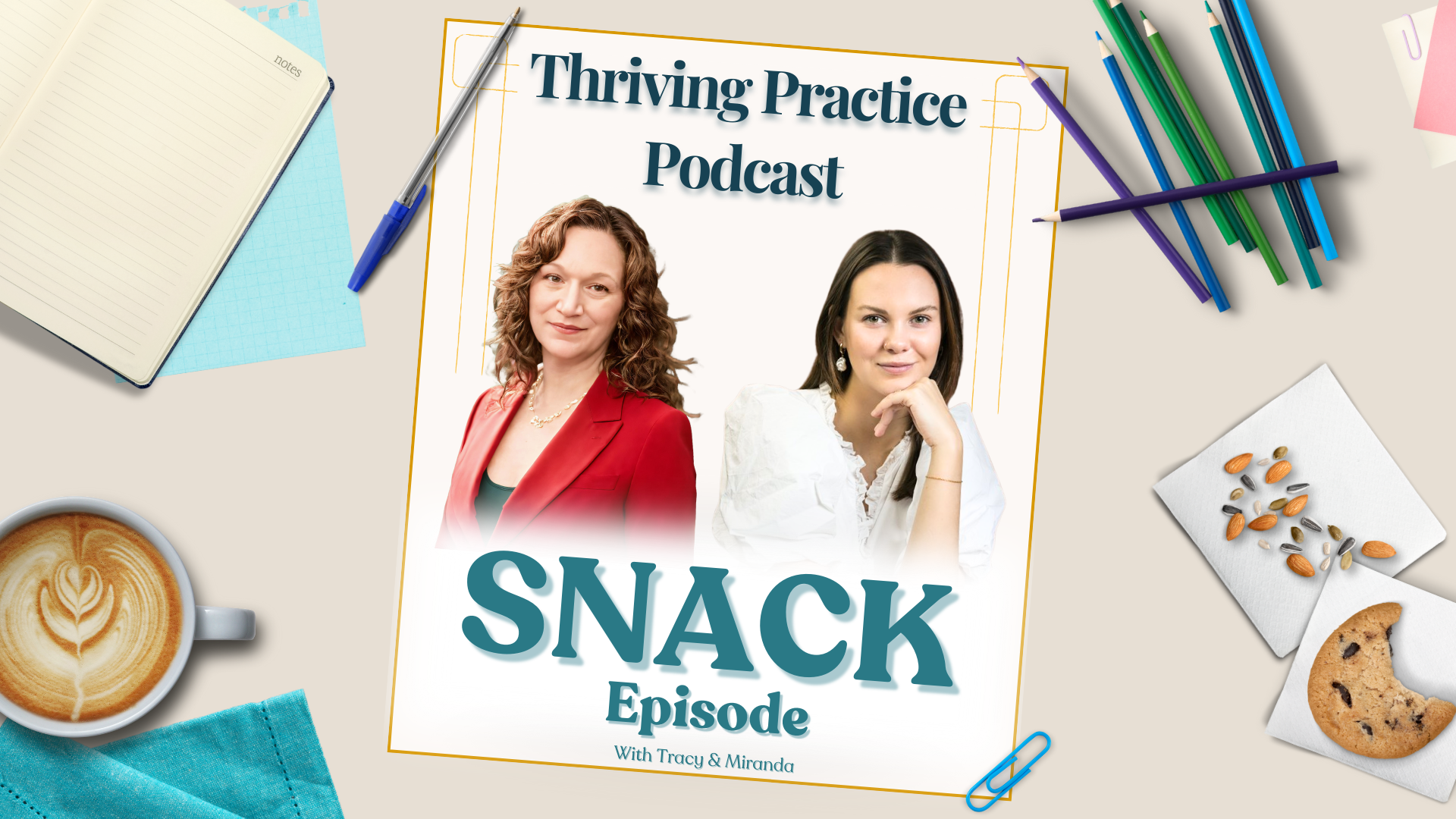
Leadership Hats: How Healthcare Providers Can Transform Clinical Confidence into Business Success – A Special Snack Episode, EP 182
In this enlightening "snack episode," host Miranda Dorta turns the mic around to interview Tracy Cherpeski about the critical connection between leadership approaches and healthcare practice success. Tracy reveals how healthcare providers often exhibit confidence in clinical settings but struggle with business leadership, sharing practical insights on adapting leadership styles while maintaining authenticity. She introduces the concept of "changing hats" to help practitioners mentally transition between clinical and leadership roles, and emphasizes that micromanagement isn't always negative when applied strategically. Tracy's most impactful leadership tip? The power of the pause—what she calls "WAIT" (Why Am I Talking?)—allowing leaders to respond thoughtfully rather than reactively.
In this enlightening "snack episode," host Miranda Dorta turns the mic around to interview Tracy Cherpeski about the critical connection between leadership approaches and healthcare practice success. Tracy reveals how healthcare providers often exhibit confidence in clinical settings but struggle with business leadership, sharing practical insights on adapting leadership styles while maintaining authenticity. She introduces the concept of "changing hats" to help practitioners mentally transition between clinical and leadership roles, and emphasizes that micromanagement isn't always negative when applied strategically. Tracy's most impactful leadership tip? The power of the pause—what she calls "WAIT" (Why Am I Talking?)—allowing leaders to respond thoughtfully rather than reactively.
Episode Highlights:
The pattern Tracy observed in healthcare providers: confidence in clinical delegation but timidity in business leadership
How practitioners can transfer clinical skills to leadership while knowing which habits to "surgically remove"
The cognitive trick of "changing hats" to help the brain switch between clinical and leadership mindsets
Why micromanagement isn't always negative and when it might be necessary
The most powerful leadership adjustment: learning to pause before reacting
Memorable Quotes:
"Sometimes their business model is to hope for the best."
"Leadership doesn't mean knowing everything. It doesn't mean being in command or control of every single thing."
"Micromanagement - it's not a four-letter word, but it sounds like it could be."
"If you take your hands off, not abdicate your responsibility for success, but take your hands off and let them do their work, they will rise to the occasion."
"We call it WAIT. It's an acronym. Why Am I Talking?"
Miranda’s Bio:
Miranda Dorta, B.F.A. (she/her/hers) is the Manager of Operations and PR at Tracy Cherpeski International. A graduate of Savannah College of Art and Design with expertise in writing and creative storytelling, Miranda brings her skills in operations, public relations, and communication strategies to the Thriving Practice community. Based in the City of Oaks, she joined the team in 2021 and has been instrumental in streamlining operations while managing the company's public presence since 2022.
Tracy’s Bio:
Tracy Cherpeski, MBA, MA, CPSC (she/her/hers) is the Founder of Tracy Cherpeski International and Thriving Practice Community. As a Business Consultant and Executive Coach, Tracy helps healthcare practice owners scale their businesses without sacrificing wellbeing. Through strategic planning, leadership development, and mindset mastery, she empowers clients to reclaim their time and reach their potential. Based in Chapel Hill, NC, Tracy serves clients worldwide and is the Executive Producer and Host of the Thriving Practice podcast. Her guiding philosophy: Survival is not enough; life is meant to be celebrated.
Connect With Us:
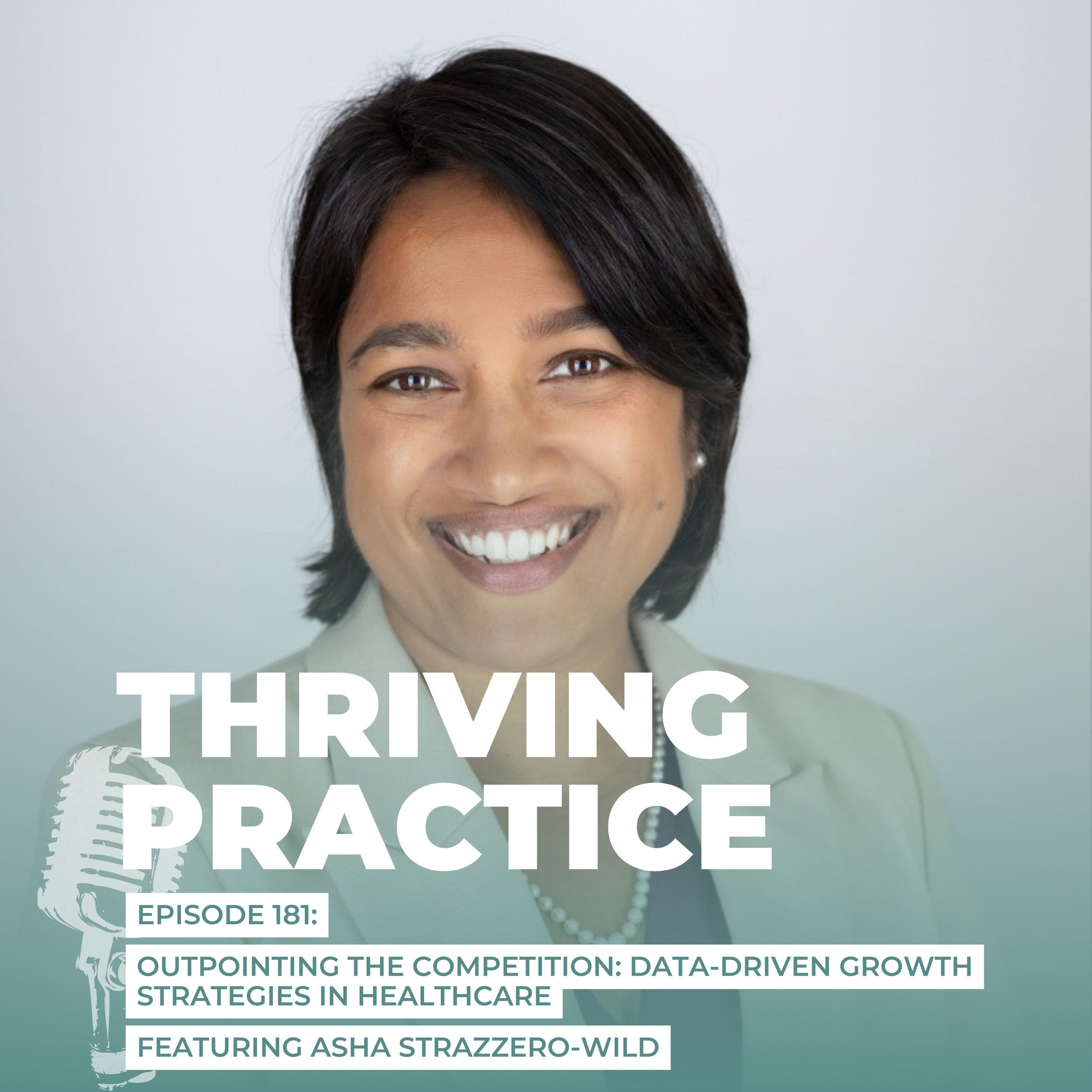
Outpointing the Competition: Data-Driven Growth Strategies in Healthcare Featuring Asha Strazzero-Wild, EP 181
In this episode, we speak with Asha Strazzero-Wild, co-founder of Outpointe, a growth strategy and execution firm specializing in healthcare. Asha shares her fascinating journey from aspiring doctor to education and public health before founding Outpointe with business partner Kelly Wilder. Their firm helps healthcare organizations optimize resources and improve patient and provider experiences through data-driven strategies and tactical support. Drawing on their combined 50 years of experience, Asha and Kelly guide healthcare companies in prioritizing initiatives, aligning metrics, and executing effectively on their vision in an increasingly complex market.
In this episode, we speak with Asha Strazzero-Wild, co-founder of Outpointe, a growth strategy and execution firm specializing in healthcare. Asha shares her fascinating journey from aspiring doctor to education and public health before founding Outpointe with business partner Kelly Wilder. Their firm helps healthcare organizations optimize resources and improve patient and provider experiences through data-driven strategies and tactical support. Drawing on their combined 50 years of experience, Asha and Kelly guide healthcare companies in prioritizing initiatives, aligning metrics, and executing effectively on their vision in an increasingly complex market.
Key Takeaways
Data-driven decision making is crucial for healthcare organizations to prioritize initiatives and allocate resources effectively
The importance of speaking the same language when defining metrics and success criteria before launching initiatives
Outpointe's proprietary Growth Readiness Outlook assessment helps organizations evaluate their readiness for growth across key areas including customer experience, financial work, sales and marketing, and workforce development
The value of intentionally seeking feedback from those implementing best practices in your industry to drive continuous improvement
Why focusing on your strengths is as important as addressing areas for improvement when building effective teams
The boxing inspiration behind the name "Outpointe" - strategically coming back round after round to outpoint your opponent (the market)
Memorable Quotes
"Everyone says 'I've got this great idea,' but actually operationalizing that and executing on it and being strategic about what you choose to do and not do is hard."
"At the end of the day, we're all working to help make healthcare better."
"Don't focus exclusively on what you need to do better. Don't forget to focus on what you do really well, and keep doing that really well."
"When you're thinking about how you are going to allow yourself to grow and evolve with the market and the market needs, it's really important. And it shouldn't be done in a vacuum."
Resources Mentioned
Book Recommendation: StrengthsFinder - for identifying your strengths and building effective teams
Bio:
Asha brings over 10 years of healthcare sector experience spanning public health, health technology, and corporate marketing. As co-founder of Outpointe, she helps healthcare organizations implement effective systems and processes for sustainable growth and successful innovation launches.
At The Advisory Board Company, Asha earned Pragmatic Marketing certifications and launched nearly a dozen successful analytics products. Later, as Senior Vice President of Integrated Sales and Marketing at a leading life sciences company, she drove effective marketing strategies that generated nearly $50 million in sales over three years. Her expertise includes managing multi-million-dollar budgets, integrating sales and marketing functions, and measuring marketing ROI.
Asha has overseen multiple acquisitions and product launches throughout her career. When not working, she enjoys spending time at the hockey rink with her son and leading community volunteer efforts in the Boston area.
Find Asha:
Connect With Us:
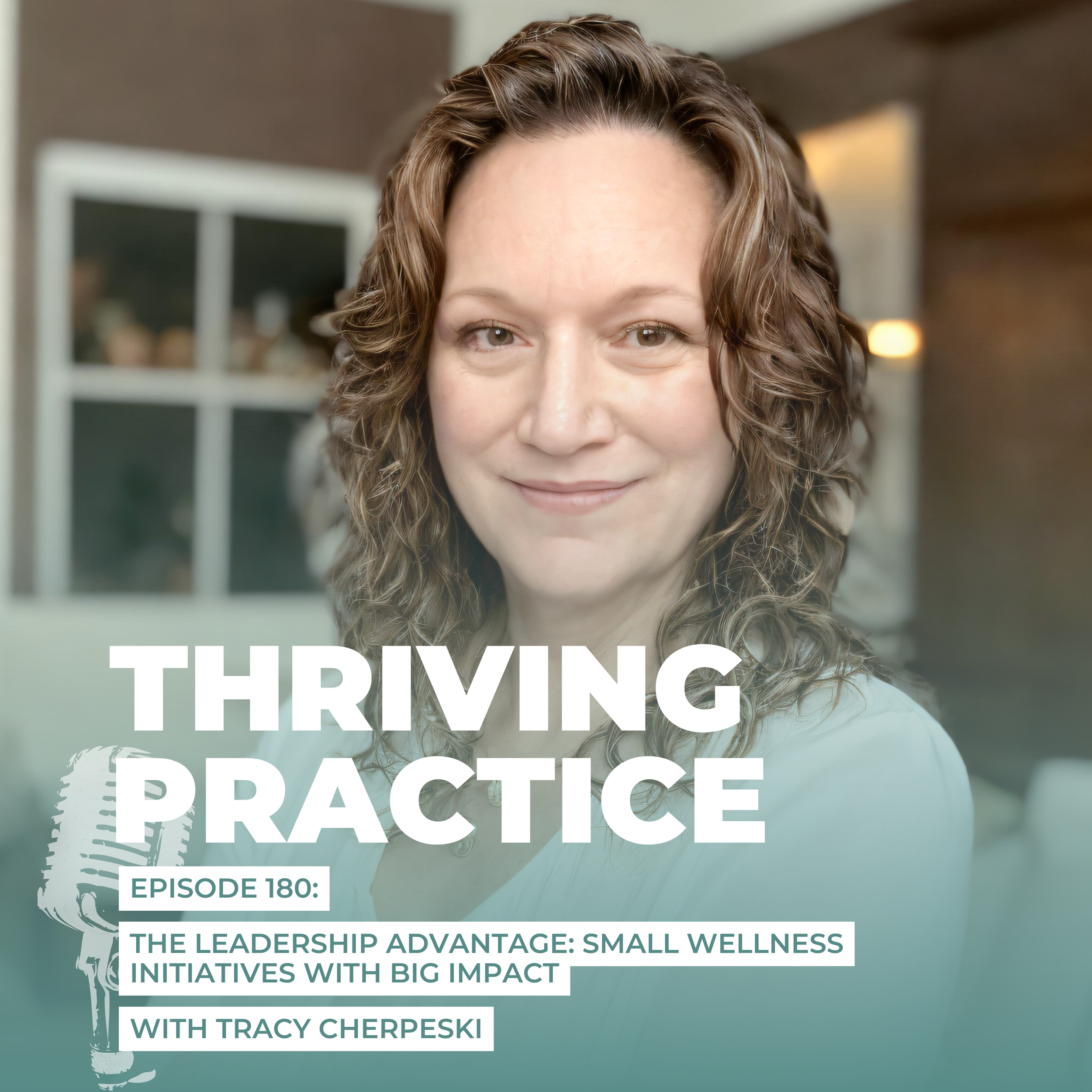
The Leadership Advantage: Small Wellness Initiatives With Big Impact, EP 180
In this episode, Tracy explores how independent healthcare practice owners can leverage small wellness initiatives as powerful demonstrations of leadership. Against the backdrop of unprecedented challenges in healthcare—from high turnover to political pressures—she reveals how intentional wellness practices create disproportionate returns for small practices. Unlike large healthcare systems, small practices have a "leadership proximity advantage" that makes even modest wellness initiatives more effective. Tracy shares practical, low-cost approaches that strengthen team culture, improve retention, and ultimately create more sustainable practices. The episode highlights how leadership presence, rather than elaborate programs, is the true foundation of practice wellbeing.
In this episode, Tracy explores how independent healthcare practice owners can leverage small wellness initiatives as powerful demonstrations of leadership. Against the backdrop of unprecedented challenges in healthcare—from high turnover to political pressures—she reveals how intentional wellness practices create disproportionate returns for small practices. Unlike large healthcare systems, small practices have a "leadership proximity advantage" that makes even modest wellness initiatives more effective. Tracy shares practical, low-cost approaches that strengthen team culture, improve retention, and ultimately create more sustainable practices. The episode highlights how leadership presence, rather than elaborate programs, is the true foundation of practice wellbeing.
Episode Highlights:
Why small practices have a distinct advantage in implementing effective wellness initiatives
A simple 20-minute weekly wellness activity that costs nothing but delivers remarkable results
Five mindset practices that integrate wellness into everyday leadership
How to measure the ROI of wellness initiatives through reduced absenteeism and improved engagement
The critical connection between a leader's own sustainable energy and team wellness
Memorable Quotes:
"Culture isn't a workshop we attend. It's about the example we set."
"The most successful practice owners know that wellness isn't about implementing a program—it's about investing in your most valuable asset: your people."
"Small, consistent wellness actions may seem insignificant compared to the daily operations of your practice, but they can completely redirect your practice culture."
"The practices that consistently outperform, even in challenging times, aren't necessarily the ones with the most resources—they're the ones led by owners who understand that how they show up matters more than what they say."
"You can't pour from an empty cup. The foundation of any successful team wellness initiative is your own sustainable energy as a leader."
Free Resource Mentioned: Download the Energy Audit workbook at PracticeSuccess.co/resources
Tracy’s Bio:
Tracy Cherpeski, MBA, MA, CPSC (she/her/hers) is the Founder of Tracy Cherpeski International and Thriving Practice Community. As a Business Consultant and Executive Coach, Tracy helps healthcare practice owners scale their businesses without sacrificing wellbeing. Through strategic planning, leadership development, and mindset mastery, she empowers clients to reclaim their time and reach their potential. Based in Chapel Hill, NC, Tracy serves clients worldwide and is the Executive Producer and Host of the Thriving Practice podcast. Her guiding philosophy: Survival is not enough; life is meant to be celebrated.
Connect With Us:
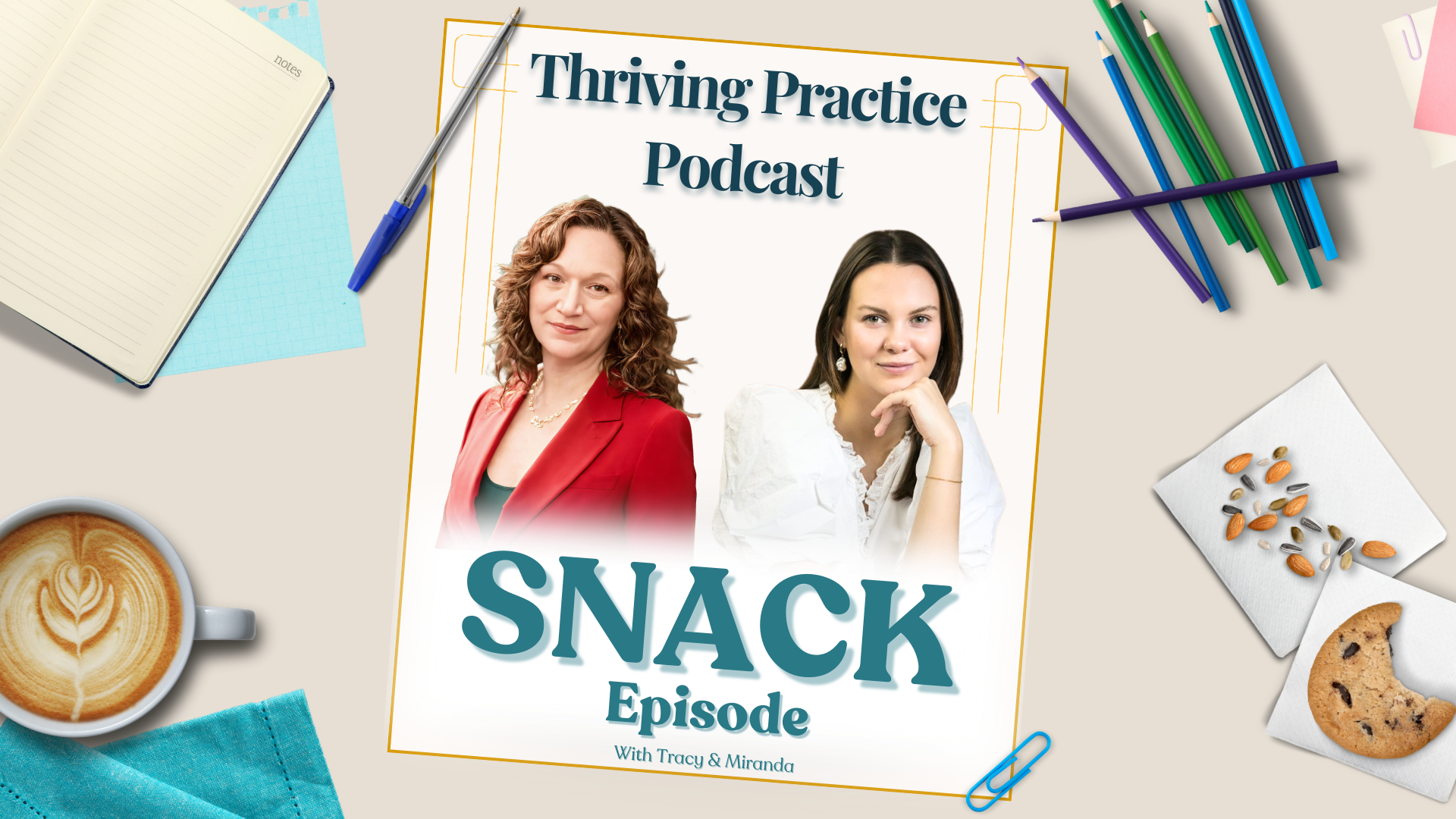
Turning Vision into Action: Tracy’s Approach to Breaking Down Goals for Healthcare Practices – A Special Snack Episode, EP 179
In this candid, unscripted "snack episode," Tracy is interviewed by Miranda, our Manager of Operations and PR at Tracy Cherpeski International and the Thriving Practice Community. Tracy shares her practical planning process for helping healthcare practice owners transform their ideas into achievable quarterly goals. She explains how to plan effectively even during uncertainty and maintain enthusiasm while building a practice vision despite challenges.
In this candid, unscripted "snack episode," Tracy is interviewed by Miranda, our Manager of Operations and PR at Tracy Cherpeski International and the Thriving Practice Community. Tracy shares her practical planning process for helping healthcare practice owners transform their ideas into achievable quarterly goals. She explains how to plan effectively even during uncertainty and maintain enthusiasm while building a practice vision despite challenges.
Key Takeaways:
Tracy's planning process starts with clarity - connecting the what, why, and how of your goals
Emotional connection to goals makes it easier to put in the necessary effort
Beginning with clarity increases speed rather than haste
Break down long-term goals by working backward - from 12 months to 9, 6, 3 months, then to weekly and daily tasks
Breaking goals into smaller chunks prevents feeling overwhelmed
Celebrate daily accomplishments with a "ta-da list" to maintain positive energy and momentum
Look for subtle wins: improved feelings, better sleep, increased energy at work
Lack of patience is a major challenge for healthcare entrepreneurs who want solutions immediately
The importance of "slowing down to speed up" - surrendering to the process brings clarity
Finding your practice's unique edge goes beyond clinical expertise to what makes you stand out in a competitive market
Notable Quotes:
"When we're emotionally connected to a goal, then it's easier for us...to put in the effort and the labor that's required to make something come to fruition."
"Clarity actually helps us increase speed rather than like haste."
"Sometimes when we have big goals, it can feel so overwhelming that we don't even start."
"My coach who trained me taught me about the ta-da list at the end of each day, which is...don't diminish progress."
"When we use this beautiful tool called surrender and we trust the process, that slowing down brings us that clarity that helps us then move forward with more speed."
"What makes you stand out so that you don't feel like it's about competition...Seth Godin calls it Purple Cow. Right? Like, what is it about your practice that makes you unique? And it can't just be your clinical expertise. It's not enough."
Miranda’s Bio:
Miranda Dorta, B.F.A. (she/her/hers) is the Manager of Operations and PR at Tracy Cherpeski International. A graduate of Savannah College of Art and Design with expertise in writing and creative storytelling, Miranda brings her skills in operations, public relations, and communication strategies to the Thriving Practice community. Based in the City of Oaks, she joined the team in 2021 and has been instrumental in streamlining operations while managing the company's public presence since 2022.
Tracy’s Bio:
Tracy Cherpeski, MBA, MA, CPSC (she/her/hers) is the Founder of Tracy Cherpeski International and Thriving Practice Community. As a Business Consultant and Executive Coach, Tracy helps healthcare practice owners scale their businesses without sacrificing wellbeing. Through strategic planning, leadership development, and mindset mastery, she empowers clients to reclaim their time and reach their potential. Based in Chapel Hill, NC, Tracy serves clients worldwide and is the Executive Producer and Host of the Thriving Practice podcast. Her guiding philosophy: Survival is not enough; life is meant to be celebrated.
Connect With Us:
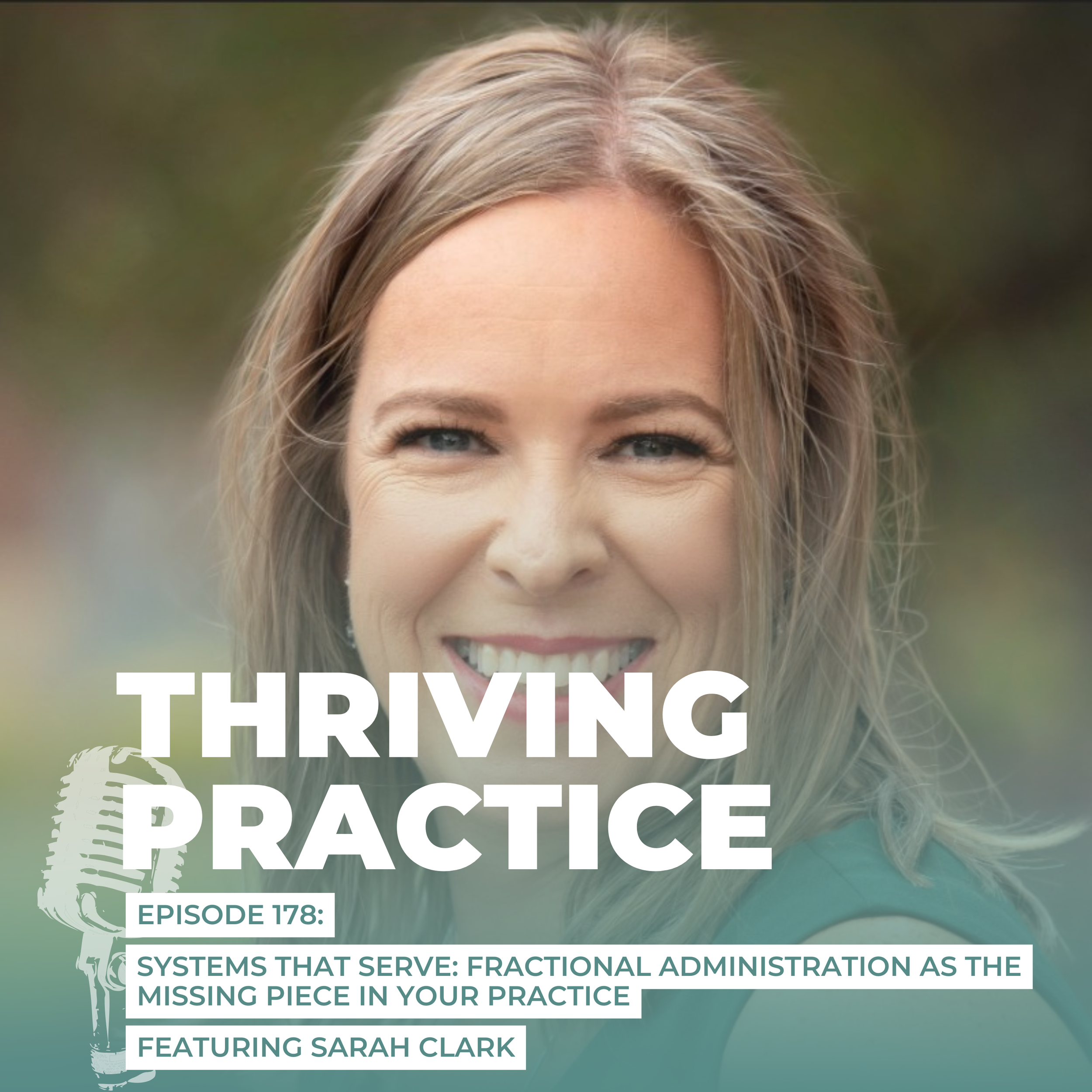
Systems That Serve: Fractional Administration as The Missing Piece in Your Practice Featuring Sarah Clark, EP 178
In this episode of Thriving Practice, Sarah Clark shares how her consulting work helps medical, dental, and chiropractic practices shift from operational chaos to sustainable calm through strategic process improvements and fractional administration that allow providers to prioritize patient care while achieving 30% better appointment punctuality.
Episode Overview
In this episode of Thriving Practice, I speak with Sarah Clark, founder of Sarah Clark Consulting, who helps medical, dental, and chiropractic practices transform operational chaos into sustainable calm. Sarah's approach combines fractional practice administration with process improvement strategies that allow providers to focus on patient care rather than administrative burdens. We explore how small, intentional changes in technology and workflow can dramatically improve both the patient experience and staff satisfaction. Sarah shares concrete examples of how simple solutions like automated appointment reminders have freed up staff time and improved patient punctuality by 30% in one practice. Her compassionate, results-driven methodology emphasizes that providers don't need to make sweeping changes all at once – even incremental improvements can lead to significant positive outcomes for practice efficiency and provider wellbeing.
Featured Quotes
"What I do is I help private medical, dental, chiropractor, anything in that field...turn their chaos into calm. And I sort of make a joke of, well, not all the way calm, more like calm-er. Because if it's really quiet and it's really calm, that's probably also like it's never really gonna happen that way."
"Burnout is not just taking care of the patients and dealing with that burden that gets put onto their shoulders, but having to run an office when a physician did not go to business school becomes really difficult...It's overwhelming. That's a full-time job."
"There are ways that you can do that and take some of the manual part of the stuff that leads up to that diagnosis...once the clients, once the business owners understand that it's okay to elevate something else off of you, to give it to somebody that has the experience and the time and the understanding to do it, it is, I mean, I have two clients that will just send me a text message about whatever it is and they used to say just handle it, now that just handle it is understood."
What You'll Learn
Listen for these key insights:
How the "Four P's" framework (People, Paperwork, Processes, and Patients) can transform your practice
Why technology adoption doesn't have to be overwhelming—and how small changes like automated appointment reminders can have outsized impacts
The surprising connection between provider burnout and patient experience
How fractional practice administration can provide expert support for practices that can't justify a full-time administrator
The critical importance of developing a strategic plan for your practice, including your eventual exit strategy
Why compassion isn't just good medicine—it's good business (with scientific evidence to back it up!)
Resources Mentioned
Compassionomics: The Revolutionary Scientific Evidence that Caring Makes a Difference - Book recommendation from Sarah about the impact of compassion on patient outcomes and provider burnout
Thriving Practice is hosted and executive produced by Tracy Cherpeski. Our mission is to help healthcare practitioners build sustainable, impactful businesses while maintaining their own wellbeing.
Bio:
Sarah Clark is the founder of Sarah Clark Consulting, where she helps medical, dental, and chiropractic practices transform operational chaos into sustainable calm. With a Master's degree in Kinesiology from Indiana University, Sarah built her career spanning both corporate healthcare with the NFL and independent medical practices.
This diverse background gives Sarah a unique perspective from nearly all roles in a medical office, allowing her to identify pain points and implement collaborative solutions. She specializes in helping independent practitioners who often wear multiple hats without adequate training for all their responsibilities.
Through fractional practice administration and process improvement, Sarah guides healthcare providers to become the best versions of themselves while improving operations and increasing profitability.
Sarah lives in Huntersville, North Carolina where she enjoys outdoor activities, RV travel, cooking, and kickboxing when she's not transforming healthcare practices.
Find Sarah:
Connect With Us:
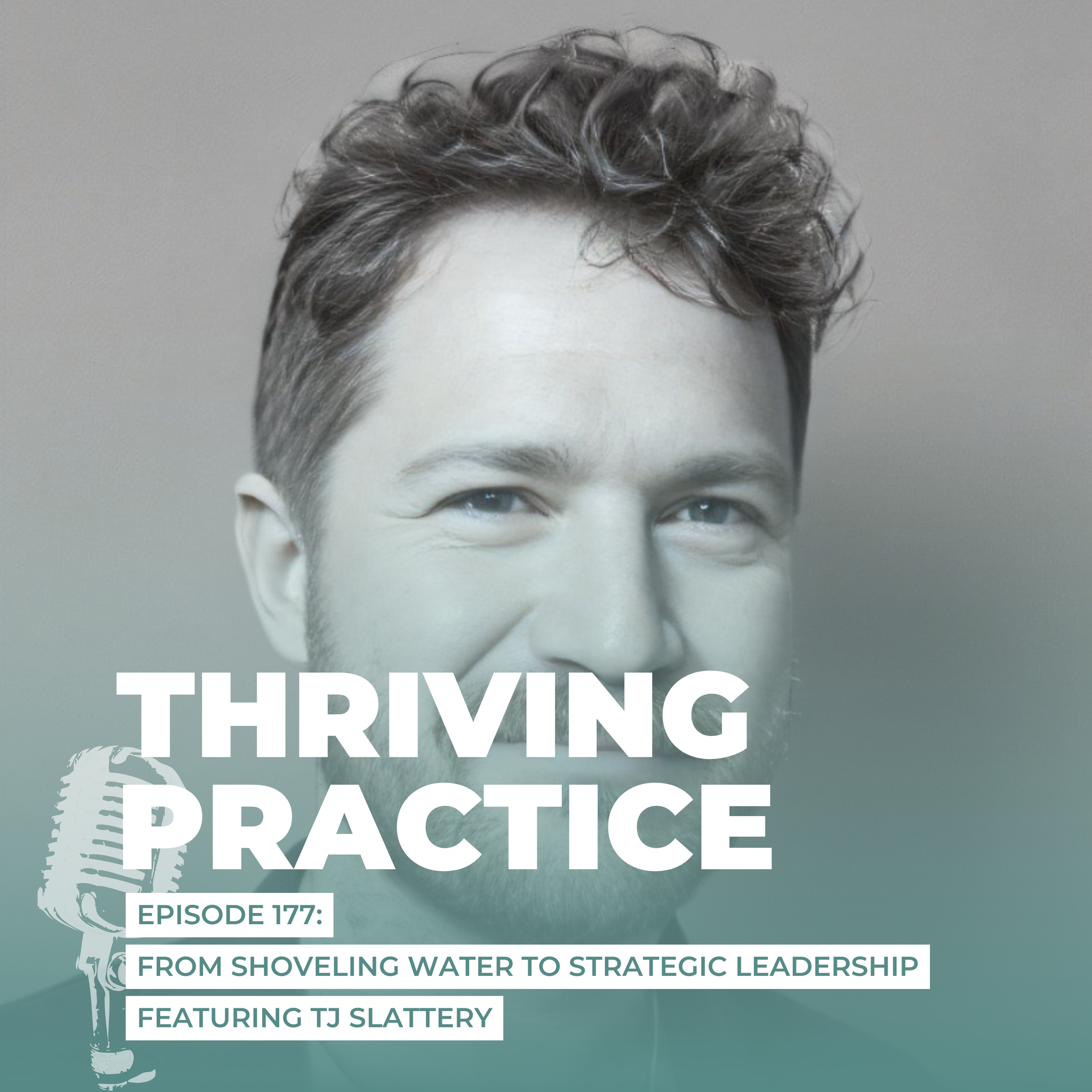
From Shoveling Water to Strategic Leadership Featuring TJ Slattery, EP 177
In this insightful episode, TJ Slattery of Crow's Nest Mindset Consulting shares strategies for healthcare practice owners who find themselves stuck "below deck" in their businesses. TJ explains how practitioners can transition from frantically managing day-to-day operations to gaining the strategic perspective needed for sustainable growth and leadership. Through practical advice and compelling metaphors, he offers a roadmap for escaping the "entrepreneurial island" that traps many healthcare business owners.
In this insightful episode, TJ Slattery of Crow's Nest Mindset Consulting shares strategies for healthcare practice owners who find themselves stuck "below deck" in their businesses. TJ explains how practitioners can transition from frantically managing day-to-day operations to gaining the strategic perspective needed for sustainable growth and leadership. Through practical advice and compelling metaphors, he offers a roadmap for escaping the "entrepreneurial island" that traps many healthcare business owners.
Episode Highlights:
The crow's nest metaphor: Why healthcare providers often find themselves "shoveling water below deck" instead of navigating strategically
The challenge of transitioning from clinical excellence (where "never let them see you sweat" is valued) to business leadership (where vulnerability and delegation are crucial)
Understanding your true hourly value and why tasks like "opening the mail" could be costing you thousands
Building a holistic performance model that aligns financial goals with marketing, operations, and leadership
Moving from "magical thinking" about growth to practical planning with measurable steps
The three mindset blocks that prevent effective delegation: martyrdom, "I alone can fix it," and guilt
How creating space for your team allows them to develop, flourish, and make your business stronger
Memorable Quotes:
"The death of every entrepreneur is you all become glorified managers. If you're doing this right, in a year from now, you're not the one getting your hands dirty - you're managing people and managing your managers."
"Would you pay a bookkeeper $1,200 an hour to go through your books? That's what you're doing when you handle those tasks yourself instead of delegating."
"Just because we can doesn't mean we should. How is a business owner to fulfill their mission and vision if they're not able to get up to that view and keep checking on it?"
"A lot of people, whatever their background or industry is, never let them see you sweat. That is a teachable mindset that you can maneuver over. That is something you can loosen up and get better at."
Guest Bio:
TJ Slattery is the Founder and Strategic Advisor at Crow's Nest Mindset Consulting, where he helps small business owners scale their enterprises and achieve greater freedom in both professional and personal spheres. With 20 years of experience in entrepreneurship and small business operations, TJ brings a unique blend of practical expertise and strategic insight to his clients.
A self-described "business plan tinkerer," TJ's approach stems from genuine curiosity and a collaborative drive to identify core challenges and implement effective solutions. His diverse background includes founding a pedicab service in Vail, running a handyman business in Denver, partnering in a London-based facilities management firm, and co-founding Zuni Street Brewing Company.
TJ holds a bachelor's degree in Interdisciplinary Business Management from Miami University of Ohio and an MBA from the University of Denver. When not helping business owners climb to their own crow's nest for a better strategic view, this Denver resident with Midwestern roots enjoys music, gardening, home projects, traveling, skiing, and spending quality time with his dog, Bella.
Find TJ:
Connect With Us:
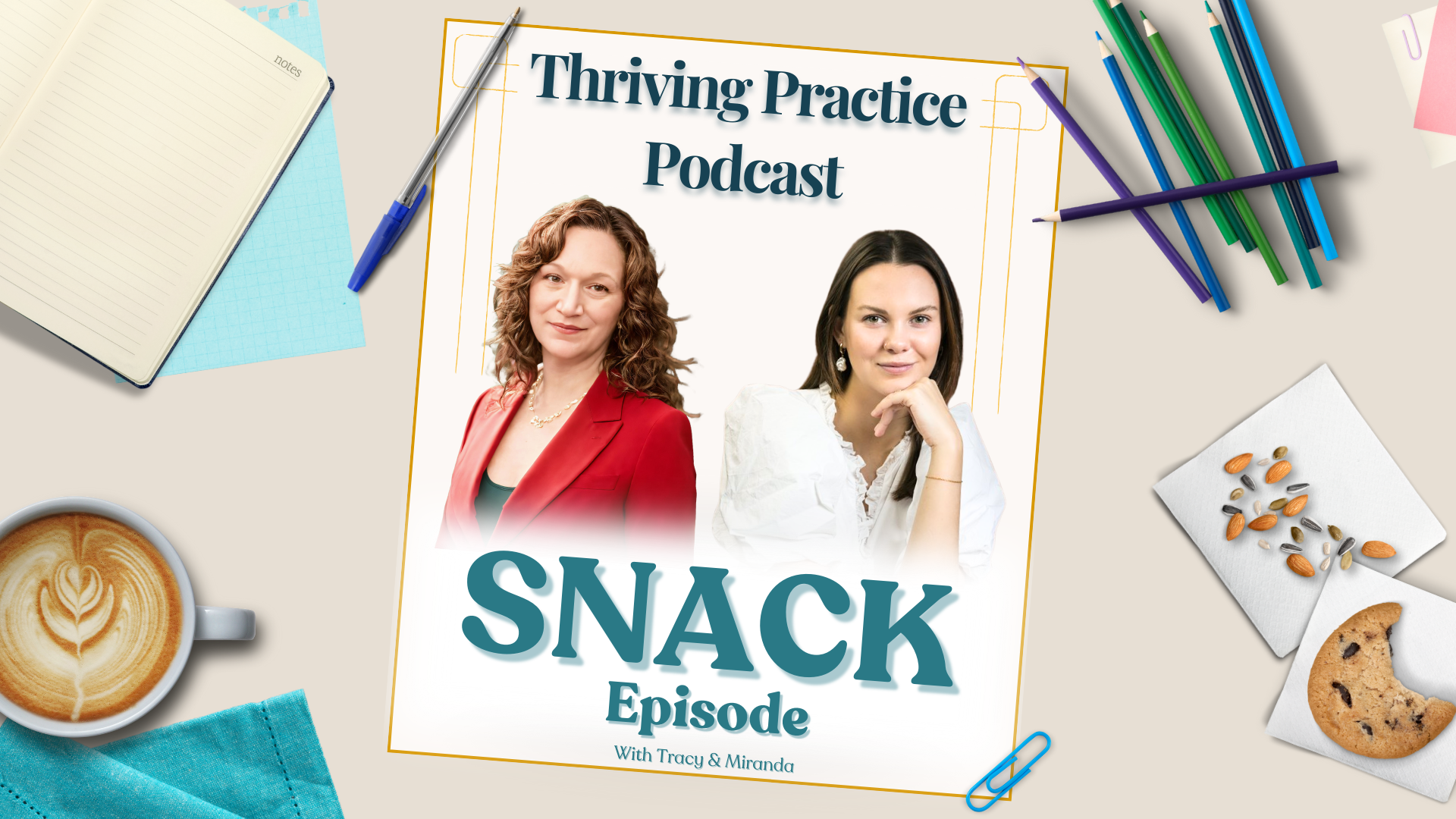
Practice CEO: The Evolution of Independent Healthcare in a Corporate World - Special Snack Episode, EP 176
In this special "snack episode" of the Thriving Practice Podcast, Miranda Dorta interviews Tracy Cherpeski about the evolution of the healthcare industry since 2010. Tracy shares insights on current challenges facing independent practices, emerging business models, and essential skills for practice owners to thrive in today's healthcare landscape. From the concerning trend of private equity acquisitions to promising signs of physicians returning to independent practice, Tracy offers her perspective on where healthcare is heading and how practice owners can adapt.
In this special "snack episode" of the Thriving Practice Podcast, Miranda Dorta interviews Tracy Cherpeski about the evolution of the healthcare industry since 2010. Tracy shares insights on current challenges facing independent practices, emerging business models, and essential skills for practice owners to thrive in today's healthcare landscape. From the concerning trend of private equity acquisitions to promising signs of physicians returning to independent practice, Tracy offers her perspective on where healthcare is heading and how practice owners can adapt.
Main Points:
Private equity acquisition of practices and expansion of larger institutions are concerning trends affecting independent healthcare practices
Early signs suggest some physicians are returning to private practice after experiencing larger institutional settings
Independent single-provider practices face significant financial challenges with high operating costs
Collaborative group practices with multiple providers offer a sustainable model for the future
Practice owners need to embrace their CEO role and focus on strategic leadership, delegation, and resource allocation
Smart investment in marketing and operations is essential for practice growth, despite some resistance
A shift back toward more relational, neighborhood-based practices may be emerging
Notable Quotes:
"I see independent provider practices struggling a lot with an individual, just one provider. So I am seeing a little bit more of a leaning towards a group focus or multiple providers."
"I see practices that maybe are successful but they're not as profitable as they could be."
"Most of our clients do not think of themselves as a CEO first. But if you're a business owner, you are the CEO."
"It's not how you spend your time. If you're spending your time, you're probably wasting it... It's how you invest the resource, the finite resource of your time and energy."
Miranda’s Bio:
Miranda Dorta, B.F.A. (she/her/hers) is the Manager of Operations and PR at Tracy Cherpeski International. A graduate of Savannah College of Art and Design with expertise in writing and creative storytelling, Miranda brings her skills in operations, public relations, and communication strategies to the Thriving Practice community. Based in the City of Oaks, she joined the team in 2021 and has been instrumental in streamlining operations while managing the company's public presence since 2022.
Tracy’s Bio:
Tracy Cherpeski, MBA, MA, CPSC (she/her/hers) is the Founder of Tracy Cherpeski International and Thriving Practice Community. As a Business Consultant and Executive Coach, Tracy helps healthcare practice owners scale their businesses without sacrificing wellbeing. Through strategic planning, leadership development, and mindset mastery, she empowers clients to reclaim their time and reach their potential. Based in Chapel Hill, NC, Tracy serves clients worldwide and is the Executive Producer and Host of the Thriving Practice podcast. Her guiding philosophy: Survival is not enough; life is meant to be celebrated.
Connect With Us:
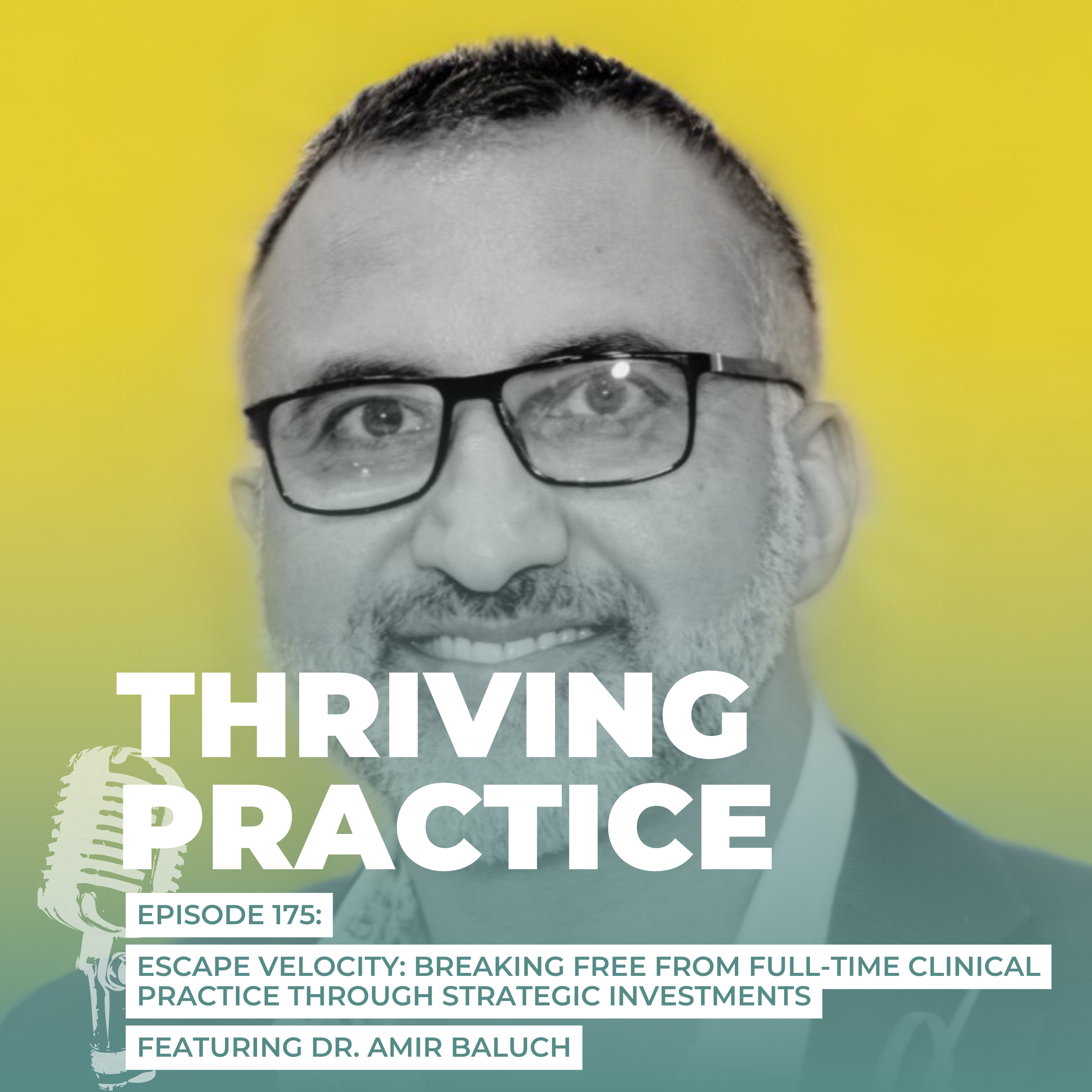
Escape Velocity: Breaking Free from Full-Time Clinical Practice Through Strategic Investments, Featuring Dr. Amir Baluch, EP 175
In this episode, we speak with Dr. Amir Baluch, a semi-retired anesthesiologist and founder of Blue Capital Partners, about alternative investment strategies for healthcare providers. Dr. Baluch shares insights on creating passive income streams, the importance of diversification beyond traditional stocks and bonds, and how strategic investments can "buy back time" for busy practitioners. While much of his financial advice offers valuable perspective for healthcare providers looking to reduce clinical hours and focus more on business development, we also provide important context regarding his comments on real estate investment and political policies that may contradict current research on housing affordability and economic impacts.
In this episode, we speak with Dr. Amir Baluch, a semi-retired anesthesiologist and founder of Blue Capital Partners, about alternative investment strategies for healthcare providers. Dr. Baluch shares insights on creating passive income streams, the importance of diversification beyond traditional stocks and bonds, and how strategic investments can "buy back time" for busy practitioners. While much of his financial advice offers valuable perspective for healthcare providers looking to reduce clinical hours and focus more on business development, we also provide important context regarding his comments on real estate investment and political policies that may contradict current research on housing affordability and economic impacts.
Episode Highlights:
The Power of Passive Income: How investing in alternative assets can create freedom in your schedule and reduce dependence on clinical hours
Diversification Strategy: Why relying solely on traditional investments like stocks may not provide adequate returns in the coming decade
Risk-Adjusted Returns: Understanding how to evaluate investments beyond just the stated return percentage
Time vs. Money: Creating a strategic plan to gradually reduce clinical hours through passive income
Marketing vs. Sales: The critical differences between creating awareness and converting leads
Building a Sellable Practice: The importance of treating your practice like a business that could someday be sold
Producer's Notes:
Two topics discussed in this episode warrant additional context:
Single-Family Home Investments: Institutional investor ownership of single-family homes has grown significantly, with just 32 institutional investors collectively owning 450,000 single-family homes by 2022. Research indicates non-individual investor ownership of single-family rentals increased from 17% in 2001 to 25% in 2021, with projections suggesting institutional investors could control 40% of U.S. single-family rental homes by 2030. This trend is contributing to the housing affordability crisis in many markets.
Policy Impacts: Despite Dr. Baluch's enthusiasm about certain administration policies, current evidence suggests recent tariffs, immigration policies, and cuts to housing programs are adversely affecting housing affordability. Housing experts note that deportation plans could severely impact the construction industry, as immigrants make up approximately 30% of the construction labor force at a time when the National Association of Home Builders projects a need for 2.2 million new skilled construction workers.
Sources:
Government Accountability Office (GAO). "Rental Housing: Information on Institutional Investment in Single-Family Homes." May 2024.
Joint Center for Housing Studies of Harvard University. "8 Facts About Investor Activity in the Single-Family Rental Market." 2024.
MetLife Investment Management. "Housing Market Projections Report." 2023.
The Washington Post. "Investors bought up a record share of homes last year." February 2022.
Center for American Progress. "Americans Recognize Housing Affordability Crisis." October 2024.
National Association of Home Builders. "Understanding Housing Affordability in Today's Market." July 2024.
Bankrate. "How Will Tariffs And Deportations Affect Housing?" April 2025.
Newsweek. "Trump Tariffs Could Slow US Housing Market in 2025." March 2025.
ProPublica. "Trump Says He'll Fight for Working-Class Americans. His First Presidency Suggests He Won't." November 2024.
National Low Income Housing Coalition. "Impacts of Trump Administration Executive Orders." April 2025.
Notable Quotes:
"If you diversify across enough asset classes, you could reduce your risk by 80% and still get the same returns." - Dr. Amir Baluch
"When people don't write it down on a piece of paper, it never happens. They throw money here and there and a couple of investments. But at the end of the year, okay, how much time did that buy you back?" - Dr. Amir Baluch
"Just imagine every dollar bill you have is a little soldier. You just want to put it to work out there." - Dr. Amir Baluch
"If you're not measuring it, it doesn't get managed." - Dr. Amir Baluch
"I think that's the key. Take your time and energy so that you can work on the business instead of being in it all the time." - Host
Bio:
Dr. Amir Baluch is a Wall Street Journal and international bestselling author who retired from anesthesiology in his early 40s to focus on transforming wealth management for healthcare professionals. After experiencing his father's bankruptcy and personal setbacks in 2001, he developed alternative investment strategies that have since helped numerous medical professionals achieve financial independence.
As founder of Blue Capital Partners, Dr. Baluch manages over $700M in projects, specializing in creating passive income through real estate, private equity, and private credit investments. His expertise has been featured on ABC News, Business Insider, and Forbes. He's dedicated to empowering 10,000 healthcare professionals to secure financial freedom through recession-proof investment opportunities that provide not just wealth accumulation but also tax reduction and lifestyle flexibility.
Dr. Baluch brings a unique physician-focused perspective to financial planning, having personally implemented the strategies he teaches to achieve early retirement and build lasting wealth.
Find Dr. Baluch:
Connect With Us:
Thriving Practice Podcast: Practice Leadership - Balancing Professional Demands and Personal Needs - Special Snack Episode, EP 174
In this special "snack episode" of the Thriving Practice Podcast, our Manager of Operations and PR, Miranda Dorta, turns the mic around to interview Tracy Cherpeski, examining the reality of healthcare practice leadership. This candid, unscripted conversation explores how practice owners can achieve sustainable growth without sacrificing personal well-being. Tracy shares her evidence-based approaches to sustainability, effective boundary setting, and the systems that support healthcare practice owners, offering valuable insights on achieving harmony between professional demands and personal needs.
In this special "snack episode" of the Thriving Practice Podcast, our Manager of Operations and PR, Miranda Dorta, turns the mic around to interview Tracy Cherpeski, examining the reality of healthcare practice leadership. This candid, unscripted conversation explores how practice owners can achieve sustainable growth without sacrificing personal well-being. Tracy shares her evidence-based approaches to sustainability, effective boundary setting, and the systems that support healthcare practice owners, offering valuable insights on achieving harmony between professional demands and personal needs.
Main Points:
Well-being vs. Work-Life Balance: Tracy defines well-being as the complete picture encompassing physical, mental, and spiritual health along with business health. She challenges the concept of "balance," suggesting that harmony with one's life goals is more realistic for business owners.
The Importance of Slowing Down: Tracy emphasizes that the first step to protecting time and energy is slowing down to gain "crystal clarity" about personal and professional goals, which allows practice owners to prioritize effectively.
Recognizing When Growth Threatens Well-being: Through reflective questioning and coaching, Tracy helps healthcare professionals recognize patterns that compromise their well-being and guides them to meaningful "aha moments" about self-care.
Addressing Perfectionism and Control: Tracy normalizes the control tendencies common in healthcare entrepreneurs while helping them learn true surrender—not abdication but rather building trust in themselves and their teams.
Notable Quotes:
"Well-being is really the entire picture of the human being's health—physical, spiritual, and mental—as well as the business."
"I just don't believe in balance... Most of us spend more of our waking hours working than we do being home. So right away we're out of balance. So are we in harmony with what we want out of life and the business that we want?"
"The most important piece of the puzzle is to slow down... It's really important to slow down so that we can get really clear. And this is the key to everything—crystal clarity."
"Physicians in particular are trained like never to let anybody see them sweat... It takes a while to sort of crack that facade and allow their real deep humanity to come out."
"When we put it back on them to look at themselves and to trust themselves, it changes the responsibility... They double down then on the responsibility to ensure that their team has what they need so that they can take their hands off of it."
"Most of the time, the desire to control ends up being the Achilles heel... when they recognize that it's probably the cause of a lot of their challenges and energy drains, it becomes a little bit easier to let go."
Miranda’s Bio:
Miranda Dorta, B.F.A. (she/her/hers) is the Manager of Operations and PR at Tracy Cherpeski International. A graduate of Savannah College of Art and Design with expertise in writing and creative storytelling, Miranda brings her skills in operations, public relations, and communication strategies to the Thriving Practice community. Based in the City of Oaks, she joined the team in 2021 and has been instrumental in streamlining operations while managing the company's public presence since 2022.
Tracy’s Bio:
Tracy Cherpeski, MBA, MA, CPSC (she/her/hers) is the Founder of Tracy Cherpeski International and Thriving Practice Community. As a Business Consultant and Executive Coach, Tracy helps healthcare practice owners scale their businesses without sacrificing wellbeing. Through strategic planning, leadership development, and mindset mastery, she empowers clients to reclaim their time and reach their potential. Based in Chapel Hill, NC, Tracy serves clients worldwide and is the Executive Producer and Host of the Thriving Practice podcast. Her guiding philosophy: Survival is not enough; life is meant to be celebrated.
Connect With Us:
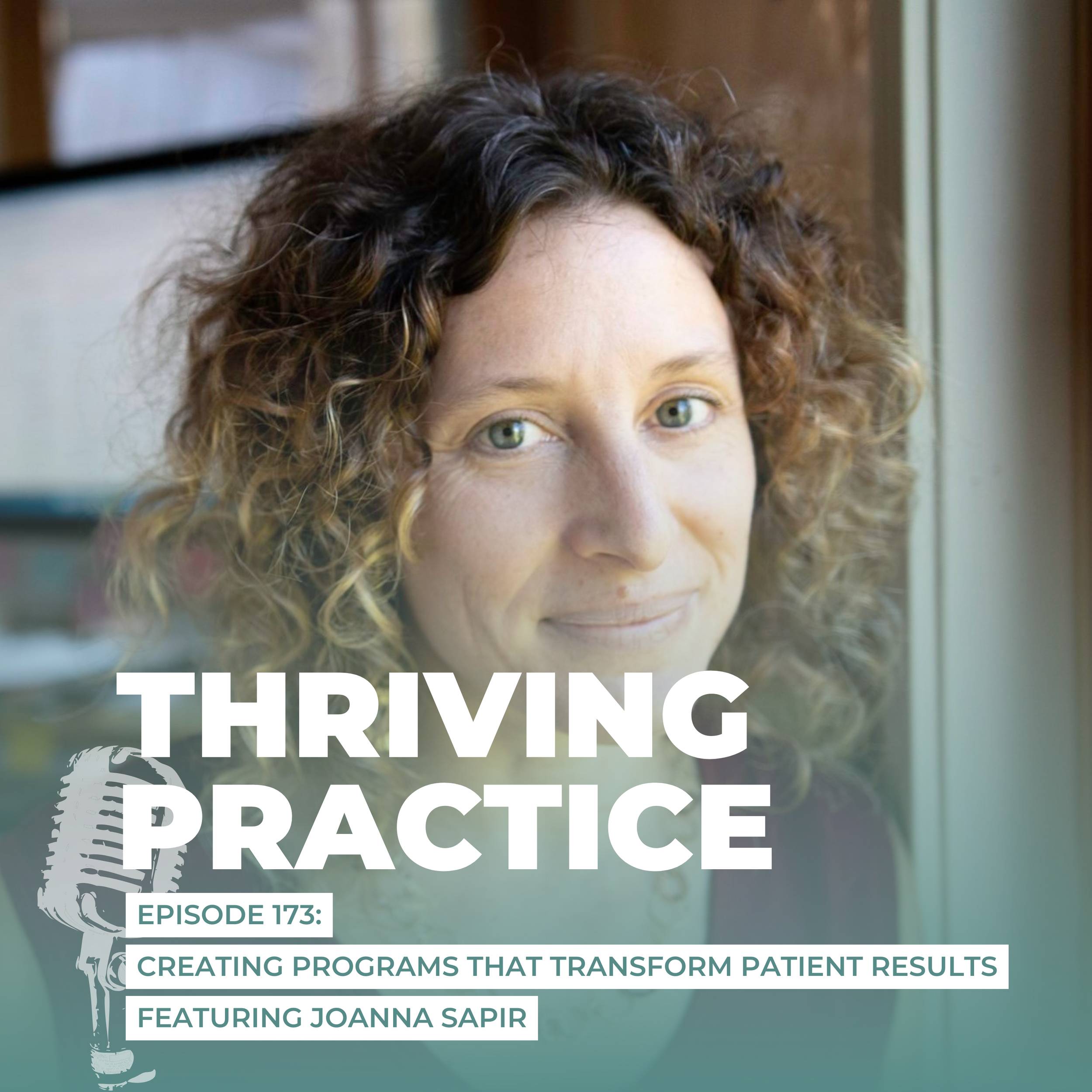
Creating Programs That Transform Patient Results with Joanna Sapir, EP 173
In this episode of the Thriving Practice Podcast, host Tracy Cherpeski interviews Joanna Sapir, a business strategist who specializes in helping wellness practitioners build thriving practices without burning out. Airing during Stress Awareness Month, this conversation explores Joanna's revolutionary approach of "stop selling sessions, start creating programs" that helps practitioners create more predictable business models while delivering better outcomes for clients. Drawing from her own burnout experience as a practice owner, Joanna shares practical strategies for designing effective programs and treatment plans that benefit both practitioners and their clients.
Episode Overview
In this episode of the Thriving Practice Podcast, host Tracy Cherpeski interviews Joanna Sapir, a business strategist who specializes in helping wellness practitioners build thriving practices without burning out. Airing during Stress Awareness Month, this conversation explores Joanna's revolutionary approach of "stop selling sessions, start creating programs" that helps practitioners create more predictable business models while delivering better outcomes for clients. Drawing from her own burnout experience as a practice owner, Joanna shares practical strategies for designing effective programs and treatment plans that benefit both practitioners and their clients.
Key Highlights
The Burnout Reality: How Joanna's emergency room visit within her first year of business became a wake-up call to reimagine how wellness practices can operate
Paradigm Shift: The fundamental difference between selling individual sessions versus creating comprehensive healing journeys
Business Benefits: How programs eliminate the financial impact of no-shows and create predictable, sustainable revenue
Client Outcomes: Why structured programs lead to better compliance, deeper healing, and more satisfied clients
Implementation Framework: Practical steps for designing programs that align with your modality and client needs
Transition Strategies: How to introduce programs to existing clients without disrupting relationships
Sales Process: Creating authentic enrollment conversations that align with healing values
Topics Covered
The profound difference between "packages" (discounted sessions) and true treatment programs
Front-end and back-end program structures for different practitioner types
How programs provide essential "guardrails" that keep clients on track with their health goals
Why selling sessions creates unpredictable income and client progress
The iterative approach to refining your programs over time
Creating systems that allow practitioners to "just show up and do their best work"
How program-based practices can scale more effectively
Featured Examples
Joanna shares two detailed program models:
Physical Practitioner Model: A body worker's 6/9/12-week assessment-based treatment plans for pain relief and injury recovery
Therapeutic Practitioner Model: A nervous system specialist's six-month cohort-based program for disordered eating with group and individual components
Resources Mentioned
Free Systems Guide: Three essential business systems for wellness practitioners:
Lead generation system
Lead capture system
Sales process system
Last week's solo episode on physician wellness and burnout prevention
Joanna's comprehensive business development programs for wellness practitioners
Episode Quotes
"Stop selling sessions and start creating programs and treatment plans." - Joanna Sapir
"When you have the systems and structures in place, you get to just show up and do your best work with the client." - Joanna Sapir
"If you don't have a business that's making money that's sustaining you sufficiently, you have an incredibly expensive hobby." - Tracy Cherpeski
"It's not necessarily about there being some people who are committed and some who aren't. It's actually about the boundaries you put in place, the guardrails that keep people in the lane." - Joanna Sapir
"You can have a beautifully authentic, meaningful, connected sales process that enrolls your patients or your clients in these programs... it's a win-win-win all around." - Joanna Sapir
Bio:
Joanna Sapir is a business strategist who helps wellness practitioners build thriving practices without burning out. Joanna specializes in helping practitioners move from the unpredictable cycle of selling individual sessions to creating comprehensive programs and treatment plans that provide better client outcomes while creating sustainable, predictable income. Her clients include acupuncturists, bodyworkers, movement specialists, and practitioners who combine multiple healing modalities.
Through her work, Joanna helps wellness professionals properly price and package their services, develop steady predictable income, clarify their unique vision and voice, and create systems that allow their businesses to run smoothly without constant hands-on management. Her ultimate goal is to help practitioners create the freedom and fulfillment that attracted them to healing work in the first place, while building businesses that truly support their desired lifestyle.
Based in Central Mexico (as of this recording), Joanna continues to expand her impact by helping practitioners worldwide transform their approach to business and client care.
Find Joanna:
Link to free resource https://joannasapir.com/lp/systems/
Connect With Us:
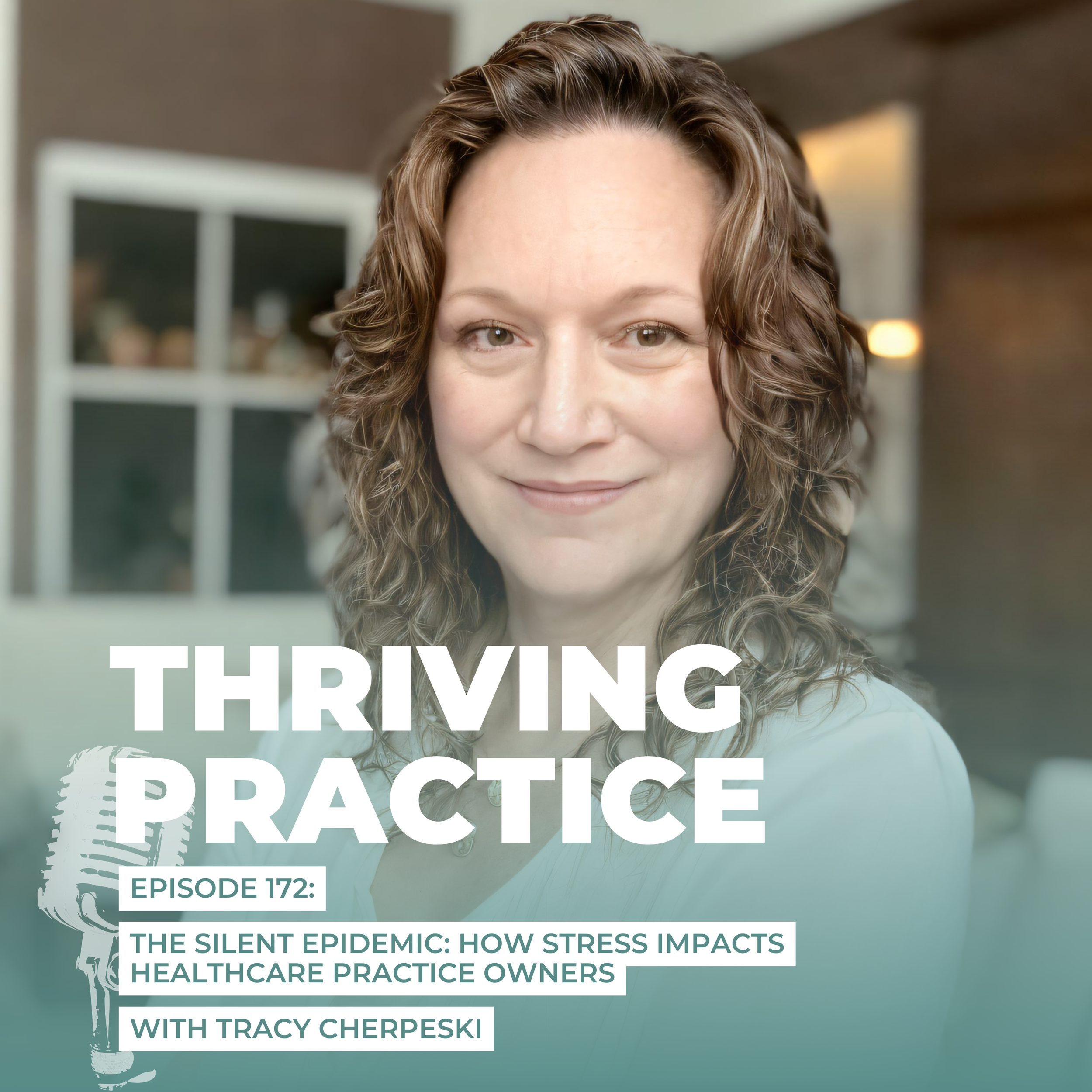
The Silent Epidemic: How Stress Impacts Healthcare Practice Owners, EP 172
In this special solo episode for Stress Awareness Month, host Tracy Cherpeski shares insights from the Sonoma-Mendocino Lake County Healthcare Expo and Conference on physician wellness and burnout. Drawing from her 15+ years of consulting experience with healthcare practices, Tracy discusses how the unique challenges faced by independent practitioners affect both personal wellbeing and business success.
In this special solo episode for Stress Awareness Month, host Tracy Cherpeski shares insights from the Sonoma-Mendocino Lake County Healthcare Expo and Conference on physician wellness and burnout. Drawing from her 15+ years of consulting experience with healthcare practices, Tracy discusses how the unique challenges faced by independent practitioners affect both personal wellbeing and business success.
Key Highlights
The Burnout Crisis: 63% of physicians report at least one symptom of burnout according to Mayo Clinic research
Double Impact: Practice owners face both clinical stress and business ownership pressures
Strengths Becoming Weaknesses: How the qualities that make great healthcare providers (service orientation, high standards, problem-solving abilities) can undermine personal wellbeing
Business Consequences: How unmanaged stress directly impacts practice revenue, staff retention, patient experience, and clinical decision-making
Practical Solutions: Stress management strategies specifically designed for independent practitioners and small practice owners
Topics Covered
The unique stress patterns observed in healthcare practitioners vs. other professionals
How to recognize early warning signs of burnout in yourself and colleagues
The measurable business costs of practitioner stress
Practical interventions that serve both wellbeing and business optimization
Why institutional wellness approaches often fail independent practitioners
Featured Framework
Tracy's coaching approach for practice owners includes:
Eight-area life assessment to identify imbalances
"Threshold interventions" - small changes at critical junctures of the day
Environmental modifications to reduce stress triggers
Intentional calendaring and boundary-setting
Integration of wellbeing strategies with business optimization
Resources Mentioned
Free Burnout Prevention Guide: Available at PracticeSuccess.co/resources (scroll to bottom of page), WHO's official burnout definition and 12-stage progression model
Episode Quotes
"In healthcare, your most important business asset isn't your equipment, your location, or even your patient list—it's you. And when you're operating from a place of chronic stress, every business metric eventually suffers."
"Addressing practitioner stress isn't just a wellness nicety—it's a business imperative with measurable ROI. When practice owners invest in their wellbeing, they're making one of the most significant business investments possible."
"We take the approach of building one's business around the life they want to live, not the other way around."
Connect With Us:
Stop Working for Free: A CFO's Guide to Medical Practice Profitability Featuring Susanne Mariga, EP 171
In this essential episode, we dive deep into the Profit First methodology and its game-changing impact on medical practices. Susanne Mariga, fractional CFO and co-author of "Profit First for Minority Business Enterprises," shares how implementing a simple five-bank-account system can create intentional profitability while improving patient care. This conversation addresses the critical gap in business education for medical professionals and offers practical solutions for building sustainable, profitable practices.
In this essential episode, we dive deep into the Profit First methodology and its game-changing impact on medical practices. Susanne Mariga, fractional CFO and co-author of "Profit First for Minority Business Enterprises," shares how implementing a simple five-bank-account system can create intentional profitability while improving patient care. This conversation addresses the critical gap in business education for medical professionals and offers practical solutions for building sustainable, profitable practices.
Key Points:
The traditional accounting equation (revenue - expenses = profit) often leads to practice owners working for free
How the Profit First system creates intentional profitability through designated bank accounts
Why profitable practices deliver better patient care and attract top talent
The importance of building business value for eventual sale or retirement
Practical steps for implementing Profit First, starting with small, manageable changes
How automated banking systems can help enforce profitability
The connection between practice profitability and work-life balance
Resource Highlight: "Profit First for Minority Business Enterprises" by Susanne Mariga and Mike Michalowicz
Each book purchase supports girls' education in Zimbabwe through Hope Worldwide
Includes specific strategies for implementing Profit First
Features tax strategy and pricing guidance for business owners
Susanne’s Bio:
Susanne Mariga is a CPA and Fractional CFO specializing in high net worth tax strategies for 7 and 8 figure entrepreneurs using the Profit First System.
Susanne is the CEO of The Mariga Group which is a Goldman Sachs 10,000 Small Business, the 2021 Profit First Professional Firm Of The Year, and a recipient of the 2011 Houston Minority Supplier Development E-10 Award. Susanne has been featured in the Houston Business Journal, MBE Magazine, and in a variety of other media outlets. She is the author of Kirkus reviewed and Publisher’s Weekly’s Editor’s Pick, Profit First For Minority Business Enterprises which was written in collaboration with Mike Michalowicz, under the Profit First brand. She is the host of the Profit Talk Podcast.
Before founding her own firm, Susanne worked at Arthur Andersen LLP, as well as one of the Big 4 firms, KPMG. Combining her industry knowledge with her own experience of growing a small business has allowed Susanne to help her clients design unique, profit-first based business plans that ensure success and long-term financial stability.
As a Certified Profit First Professional (PFP) at the Mastery Level, she is passionate about helping entrepreneurs maximize their revenue, grow their business, and save dollars through sound tax strategies.
Find Susanne:
Profit First for Minority Business Enterprises
Connect With Us:
Beyond the Agenda: Creating Psychological Safety in Group Facilitation - Special Snack Episode, EP 170
In this special "snack episode" of the Thriving Practice Podcast, Miranda Dorta turns the tables and interviews Tracy Cherpeski about the human side of group leadership. This candid, unscripted conversation explores Tracy's insights on facilitation, psychological safety, and the subtle dynamics that shape group interactions. Tracy shares personal stories and practical wisdom gained from years of experience working with healthcare providers and corporate clients.
In this special "snack episode" of the Thriving Practice Podcast, Miranda Dorta turns the tables and interviews Tracy Cherpeski about the human side of group leadership. This candid, unscripted conversation explores Tracy's insights on facilitation, psychological safety, and the subtle dynamics that shape group interactions. Tracy shares personal stories and practical wisdom gained from years of experience working with healthcare providers and corporate clients.
Episode Highlights:
Tracy shares a humbling learning moment from her earlier facilitator days when a communication mishap taught her to prioritize understanding her audience over sticking to her agenda
The importance of improv techniques as Tracy's most valuable facilitation tool for creating authentic learning moments
How psychological safety feels in the body - the absence of tension and the presence of ease
Creating "the least restrictive learning environment" as a cornerstone of effective facilitation
Tracy's excitement about the growing emphasis on psychological safety and wellness in professional settings post-COVID
Notable Quotes:
"Don't be afraid to pause the agenda in order to really understand the people that are your audience."
"I think it's really important to come in as a facilitator with the intention of creating the least restrictive learning environment. If we're here to learn, then we need to set the tone for the learning."
Connect With Us:
Numbers, Notes, and Confidence: A Musical CFO's Approach to Practice Growth Featuring Danielle Hendon, EP 169
In this episode, we dive into the world of financial clarity and confidence with Virtual CFO Danielle Hendon. From her unexpected journey from opera singer to CPA, to her mission of transforming business owners' relationship with their numbers, Danielle shares valuable insights about what it really means to be in command (not just in control) of your business finances.
In this episode, we dive into the world of financial clarity and confidence with Virtual CFO Danielle Hendon. From her unexpected journey from opera singer to CPA, to her mission of transforming business owners' relationship with their numbers, Danielle shares valuable insights about what it really means to be in command (not just in control) of your business finances.
Key Episode Highlights:
- What a fractional CFO does and why it matters for practice owners
- The critical difference between being "in control" vs "in command" of your business
- Why understanding your numbers is about more than just tracking expenses
- How to move from financial anxiety to confidence in your decision-making
- Common challenges highly credentialed professionals face when running a business
- The importance of having data-backed decisions for business growth
- Simple ways to start understanding the story your numbers are telling
- Why splitting up your revenue streams can transform your financial clarity
- How proper financial support can help prevent burnout
Memorable Quote:
"Your time is going to make you so much more money in your zone of genius than trying to figure this piece out."
Key Takeaway:
A budget isn't meant to restrict you - it's a roadmap that guides you toward your business goals. Understanding your numbers doesn't mean giving up control; it means gaining the confidence to make better decisions for your practice's future.
Danielle’s Bio:
Danielle is a CPA and Virtual CFO who helps small business owners maximize their profits and personal income. With over a decade of corporate finance experience, she founded 4 Corners CFO after witnessing firsthand how financial expertise could make or break a business. She translates complex financial concepts into actionable strategies, enabling entrepreneurs to make data-driven decisions, establish sustainable growth, and pay themselves appropriately.
Through her Breakthrough, Focused, and Comprehensive CFO services, she provides scalable financial guidance - from foundational support for emerging six-figure businesses to full-service accounting and strategic planning for established entrepreneurs. Her mission is helping business owners move from burnout to abundance by understanding and intentionally growing their profits.
Find Danielle:
Connect With Us:
From Survival to Mission: A Founder's Evolution in Healthcare Leadership - Special Snack Episode, EP 168
In this special "snack episode" of the Thriving Practice podcast, host Miranda Dorta interviews Tracy Cherpeski about her journey in building a mission-driven company. Tracy shares her unexpected path into coaching, beginning as a necessity during a major life transition with young children, and evolving into a focused healthcare provider coaching practice. The conversation reveals how her initial desire for career flexibility transformed into a larger vision of creating systemic change in healthcare, while offering insights into leading a mission-driven organization.
In this special "snack episode" of the Thriving Practice podcast, host Miranda Dorta interviews Tracy Cherpeski about her journey in building a mission-driven company. Tracy shares her unexpected path into coaching, beginning as a necessity during a major life transition with young children, and evolving into a focused healthcare provider coaching practice. The conversation reveals how her initial desire for career flexibility transformed into a larger vision of creating systemic change in healthcare, while offering insights into leading a mission-driven organization.
Key Points:
Tracy's journey into coaching was unexpected, transitioning from international work and consulting after a major life change
The company's evolution from a general coaching practice to a specialized healthcare provider focus
The importance of staying committed to your mission, even when it feels "weird" (which Tracy notes comes from the word "supernatural")
How the company's vision expanded from seeking work-life flexibility to creating systemic change in healthcare
The value of remaining deeply connected to client work while maintaining professional boundaries
The importance of fostering team creativity and allowing new perspectives to shape the company's growth
Notable Quote: "Self disclosure - if you ever want to learn what you're really made of, start a business." - Tracy Cherpeski
Connect With Us: