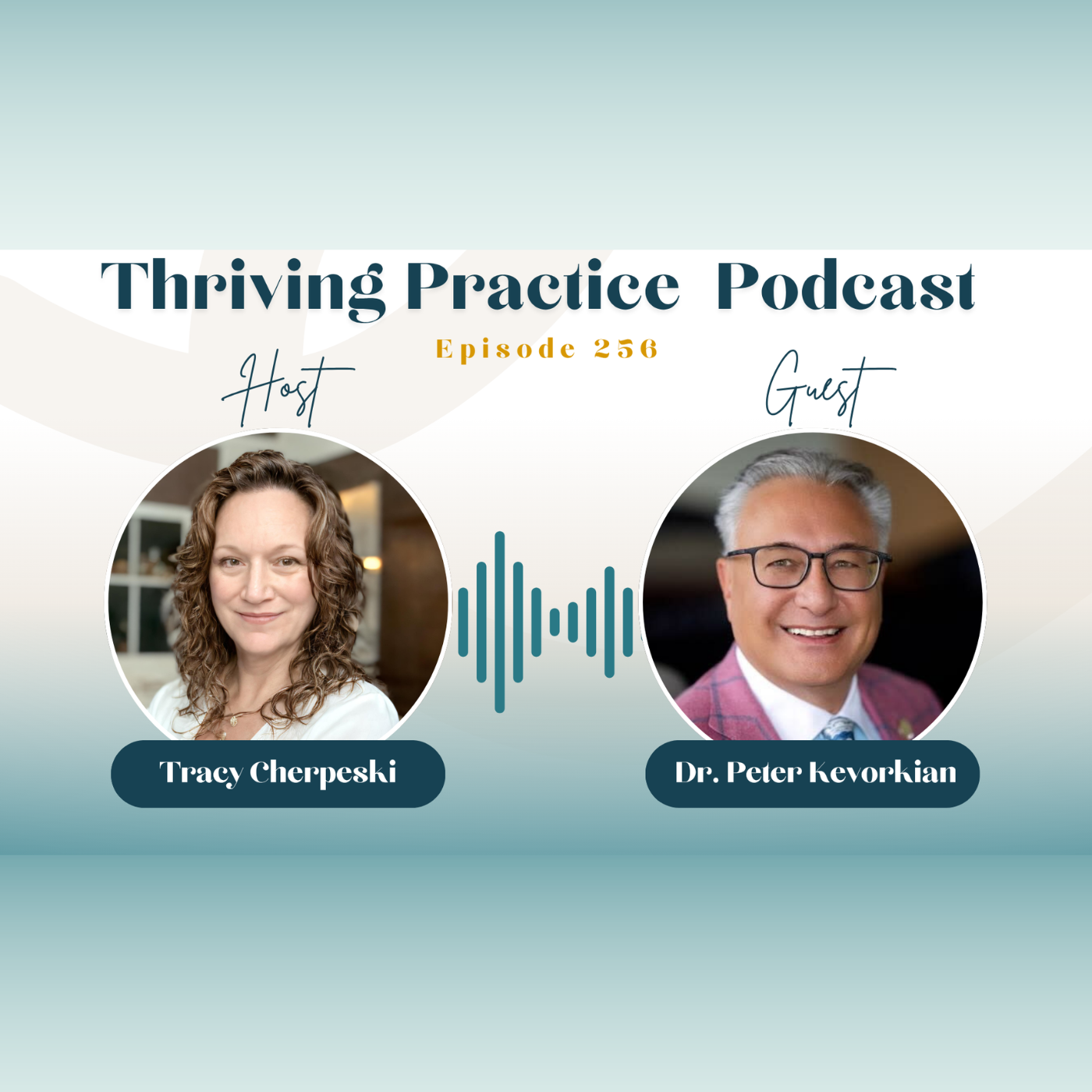
Keep the Main Thing the Main Thing: Dr. Peter Kevorkian on Purpose-Driven Practice and Burnout Prevention, EP 256
What does it look like when a healthcare practice owner stays connected to their purpose for over four decades — and then pours everything they've learned into shaping the next generation? In this episode of The Thriving Practice Podcast, Tracy Cherpeski sits down with Dr. Peter Kevorkian, President of Life Chiropractic College West and a chiropractor who spent 42 years in private practice, to talk about the one thing that sustainable, burnout-proof practice ownership comes down to: keeping the main thing the main thing.
What does it look like when a healthcare practice owner stays connected to their purpose for over four decades — and then pours everything they've learned into shaping the next generation? In this episode of The Thriving Practice Podcast, Tracy Cherpeski sits down with Dr. Peter Kevorkian, President of Life Chiropractic College West and a chiropractor who spent 42 years in private practice, to talk about the one thing that sustainable, burnout-proof practice ownership comes down to: keeping the main thing the main thing.
Dr. Peter has spent his career as a quiet voice of conscience for healthcare practitioners — reminding them that they entered this work to serve people, not to be consumed by coding, compliance, and insurance bureaucracy. His perspective on building a profitable, values-aligned private practice without losing yourself in the process is something every practice owner navigating the tension between business and calling needs to hear.
Whether you're rethinking your care model, considering dropping insurance panels, or simply trying to remember why you started, this conversation offers both grounding and a practical path forward.
Key Takeaways
Purpose is the antidote to burnout. When your actions and words fall out of alignment with your values, it creates a slow erosion — Dr. Peter calls it being "rotted from the inside out." Reconnecting to your why isn't soft advice; it's a survival strategy.
The business of healthcare can crowd out the heart of it. Coding, compliance, billing, and HR pull practitioners away from the patient relationship that drove them into the field. Naming this pattern is the first step to resisting it.
Patient empowerment is good medicine and good business. Dr. Peter built a practice where over 90% of patients were self-pay, not by being inaccessible, but by making care affordable and helping people understand why investing in their own health was worth it.
You can operate outside the system ethically and profitably. He never turned a patient away who truly wanted care — instead he created an "angel plan" that tied reduced fees to community service, keeping care accessible without sacrificing sustainability.
Everyone wants to feel heard. Dr. Peter's final wisdom is disarmingly simple: every human being — patient, employee, student — wants to feel heard, significant, and loved. Leading from that understanding changes everything.
Q&A
Why do so many healthcare practice owners burn out?
Dr. Peter points to the gap between why practitioners enter the field and what the business of healthcare actually demands from them. Most people go into healthcare driven by a desire to serve and help people thrive — but once they're in practice, they get pulled into coding, compliance, billing, HR, and all the operational machinery that comes with running a business. When the daily work stops reflecting your values and your purpose, the disconnection compounds over time. As Dr. Peter puts it, doing and saying things that aren't aligned to who you are and what your life purpose is — that rots people away from the inside.
How did Dr. Peter build a profitable practice outside the insurance system?
More than 90% of Dr. Peter's patients over the course of his 42-year practice were self-pay. He made care affordable, structured his fees to reflect what people could realistically manage, and was transparent about why. For patients who genuinely couldn't afford his rates, he created what he called an "angel plan" — a sliding scale arrangement where the remaining balance was offset by a commitment to community service. His view: money is just energy, and there are many forms of exchange. This approach let him run a thriving, values-aligned practice while never turning anyone away who truly wanted care.
What does patient empowerment actually look like in practice?
Dr. Peter describes a fundamental shift in how he thought about his role: not as the authority who tells patients what to do, but as a guide who helps them make informed decisions about their own bodies. He pushed back on the idea of the patient who packages up their body and hands it to the doctor to fix. Instead, his job was to give people information, ask what they wanted, and meet them where they were — even if that meant finding exercises they actually enjoyed rather than prescribing a routine they'd never stick to. The result, as Tracy confirms from her own experience with a collaborative provider, is dramatically higher compliance and a far more durable patient relationship.
What role does creativity play in healthcare leadership?
Dr. Peter draws an unexpected parallel between Walt Disney's imagineers and the kind of leadership healthcare needs. What inspired him about Disney wasn't the brand — it was the commitment to letting human creativity operate outside the constraints of convention, looking at problems from different angles and building experiences no algorithm could anticipate. He believes that's the one human capacity that will never be replicated by AI, and it's precisely what practice owners need to solve the complex, human problems they face every day.
Episode Highlights
Dr. Peter's 42-year private practice journey and what led him to leave it for academia
Why he describes himself as a "voice of conscience" for chiropractors throughout his career
The critical difference between a caregiver and a businessperson — and what happens when they collide
Why Dr. Peter believes third-party payers have fundamentally distorted the healthcare system
The "angel plan": how he made care accessible without undermining his business
Why patient compliance goes up when patients feel genuinely heard and empowered
Disney's imagineers as a model for creative leadership in healthcare
His simple, profound final message: everyone wants to feel heard, significant, and loved
Memorable Quotes
"Sometimes we lose healthcare in the business of healthcare."
— Dr. Peter Kevorkian
"When your actions and your words aren't aligned to your values and principles, that rots people away from the inside."
— Dr. Peter Kevorkian
"You can live outside the system and do it honestly, ethically, and in a compassionate way."
— Dr. Peter Kevorkian
"More than anything else, everyone wants to feel heard. They want to feel significant. And more than anything else, they want to be loved."
— Dr. Peter Kevorkian
"The system is really a sick care system. We give people benefits for having a condition — and virtually nothing to empower their body to become healthier and stronger."
— Dr. Peter Kevorkian
Dr. Peter Kevorkian has spent over four decades reminding healthcare practitioners of something that's easy to forget in the weeds of running a practice: you are here to serve people, and everything else is in service of that. If the business of healthcare has started to crowd out the heart of it for you, this episode is a good place to start finding your way back. Visit lifewest.edu to learn more about Dr. Peter's work and Life Chiropractic College West, and explore thrivingpracticecommunity.com for resources to help you build a practice that sustains you as much as it serves your patients.
Guest Bio:
Dr. Peter Kevorkian is the 4th President of Life West Chiropractic College and a chiropractor with over 40 years of practice, teaching, and global leadership experience. Known for his philosophy of Give. Do. Love. Serve., he has mentored thousands of practitioners, served on the boards of the ICPA and Sherman College, and spent decades helping families — and the practitioners who serve them — live with greater purpose, clarity, and joy.
Find Dr. Kevorkian:
Website: Lifewest.edu
See Where Your Practice Stands: Take our Practice Growth Readiness Assessment
Connect With Us:
Schedule Strategy Session with Tracy
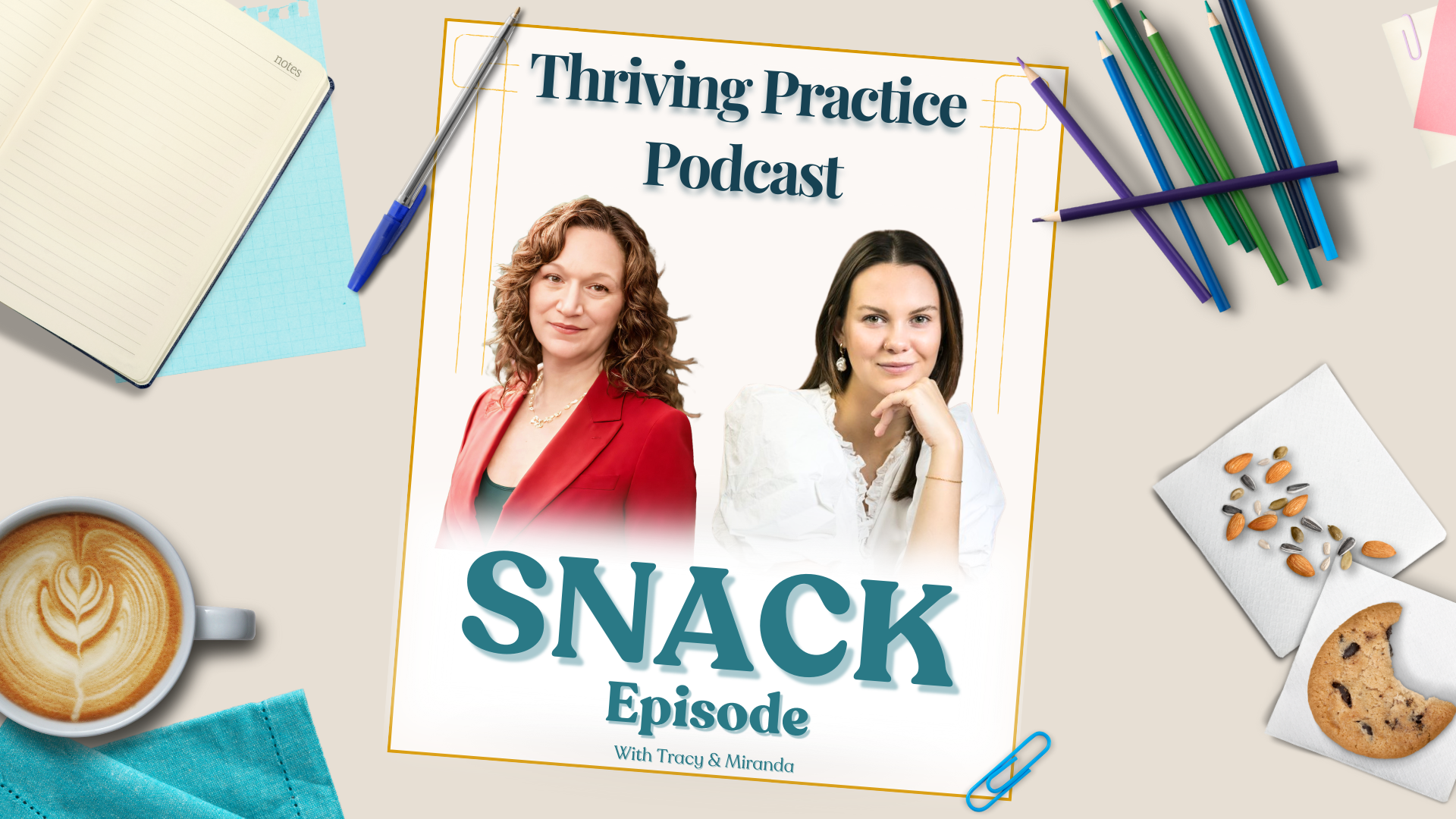
What Med School Never Taught You About Running a Practice—And How to Close the Gap – A Special Snack Episode, EP 255
Medical school taught you how to care for patients. It didn't teach you how to run a practice. In this SNACK episode, Miranda Dorta interviews host Tracy Cherpeski about the business knowledge gap that's quietly costing independent practice owners—and what you can do about it whether or not you have a business degree.
Most healthcare practice owners spent years—sometimes decades—in training to become excellent clinicians. But here's the gap no curriculum covers: how to actually run a practice as a business. In this SNACK episode of The Thriving Practice Podcast, Miranda Dorta flips the mic on host Tracy Cherpeski to explore what the absence of formal business training really costs independent practice owners—and what to do about it, with or without an MBA.
Tracy, who holds an MBA herself, makes a point that may surprise you: formal business education isn't a prerequisite for practice ownership success. What matters more is the willingness to shift perspectives—to stop examining your practice through a clinical lens and start examining it through a leadership one. That shift, she argues, is where the real work begins.
Whether you're a solo provider who's been winging the business side, a practice owner stuck in operational overwhelm, or a clinician curious about what sustainable leadership actually looks like, this episode offers grounded, practical insight you can act on immediately.
Key Takeaways
Business knowledge matters more than a business credential. A business degree isn't required to run a successful practice. Tracy explains why formal credentials matter less than most practice owners think—and what actually moves the needle.
The clinician hat and the CEO hat are not interchangeable. Clinicians are trained to be linear, proof-driven, and evidence-based. Those are clinical strengths—but they can work against decisive business leadership.
Delegation is not abdication. Handing off tasks and responsibilities is a sign of strong leadership, not lost control.
Business leadership requires a different relationship with uncertainty. Unlike clinical decision-making, running a practice requires trusting the process once due diligence is done. That capacity for informed leaps of faith is a skill that has to be developed intentionally.
Pause before you accelerate. When you feel behind on the business side, the most effective first step isn't moving faster—it's getting clear on what actually needs attention.
Q&A
What's the most critical business skill that healthcare practice owners are missing?
It's not strategy—it's perspective. Many practice owners approach business decisions the same way they approach clinical problems: seeking linear proof, extensive data, and certainty before acting. In business, that approach can create decision paralysis. The shift is learning when the data is sufficient and taking a forward-moving step even without perfect certainty.
Do practice owners really need an MBA to run a successful practice?
No—and Tracy (who has one) says so directly. For most private practice owners, formal credentials aren't necessary. More impactful options include finding a mentor who's succeeding on the business side, taking a targeted interest in one area of business at a time, or working with a consultant or coach who brings deep practical experience.
What does the clinician-to-practice-leader shift actually look like?
Tracy describes more ease—not necessarily easy, but more of it. Decision-making becomes faster. Delegation becomes almost automatic. The friction between clinical identity and business identity softens. The joy factor increases, and stress symptoms start to decrease. It's a significant shift—and she says it's genuinely remarkable to witness.
Episode Highlights
Why more physicians are pursuing MBAs—and what it signals about the state of practice ownership
The difference between business education in large integrated systems versus independent private practice
Why business is business regardless of industry—and why that's actually good news
How the data-driven clinical mindset can slow down business decisions
"Delegation is not abdication": breaking down one of the most important mindset shifts for practice owners
What the clinician-to-practice-leader shift actually looks and feels like in real life
The most practical first step for practice owners who feel behind on the business side
Memorable Quotes
"Delegation is not abdication." — Tracy Cherpeski
"Business is business is business regardless of the industry. A package of business is a package of business, period, full stop." — Tracy Cherpeski
"Take off the clinician's hat, put it on its shelf, buff it, shine it, make it pretty—and then put on your CEO hat and look at business as a business person." — Tracy Cherpeski
"Don't accelerate on something. Pause. Get a lay of the land." — Tracy Cherpeski
"There's a tremendous amount of trusting the process once you put something in motion and taking informed, data-backed leaps of faith. And that's a big challenge for medical practice business owners." — Tracy Cherpeski
The business of running a practice is learnable—and you don't have to go back to school to learn it. Tracy's first recommendation isn't a course or a credential: it's a pause. Get honest about what's creating the most friction, get it out of your head and onto paper, and address it one step at a time. When you're ready for more support, visit practicesuccess.co and thrivingpracticecommunity.com to explore resources built specifically for practice owners who are serious about building something sustainable.
Is your practice growth-ready? See Where Your Practice Stands: Take our Practice Growth Readiness Assessment
Miranda’s Bio:
Miranda Dorta, B.F.A. (she/her/hers) is the Manager of Operations and PR at Tracy Cherpeski International. A graduate of Savannah College of Art and Design with expertise in writing and creative storytelling, Miranda brings her skills in operations, public relations, and communication strategies to the Thriving Practice community. Based in the City of Oaks, she joined the team in 2021 and has been instrumental in streamlining operations while managing the company's public presence since 2022.
Tracy’s Bio:
Tracy Cherpeski, MBA, MA, CPSC (she/her/hers) is the Founder of Tracy Cherpeski International and Thriving Practice Community. As a Business Consultant and Executive Coach, Tracy helps healthcare practice owners scale their businesses without sacrificing wellbeing. Through strategic planning, leadership development, and mindset mastery, she empowers clients to reclaim their time and reach their potential. Tracy designs and delivers CME-accredited wellness retreats and workshops in partnership with medical associations, bringing burnout prevention and sustainable practice management to physicians nationwide. Based in Chapel Hill, NC, Tracy serves clients worldwide and is the Executive Producer and Host of the Thriving Practice podcast. Her guiding philosophy: Survival is not enough; life is meant to be celebrated.
Connect With Us:
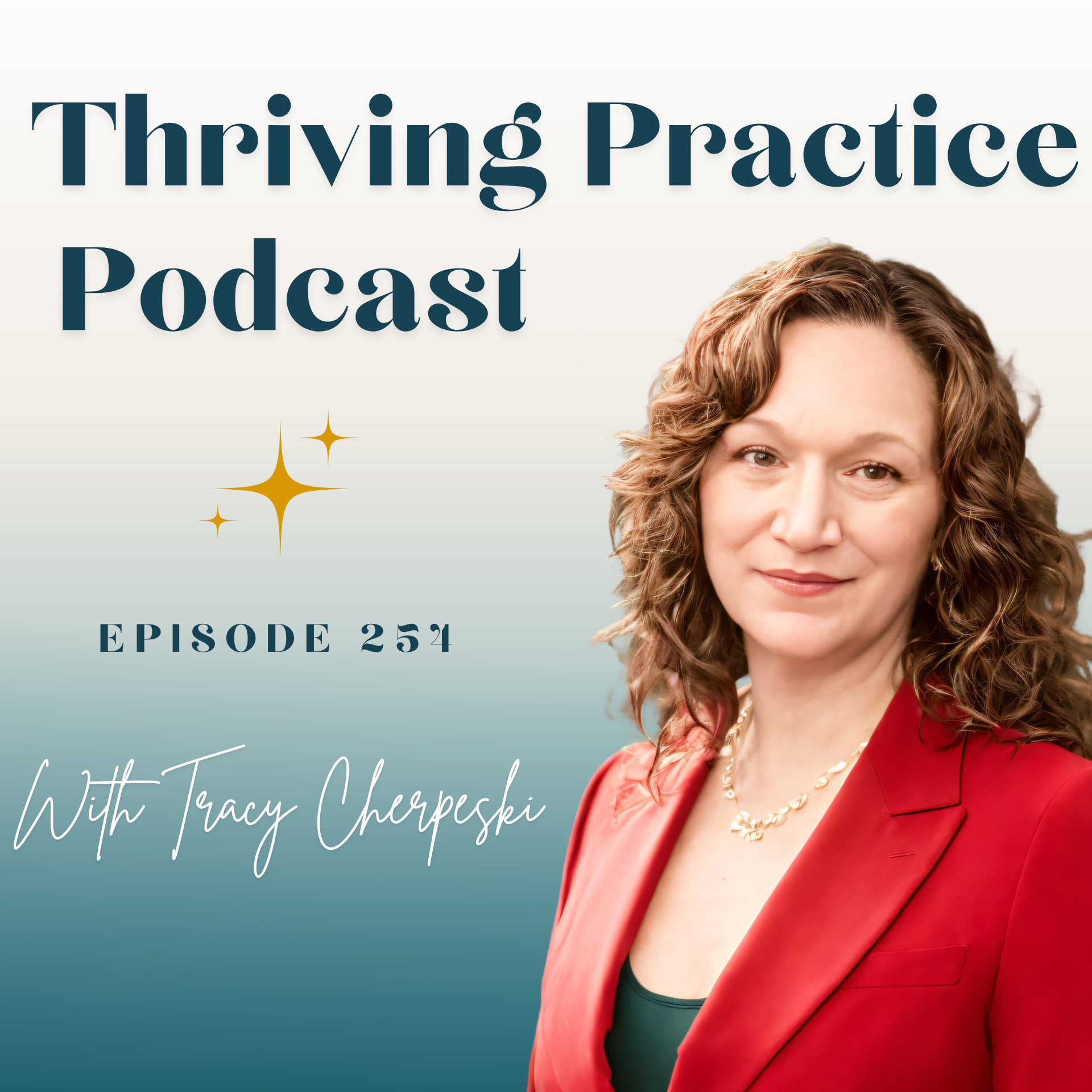
The Diagnostic Eye: Reading Your Practice's Recurring Problems, EP 254
There's something in your practice that keeps coming back. You handle it, move on — and there it is again. In this solo episode of The Thriving Practice Podcast, Tracy Cherpeski reframes every recurring problem in your practice: those problems aren't malfunctions. They're messages.
There's a problem in your practice that keeps coming back. Maybe it's a recurring staff conflict, a billing breakdown, or an operational gap you've already fixed at least twice. You handle it, move on — and there it is again. If you've ever stood in front of that moment and wondered what you're missing, this episode is for you.
In this solo episode of The Thriving Practice Podcast, Tracy Cherpeski introduces a mindset shift that reframes every recurring problem in your practice: what if those problems aren't malfunctions? What if they're messages? Drawing on her background in regenerative gardening and her work coaching independent healthcare practice owners, Tracy makes the case that the diagnostic intelligence you use inside the exam room belongs in the business side of your practice — and most practice owners have simply never been invited to bring it there.
This is part two of a two-part mindset series. Part one — Episode 247, From the Weeds to the Horizon — introduced the altitude shift: learning to zoom out from day-to-day operations and see your practice from a wider view. Today's episode is about what you do once you're up there. What you see — and how to read it. Whether you're dealing with persistent team friction, chronic operational breakdowns, or the kind of exhaustion that rest doesn't seem to fix, this framework gives you a starting place that's different from anything you've tried before.
Key Takeaways
Recurring problems aren't evidence of failure — they're data. Your practice communicates through patterns, and learning to read them is a leadership skill.
The diagnostic intelligence you use in patient care translates directly to practice management. Most practice owners haven't been invited to bring it out of the exam room.
Three categories of practice problems — operational friction, team dynamics, and persistent personal depletion — each signal something different and require different responses.
The Two-Week Data Log is a simple tool that shifts you from reactive problem-solver to pattern-reader, often revealing more in two weeks than months of individual fixes.
Altitude (zooming out) combined with a diagnostic eye equals leadership. Without both, you're either drowning in problems or avoiding them.
Q&A
Why do the same problems keep showing up in my practice?
Most recurring practice problems are symptoms of something structural — a missing system, a role that's outgrown its design, or a care model misaligned with how you're wired to work. Tracy uses a regenerative gardening metaphor: weeds keep returning because the soil condition that called them forth hasn't changed. Fixing the surface problem without reading what's underneath means they'll keep coming back. Your practice isn't broken — it's communicating.
How do I apply my clinical skills to running my practice?
Tracy walks through four questions drawn directly from clinical history-taking that you can apply to any recurring business problem: How long has this been happening? When does it get worse? What have you already tried? What else is showing up alongside it? These aren't new skills for clinicians. You use them every day in the exam room. This episode is the invitation to bring them with you when you walk out.
What is the Two-Week Data Log?
It's a simple practice: for two weeks, when a problem surfaces, log it — thirty seconds, a note on your phone or a running document. Just what happened, when, and anything you notice. No analysis, no immediate fixes. At the end of two weeks, look for clusters. What kept showing up? What's it grouped around? Tracy calls it a soil test — you're reading the land before you pull a single weed, so you can respond to what's actually there rather than what you assumed was there.
Is this episode related to Tracy's earlier solo episode?
Yes — this is part two of a two-part mindset series. Part one (Episode 247) focused on the altitude shift: getting perspective on your practice by zooming out from the weeds. This episode completes the arc by giving you something to do once you've zoomed out — a diagnostic lens for reading the patterns you can now see. Tracy recommends listening to both, though either stands on its own.
Episode Highlights
Part two of the two-part mindset series — completing the arc from altitude shift (EP247) to diagnostic action
The clinical parallel: how skilled diagnosticians treat recurring symptoms versus how most practice owners handle recurring business problems
The regenerative gardening metaphor: how weeds signal soil conditions, and what your practice "weeds" are actually pointing to
Three categories of recurring practice problems (operational friction, team friction, personal depletion) and what each signals
The four diagnostician's questions — applied to practice management, not the exam room
The Two-Week Data Log: a low-effort, high-value tool for moving from reactive to diagnostic
The integration of altitude and diagnosis — and why both are necessary for real leadership
Tracy's invitation to the June TPC cohort for peer-supported practice diagnostics
Memorable Quotes
"Your recurring problems are not malfunctions. They are data points." — Tracy Cherpeski
"The diagnostic brain doesn't stop being useful at the exam room door. You just haven't been invited to bring it with you." — Tracy Cherpeski
"A weed is not the problem. The weed is the message." — Tracy Cherpeski
"Zoomed out with a diagnostic eye? That is leadership." — Tracy Cherpeski
"The next time something comes back — instead of reaching for it immediately, pause. Kneel down. Look at it. And ask: what are you telling me?" — Tracy Cherpeski
The next time something comes back — a problem you've handled, a friction point you've already addressed — try something different before you reach for the fix. Pause. Look at it. Ask what it's telling you about what's happening underneath. That small shift, Tracy says, is where real practice leadership begins. If this episode resonated, share it with a colleague who's deep in their own weeds and needs permission to look at them differently. And if you're ready to do this kind of thinking alongside peers who understand what it means to run an independent practice, Tracy's June TPC cohort is open now. Visit ThrivingPracticeCommunity.com to learn more and schedule a call.
Is your practice growth-ready? See Where Your Practice Stands: Take our Practice Growth Readiness Assessment
Resources Mentioned:
Episode 247: From the Weeds to the Horizon: The Altitude Shift That Sharpens Every Decision and Protects You From Burnout
Tracy’s Bio:
Tracy Cherpeski, MBA, MA, CPSC (she/her/hers) is the Founder of Tracy Cherpeski International and Thriving Practice Community. As a Business Consultant and Executive Coach, Tracy helps healthcare practice owners scale their businesses without sacrificing wellbeing. Through strategic planning, leadership development, and mindset mastery, she empowers clients to reclaim their time and reach their potential. Tracy designs and delivers CME-accredited wellness retreats and workshops in partnership with medical associations, bringing burnout prevention and sustainable practice management to physicians nationwide. Based in Chapel Hill, NC, Tracy serves clients worldwide and is the Executive Producer and Host of the Thriving Practice podcast. Her guiding philosophy: Survival is not enough; life is meant to be celebrated.
Connect With Us:
You May Be the Bottleneck: What a Telehealth Entrepreneur Wants Every Practice Owner to Know Featuring Paulina Riedler, EP 253
What does it cost when a skilled provider spends their afternoon doing compliance paperwork instead of treating patients? In this episode, Tracy Cherpeski sits down with Paulina Riedler — founder of SpaKinect and a registered nurse turned entrepreneur — to talk about telehealth compliance, practice efficiency, and the real cost of being the bottleneck in your own medical spa or aesthetic practice.
What does it cost when a highly skilled provider spends their afternoon doing paperwork instead of treating patients? For a lot of aesthetic practices, that question has a very specific answer — and it's higher than they think. In this episode of The Thriving Practice Podcast, Tracy Cherpeski sits down with Paulina Riedler, founder of SpaKinect, to talk about telehealth compliance, operational efficiency, and what it really means to stop being the bottleneck in your own medical spa or aesthetic practice.
Paulina is a registered nurse who co-founded SpaKinect 14 years ago after spotting a gap in the aesthetics industry: nurses were performing Botox injections without proper physician oversight, not because they were careless, but because the existing system made compliance impractical and expensive. Her solution was a telehealth-based good faith exam model that connects patients with nurse practitioners before aesthetic treatments — protecting providers, protecting patients, and freeing up the practice to run more efficiently.
What started in California now serves over 40 states with 42 employees. But the business growth story isn't the most important thing Paulina has to share. It's what she's learned about how healthcare practice owners think — and how they need to think differently — when it comes to time, infrastructure, and building something that can thrive without them.
Key Takeaways
When providers handle every task that touches their name — exams, consults, approvals — they create a single point of failure that slows down the whole practice and limits growth. You may be the bottleneck you can't see.
Good faith exams are often treated as a cost of doing business. Flip the script: outsourcing them frees up nurse injectors who generate $500–$1,000 per hour for the practice. Compliance has a business case.
Practices that have clear workflows and SOPs in place get far more out of operational support services than those still figuring out their processes on the fly. Build the infrastructure before the growth.
Writing down every task and how long it takes for one week is one of the most clarifying exercises a practice owner can do. Most of what shows up can be done by someone else. Do a time audit — really.
Whether or not you ever plan to sell, building a practice that doesn't depend entirely on you is the smartest thing you can do for your future, your team, and the patients you serve. Always be deal ready.
Q&A
What is a good faith exam, and why does it matter for med spas?
A good faith exam is essentially a health history evaluation for patients receiving aesthetic treatments like Botox or fillers. It must be performed by a licensed prescribing provider — typically a physician, nurse practitioner, or PA — before treatment begins. Many aesthetic practices have RNs who are highly skilled injectors but cannot legally prescribe, which creates a compliance problem. SpaKinect solves this by connecting patients with telehealth NPs who conduct the exam and issue a treatment plan, allowing the RN to legally carry out the procedure.
How does outsourcing good faith exams actually improve a practice's bottom line?
The math is straightforward once you see it. A nurse injector generates between $500 and $1,000 per hour in revenue for a practice. Every 10-minute good faith exam that pulls them away from a treatment room is lost revenue. Multiply that across a day, and the cost of not outsourcing becomes significant. The same logic applies to physicians or NPs who are the sole person responsible for exams — their highest and best use is almost certainly not doing compliance consults all day.
What does it mean to 'always be deal ready'?
Paulina uses this phrase to mean that your practice should always be in a position where it could be transitioned, sold, or handed off — even if that's never the plan. That means documented SOPs, clear workflows, a team that can function without you, and financials that tell a coherent story. It's the same logic as estate planning: you don't do it because you expect to need it tomorrow. You do it because life happens, and being prepared is always better than scrambling when it does.
How do compliance gaps in aesthetics get created in the first place?
Partly because aesthetics has grown so fast that regulation hasn't kept up. Partly because many people — including some physicians — didn't initially think of Botox as medicine. And partly because the system made compliance genuinely difficult and expensive, which led some providers to work around it. Paulina now runs a nonprofit advocacy organization focused on educating state legislators about telehealth and aesthetics regulation, fighting bills that would create new barriers to compliant care rather than addressing the real problems.
Episode Highlights
How a California Medical Board crackdown on RN-led Botox practices revealed a market gap
The telehealth pivot: how SpaKinect adapted an existing platform for aesthetic compliance
What happens when a plastic surgeon becomes the single point of failure for their own aesthetics team
The "I'll squeeze it in" culture in healthcare — and the hidden costs it carries
Why thinking like a CEO feels unnatural to clinicians, and how to make the shift
Paulina's time audit recommendation: one week, write it all down
A real story about succession planning (and the physician who had none)
The Texas med spa patient death that sparked a lobbying battle over telehealth
Tracy's shoutout to Miranda for systematizing her role before going on maternity leave
Memorable Quotes
"Our mission statement is to protect providers and patients through aesthetic telehealth." — Paulina Riedler
"Everyone sort of thinks about this as a compliance checkbox and a cost of doing business. But we don't talk about it as a revenue generator if they flip the script." — Paulina Riedler
"If you really audit your time — write down what you're doing, how much time you're spending on it — you'll be shocked at how much of that you go, I really didn't need to do that at all." — Paulina Riedler
"Just always be deal ready. You don't have to be planning for that, but you want a contingency plan." — Paulina Riedler
"Think about where you might be a bottleneck. Where do things wait on you, on your approval, on your time. Audit that, and figure out where you can free some of that up." — Paulina Riedler
Paulina Riedler built a company by asking a simple question: why is this so hard, and how do we make it easier? That same question applies to every practice owner who's tired of being the last stop for every approval, every consult, every decision. If this conversation gave you something to think about, share it with a colleague who's running hard and hasn't looked up lately.
Visit thrivingpracticecommunity.com to explore resources that help you build a practice that runs — and thrives — without burning you out in the process.
Guest Bio:
Paulina Riedler, RN, is the CEO and co-founder of Spakinect, an innovative telehealth company providing compliance support to 4,000 medical spas across the United States. Riedler grew Spakinect from a San Diego, California, startup with 3 employees in 2012 to the seven-figure, national enterprise it is today. She brings to her clients more than a decade of experience developing and implementing clinical operations protocols as well as training medical providers.
As a medical compliance expert who has impacted legislation on the state level within the Med Spa industry, Riedler has appeared on prestigious industry podcasts including Legal 123s with ByrdAdatto and Spa Marketing Made Easy. She also founded the National Med Spa Society, a nonprofit organization aimed at advocating for and educating the public on patient rights within the aesthetics industry. A married mother of two, she lives in Durham, North Carolina.
Find Paulina:
Website: SpaKinect.com
Instagram: @Spakinect
See Where Your Practice Stands: Take our Practice Growth Readiness Assessment
Connect With Us:
The Ick Factor: Why Practice Owners Avoid Fee Conversations — And What It's Costing Them – A Special Snack Episode, EP 252
If you've ever looked at your fee schedule and felt a knot in your stomach, you're not alone. Fee setting is one of the most avoided conversations in private practice — and it's not about not caring. It's about the discomfort that runs deep in helping professions, where talking about money can feel like it conflicts with the commitment to care.
If you've ever looked at your fee schedule and felt a knot in your stomach, you're in very good company. Fee setting is one of the most avoided conversations in private practice — not because practice owners don't care about the financial health of their business, but because the whole topic can feel loaded. In healthcare, there's often a deeply held belief that focusing on money is somehow at odds with the commitment to patient care. It isn't. And in this episode of The Thriving Practice Podcast, Tracy Cherpeski and Miranda Dorta make that case clearly.
This SNACK episode is a focused, practical conversation about the financial foundation every independent practice needs — and the mindset shifts that make it possible to build one. Tracy draws on her experience working with practice owners across medicine, dentistry, therapy, chiropractic, and more to explore what's really going on when practice owners underprice their services, avoid raising fees, or struggle to make sense of why profitable practices still feel broke.
Whether you're a solo practitioner trying to figure out your break-even number, a growing practice owner considering whether to stay on insurance panels, or someone who just knows it's time to take a real look at the financial side of the business, this episode is a solid starting point. No accounting degree required.
Key Takeaways
Helping professions carry a money mindset burden. The discomfort around pricing in healthcare is real — and it's rooted in professional identity. The Hippocratic oath commitment to service is a strength, but when it creates an aversion to financial conversations, it can quietly undermine the sustainability of the practice.
Know your numbers, especially cash flow. Profitability and cash flow are not the same thing. A practice can be technically profitable and still have no money available. Knowing your burn rate — what it costs just to keep the doors open — is the baseline for every financial decision.
The undercharging-burnout connection is direct. Undercharging isn't just a revenue problem — it's a burnout risk. Financial stress affects how you show up in the exam room, how you treat your team, and how long you can sustain the work you've built.
Fear, not math, is what stops most fee increases. Raising fees is harder psychologically than mathematically. The fear of being perceived as money-driven or of upsetting patients often has more influence than the actual market reality.
Insurance decisions should be strategic, not inherited. There is no single right answer on insurance versus out-of-pocket — but there is a right answer for your practice, your population, and your goals. That decision deserves a clear-eyed look, not a default.
Q&A
Why do so many practice owners avoid looking at their fee structure?
The resistance is usually emotional before it's practical. In healthcare and other helping professions, there's a strong cultural narrative that equates financial focus with compromising your commitment to care. That shows up as avoidance — not looking at the numbers, delaying fee reviews, or simply charging what colleagues charge without asking whether it works. Tracy describes it plainly: money in a care context carries an ick factor that's worth naming and working through.
What's the relationship between undercharging and burnout?
It's more direct than most practice owners realize. When fees don't cover true costs — or don't leave room for the unexpected — financial stress becomes a constant undercurrent. That stress affects your clinical presence, your team culture, and your capacity to serve patients well over time. As Tracy puts it: if you want to truly show up as the best provider you can be, you have to be financially sound. One reinforces the other.
How do you figure out what to charge?
Start with the end in mind. What are your goals — for revenue, for growth, for the life the practice is supposed to support? From there, work backward: what's your burn rate (the cost of keeping the doors open)? What level of revenue gets you to break-even, and then to a cushion that gives you real stability? Tracy recommends having at least a few months of total expenses available at any given time — not as a luxury, but as a basic operational buffer.
When is it time to look at the insurance-versus-out-of-pocket question?
Honestly, it's always worth revisiting. Some practices do well staying on certain panels — particularly payers known for fair reimbursement and low administrative burden. Others find that hybrid models (some insurance, some direct-pay) give them more flexibility. And others go fully cash-based, which Tracy notes requires intentional systems, strong patient communication, and a commitment to a hospitality-level experience. The point isn't to pick the trendy model — it's to pick the model that fits your population, your values, and your financial goals.
Episode Highlights
Why money conversations feel loaded in healthcare — and why that matters for practice sustainability
The numbers every practice owner should know: revenues, profitability, burn rate, and cash flow
How to set fees by starting with goals and working backward
The undercharging-burnout connection and why financial stress affects clinical quality
What stops practice owners from raising fees — and why the obstacle is usually psychological
Insurance panels, direct care models, and hybrid approaches: how to think through the tradeoffs
The one number you can pull up right now that tells you something real about where your practice stands
Memorable Quotes
"If you want to be of service, to truly show up and be the best clinician you can be, you have got to be financially sound." — Tracy Cherpeski
"Take off the clinical hat. Put on the CEO hat." — Tracy Cherpeski
"Knowledge is power. Making a wise decision about how your fee schedules are set up is a big piece of the puzzle." — Tracy Cherpeski
"If you paint yourself into a corner, you're going to have to make a mess getting out." — Tracy Cherpeski
"It is an exchange of energy. You are providing something people are seeking out, and it needs to be paid for." — Tracy Cherpeski
Fee setting isn't just an accounting exercise — it's one of the most direct expressions of how you value your work, your team, and the practice you've built. Tracy's message here is practical and clear: get clear on your numbers, make a plan, and stop letting financial stress quietly erode the thing you worked so hard to create. If this episode prompted some honest reflection, share it with a colleague who could use the same nudge. And when you're ready to take a real look at the financial side of your practice, visit thrivingpracticecommunity.com to explore what's available to help you move forward.
To learn about CFO services or schedule a Strategic Finance Consultation: Inquire here
Is your practice growth-ready? See Where Your Practice Stands: Take our Practice Growth Readiness Assessment
Miranda’s Bio:
Miranda Dorta, B.F.A. (she/her/hers) is the Manager of Operations and PR at Tracy Cherpeski International. A graduate of Savannah College of Art and Design with expertise in writing and creative storytelling, Miranda brings her skills in operations, public relations, and communication strategies to the Thriving Practice community. Based in the City of Oaks, she joined the team in 2021 and has been instrumental in streamlining operations while managing the company's public presence since 2022.
Tracy’s Bio:
Tracy Cherpeski, MBA, MA, CPSC (she/her/hers) is the Founder of Tracy Cherpeski International and Thriving Practice Community. As a Business Consultant and Executive Coach, Tracy helps healthcare practice owners scale their businesses without sacrificing wellbeing. Through strategic planning, leadership development, and mindset mastery, she empowers clients to reclaim their time and reach their potential. Tracy designs and delivers CME-accredited wellness retreats and workshops in partnership with medical associations, bringing burnout prevention and sustainable practice management to physicians nationwide. Based in Chapel Hill, NC, Tracy serves clients worldwide and is the Executive Producer and Host of the Thriving Practice podcast. Her guiding philosophy: Survival is not enough; life is meant to be celebrated.
Connect With Us:
If You Don’t Ask, You Don’t Know: A GP’s Case for Making Menopause Care a Practice Priority Featuring Dr. Danielle Hunte, EP 251
What if the physician best positioned to help women through perimenopause is the one they’re already seeing — their GP? In this episode, Tracy sits down with Dr. Danielle Hunte, a general practitioner from Barbados and founder of Midlife Meridian, to explore exactly that.
What if the physician best positioned to help women through perimenopause and menopause is the one they’re already seeing — their GP? In this episode of The Thriving Practice Podcast, Tracy Cherpeski sits down with Dr. Danielle Hunte, a general practitioner in Barbados with nearly 30 years in medicine and the founder of Midlife Meridian, a growing platform dedicated to closing the gap in menopause care and education for both patients and providers.
Danielle didn’t set out to become a menopause specialist. She set out to be a GP — and stayed one for two decades. But when she went through perimenopause herself and found that even her own medical training hadn’t fully prepared her for the experience, something shifted. She saw the gap: women running businesses, leading teams, raising families, and silently struggling because no one had given them a full picture of what midlife hormonal change could actually look like. And she saw her own profession’s role in that silence.
For practice owners navigating what it means to truly serve patients — not just treat conditions — this episode is essential listening. Danielle brings both the clinical perspective and the business perspective, and the conversation covers everything from screening tools and digital product development to LinkedIn strategy and burnout prevention for the physician-entrepreneur.
Key Takeaways
GPs are uniquely positioned to manage perimenopause and menopause. Because menopause is not limited to one system — it can affect nearly every tissue in the body — primary care physicians are better suited than most specialists to put the whole picture together.
If you don’t ask, you don’t know. Danielle developed a simple screening form patients fill out in the waiting room. It’s revealed a whole cohort of women with symptoms who simply weren’t saying anything.
The infrastructure gap is what’s holding GPs back. It’s not just lack of awareness — it’s lack of practical tools: reference materials, patient education resources, prescribing guides. That’s exactly the gap Midlife Meridian is built to fill.
Service-first content is the most effective marketing. Danielle started writing LinkedIn articles purely to educate — and women started reaching out asking to book appointments. No campaigns. No funnels. Just genuinely useful information.
Sustainable practice growth means knowing what you’re giving up. Whether you’re adding a new clinical service or a new revenue stream, time isn’t renewable. Getting clear on what you’re stepping back from is what makes adding something new actually work.
Q&A
Why are GPs better suited for menopause care than gynecologists or specialists?
Because menopause is a full-body event. It’s not a gynecological problem — it’s what Danielle calls neuroendocrine upheaval that can affect almost every tissue in the body. Specialists manage one system. GPs manage everything. They’re the first line — the ones sorting through all the symptoms and putting the puzzle pieces together. They just need the education and infrastructure to do it intentionally.
How can a GP add menopause care to their practice without a massive learning curve?
Start with awareness, then build the infrastructure. The Menopause Society and International Menopause Society both offer accessible, on-demand education. Then ask: do I have a screening tool? Do I have patient education materials? Do I know what’s available and what isn’t in my market? Danielle’s Midlife Meridian is developing “practice-in-a-box” digital products specifically designed to give GPs the tools they need to implement without starting from scratch.
What does sustainable practice growth look like when you’re already stretched thin?
It looks like clarity and subtraction. Danielle brought in another physician to see GP patients while she’s focused on menopause care. She protected her Thursday “off” day even when things got chaotic. And she got honest about the pace she could sustain. As she put it: “I can’t work at this pace for the next 20 years.” That honesty is what drives the move toward more scalable, lower-overhead revenue streams — like the digital products she’s building.
How can physicians use LinkedIn without it feeling like marketing?
Stop thinking of it as marketing and start thinking of it as service. Danielle didn’t write her LinkedIn articles to get patients — she wrote them because women in leadership deserved accurate, readable information about what was happening to their bodies. The appointment requests followed. When your content genuinely helps people, the business results take care of themselves.
Episode Highlights
Danielle’s origin story: a personal perimenopause experience that revealed a gap in her own clinical knowledge
Why menopause care belongs in primary care, not just specialty practices
The screening tool she developed — and the cohort of symptomatic patients it uncovered who never said a word
Building a “practice-in-a-box”: reference materials, prescribing guides, and patient education resources for other GPs
LinkedIn as service-first content strategy — and why it’s outperformed any deliberate marketing effort
The challenge of operating a private practice, owning the building, and managing tenants — all at once
Creativity as burnout prevention: jewelry-making, acrylic painting, and what the right brain needs after a day of science
The business case for adding menopause care: your captive audience is already there
Delegation, boundaries, and the art of protecting your off day
Memorable Quotes
"GPs are uniquely positioned to manage perimenopause and menopause because it’s not just a gynecological problem. It’s neuroendocrine upheaval that affects almost every tissue in your body."
— Dr. Danielle Hunte
"If you don’t ask, you don’t know."
— Dr. Danielle Hunte
"You already have a captive audience. Women are probably the biggest demographic in your clinic. A lot of them are going to be midlife women — and you’re probably missing revenue if you’re not doing it."
— Dr. Danielle Hunte
"Time is not renewable. So if you’re adding something, what are you giving up?"
— Dr. Danielle Hunte
"Success is just the ability to keep going. In spite of what life is throwing at you, to just keep going."
— Dr. Danielle Hunte
Dr. Danielle Hunte is proof that the best practice innovations often come from lived experience — from a physician who felt the gap herself and decided to close it. Whether you’re a GP considering menopause care, a practice owner looking for a smarter model, or someone trying to build something sustainable without burning out, this episode offers both the permission and the playbook. Connect with Danielle on LinkedIn or visit midlifemeridian.com to learn more about her work. And if you’re ready to build a practice that thrives on your terms, explore the community and resources at ThrivingPracticeCommunity.com.
Guest Bio:
Dr. Danielle Hunte is a General Practitioner in Barbados who spent nearly 30 years treating everything from emergency cases to chronic disease management before realizing the most underserved population in her practice wasn't the elderly or the acutely ill - it was midlife women navigating perimenopause.
Now completing her Menopause Society certification and building a platform to educate both patients and clinicians, Dr. Hunte is bridging the gap between emerging menopause science and practical primary care - particularly for doctors in small practices and resource-limited settings. Through her LinkedIn newsletter "Midlife for Women Who Lead" and her clinical work at Maxwell Medical Clinic, she's proving that evidence-based menopause care doesn't require specialty training or expensive protocols - just awareness, empathy, and willingness to learn. Connect with her on LinkedIn where she shares practical approaches to midlife women's health
Find Dr. Hunte:
Website: Maxwell-Clinic
Instagram: MaxwellMedClinic
See Where Your Practice Stands: Take our Practice Growth Readiness Assessment
Connect With Us:
18 Years in the Insurance System, Then She Built Something Better: Dr. Samantha Mekrut on DPC and Women’s Midlife Health, EP 250
After more than 18 years in insurance-based healthcare, Dr. Samantha Mekrut made a decision a lot of physicians dream about: she left to build something better. The result is Meristem Family Medicine — a direct primary care practice in Medfield, Massachusetts, where patients pay a flat monthly membership fee, appointments run 30 to 60 minutes, and the administrative machinery of insurance billing is nowhere to be found.
What does it actually take to build a healthcare practice that serves patients well, keeps overhead low, and doesn’t burn you out in the process? In this episode of The Thriving Practice Podcast, Tracy Cherpeski sits down with Dr. Samantha Mekrut — a family physician with more than 18 years in insurance-based healthcare who left the system to found Meristem Family Medicine, a direct primary care practice in Medfield, Massachusetts. For anyone who’s wondered what running an independent practice on your own terms really looks like, this conversation delivers.
See Where Your Practice Stands: Take our Practice Growth Readiness Assessment
Dr. Mekrut’s approach centers on something the conventional model rarely allows for: time. As a direct primary care provider, she works on a flat monthly membership model — no surprise billing, no insurance middlemen, no ten-minute appointments. Her patients get 30- to 60-minute visits, same-day messaging access, and a physician who actually knows their story. It’s a model gaining serious attention among practice owners who are exhausted by the administrative weight the insurance system demands.
Beyond the business model, Dr. Mekrut has built a specialty that’s both timely and deeply needed: menopause care for women in midlife. With decades of research being revisited and a whole generation of women in their 40s and 50s looking for providers who take their symptoms seriously, she’s filling a gap that the conventional system has largely leftopen.
Key Takeaways
Direct primary care and concierge medicine are not the same. Direct primary care and concierge medicine are not the same. DPC includes all visit services in the monthly membership fee with no additional charges or insurance billing — making it far more affordable than most patients expect.
Eliminating insurance billing overhead is what makes affordable DPC possible. Eliminating insurance billing overhead is what makes affordable DPC possible. The average physician requires 1.7 administrative billers to manage insurance reimbursements — a cost that DPC removes entirely.
Autonomy is the real draw for providers. Autonomy is the real draw for providers. Without insurance companies dictating how care is delivered, Dr. Mekrut can offer services — like annual nutrition analyses — that genuinely benefit patients but wouldn’t be reimbursed in a conventional model.
Women in midlife have been underserved by the conventional medical system, often for decades. Women in midlife have been underserved by the conventional medical system, often for decades. Perimenopause and menopause are not disease states — Dr. Mekrut argues they belong in primary care and prevention, not specialist-only territory.
Community presence is authentic marketing. Community presence is authentic marketing. Library talks, midlife book clubs, and patient education with no strings attached build the kind of trust that no ad spend can replicate.
Q&A
What’s the real difference between direct primary care and concierge medicine?
Both use a membership model, but direct primary care includes all visit services in the monthly fee with no additional charges and no insurance billing. Concierge practices typically still bill insurance and charge copays on top of the membership fee. That distinction is what allows DPC to be accessible at a price point that surprises most people who assume it’s only for wealthy patients.
Can a direct primary care practice actually be financially sustainable?
Yes — and the key is overhead. Dr. Mekrut points out that the average physician requires 1.7 administrative billers just to manage insurance reimbursements. DPC removes that cost entirely. Combined with a streamlined EHR system and a direct scheduling link (no receptionist needed), the model can be lean enough to offer genuinely affordable monthly fees while still building a viable practice.
How does direct primary care handle lab work?
Services performed on-site — strep tests, urinalysis, and the like — are typically covered within the membership fee. For external labs, patients can use their existing insurance or take advantage of a cash pricing arrangement, which Dr. Mekrut describes as significantly less expensive than paying through insurance for those without coverage. It’s one more way the model reduces the financial guesswork patients dread.
Why should menopause care live in primary care rather than with specialists?
Because menopause isn’t an illness — it’s a natural transition that affects half the population, and it belongs in the prevention realm of primary care. Dr. Mekrut makes the case that having a primary care physician who can address menopause alongside general health concerns gives women more integrated, continuous care. She also points to two decades of under-prescribing hormone therapy based on a misreading of the Women’s Health Initiative study — and why a closer look at the data tells a very different story about safety and benefit.
Episode Highlights
The meaning behind “Meristem” — and why a biology background shaped how Dr. Mekrut thinks about growth and healing
How direct primary care differs from concierge medicine, and why the distinction matters for both patients and providers
What a typical Tuesday looks like: two to four patients, unhurried appointments, and no insurance billing in sight
The 1.7 billers statistic — and how DPC eliminates that overhead entirely
Why Dr. Mekrut says she doesn’t need an insurance company telling her how to practice medicine after 18 years of experience
How the Women’s Health Initiative study shaped two decades of under-prescribing hormone therapy — and what newer data actually shows
Dr. Mekrut’s work in Nicaragua training community health workers, and how that experience shaped her view of community-based care
How library talks and midlife book clubs build genuine patient trust — without selling anything
What comes next for Meristem: hiring intentionally and growing a team without losing the culture she’s built
Memorable Quotes
“It just takes the guesswork out of coming in to see your doctor. If you’re sick, you just come in — you don’t have to worry.” — Dr. Samantha Mekrut
“I really don’t need an insurance company to tell me how to practice medicine.” — Dr. Samantha Mekrut
“Menopause is not an illness. We really want to keep it in that prevention realm of primary care.” — Dr. Samantha Mekrut
“If someone doesn’t know about my practice, they can’t benefit from it.” — Dr. Samantha Mekrut
“Decoupling primary care from insurance — that’s my way of voting with my feet.” — Dr. Samantha Mekrut
Dr. Samantha Mekrut built her practice around a simple but powerful idea: that good medicine shouldn’t require financial guesswork, rushed appointments, or a system that prioritizes billing over patients. For practice owners wrestling with burnout, overhead, or the tension between doing right by patients and running a sustainable business, this episode is a reminder that a different model is not only possible — it’s already working. Learn more about Meristem Family Medicine at [url— please verify], find menopause provider directories through The Menopause Society at menopause.org, and explore thrivingpracticecommunity.com for resources to help you build a practice that truly thrives.
Guest Bio:
Dr. Sam Mekrut is a board-certified family physician, Menopause Society Certified Practitioner (MSCP), and the founder of Meristem Family Medicine, a direct primary care practice in Massachusetts. She has spent nearly two decades in community and women’s health, including leadership roles as Medical Director at the Edward M. Kennedy Community Health Center in Framingham and previously with Optum Student Health Services. Her work has centered on expanding equitable access to care, developing high-functioning clinical teams; and advancing maternal–child health, obstetrics, and gynecologic care, alongside teaching and mentoring medical students, residents, and advanced practice providers.
Today, Dr. Mekrut focuses on innovative, relationship-based care through the DPC model, with a particular emphasis on evidence-based primary care, menopause care, and midlife women’s health. She is passionate about empowering patients, supporting a healthier and more sustainable healthcare ecosystem, and promoting more joy and fulfillment in clinical practice
Find Dr. Mekrut:
Website: MeristemFamilyMedicine.com
Instagram: @meristemdpc
See Where Your Practice Stands: Take our Practice Growth Readiness Assessment
Connect With Us:
The Real Burnout Prevention Framework for Independent Practice Owners – A Special Snack Episode, EP 249
Burnout is one of the most talked-about topics in healthcare — and still one of the most misunderstood. In this SNACK episode, Miranda Dorta turns the mic around and puts Tracy in the hot seat for an unscripted conversation about what burnout prevention actually requires. Not the surface-level version. The real one.
Everyone in healthcare is talking about burnout. Fewer people are actually doing something to stop it before it starts. In this SNACK episode of The Thriving Practice Podcast, Miranda Dorta flips the script — putting Tracy Cherpeski in the interview chair for an unscripted conversation about what burnout prevention genuinely requires for independent practice owners. If you've been waiting for someone to go beyond the self-care checklist, this is that conversation.
Sign up for the Prevention Paradigm Masterclass.
Tracy has delivered this content as CME-accredited programming in California, and she brings that same research-grounded depth here. The question she's really answering: what does it actually take to build a practice that's sustainable — not just one that survives until the next crisis?
Whether you're a physician, dentist, chiropractor, therapist, or any other independent practice owner feeling the weight of wearing too many hats, this episode offers a framework that's both honest about the structural challenges of the healthcare system and practical about what you can do right now.
Key Takeaways
Burnout prevention starts earlier than you think. Most providers picture burnout at its most extreme — late-stage crisis. Real prevention means understanding how it starts, often back at the beginning of a career, with the habits and patterns that look like dedication.
Practice ownership compounds burnout risk in unique ways. The data on burnout rates has largely been collected through large integrated systems — it rarely captures the experience of the practice owner carrying both full-time clinical and full-time business responsibilities simultaneously.
Prevention is a structural decision, not just a personal one. Building systems for compliance, decision-making, and delegation relieves pressure at the business level — which is often where the burnout actually originates for practice owners, not on the clinical side.
Skipping delegation is one of the most expensive shortcuts. The 'I'll just do it myself' habit keeps goalposts moving indefinitely. Understanding what to delegate, when, and to whom — or to what system — is essential prevention work that most practice owners delay too long.
Regulation is where you start. One micro-habit — like five intentional breaths before you walk in the door at home — can help regulate your nervous system, slow your brain down, and make you more resilient to the pressures that fuel burnout.
Q&A
What does real burnout prevention look like for a practice owner?
It starts with naming reality: the healthcare system is structurally extractive, and that's not going to change overnight. From there, prevention means building your business model to relieve pressure — compliance systems that are built in, not bolted on; decision frameworks that eliminate paralysis; and a clear understanding of the role of delegation. It's about having little pressure valves all over your operation, not white-knuckling it until you can't anymore.
Why don't the standard burnout stats capture what practice owners experience?
Most burnout data has been gathered by and through large integrated health systems — that's who the AMA's clients are, and that's where research funding tends to go. Independent practice owners carrying dual roles (clinician and CEO) often fall outside that data, which means their risk factors are underestimated and underserved by conventional burnout frameworks.
Where do most practice owners skip the prevention work?
Delegation. The 'I can do it myself' reasoning is understandable, but it keeps moving the goalposts with no end in sight. And that open-ended, no-finish-line dynamic is one of the clearest recipes for burnout. Tracy notes it's not just about knowing what to delegate — it's understanding to whom or to what system, and making the time to train for it.
Episode Highlights
Why 'self-care, better boundaries, time management' is the incomplete version of burnout prevention
How burnout starts at the beginning of a career — not at the breaking point
What the data misses about independent practice owners and burnout risk
The structural healthcare system challenges practice owners need to name before they can address
Why burnout for practice owners often originates on the business side, not the clinical side
The delegation problem: where prevention work gets skipped most often
Tracy's immediate, grounded advice if you're already in the thick of it
A preview of The Prevention Paradigm masterclass — what it covers and why it's different
Memorable Quotes
"When we hear burnout prevention, we think of the little platitudes — self-care, better boundaries, time management. And yes, and. But that's the misconception of where prevention is actually meant to be." — Tracy Cherpeski
"Prevention is really about understanding how it starts. Going all the way back to the beginning of one's career — the model physician saying yes, working late, doing all the things. That's actually where it begins." — Tracy Cherpeski
"The current structure of the healthcare system is highly extractive. We have to name it. We have to look at it. We have to make a decision not to allow it to victimize." — Tracy Cherpeski
"The goalposts continue to move with no end in sight — and that is a recipe for burnout." — Tracy Cherpeski
"We're not throwing glitter bombs at you and telling you to get a bubble bath. We're going to give you really practical information you can take and implement immediately." — Tracy Cherpeski
Burnout prevention isn't a personality trait or a personal discipline problem — it's a design challenge. And Tracy Cherpeski's work is about helping independent practice owners build the systems, structures, and awareness to get ahead of it before it becomes a crisis. If this conversation resonated, the next step is The Prevention Paradigm masterclass on April 28th — the link is in the show notes. And whenever you're ready to talk about what this looks like for your practice specifically, Tracy is available at thrivingpracticecommunity.com.
Sign up for the Prevention Paradigm Masterclass.
Is your practice growth-ready? See Where Your Practice Stands: Take our Practice Growth Readiness Assessment
Miranda’s Bio:
Miranda Dorta, B.F.A. (she/her/hers) is the Manager of Operations and PR at Tracy Cherpeski International. A graduate of Savannah College of Art and Design with expertise in writing and creative storytelling, Miranda brings her skills in operations, public relations, and communication strategies to the Thriving Practice community. Based in the City of Oaks, she joined the team in 2021 and has been instrumental in streamlining operations while managing the company's public presence since 2022.
Tracy’s Bio:
Tracy Cherpeski, MBA, MA, CPSC (she/her/hers) is the Founder of Tracy Cherpeski International and Thriving Practice Community. As a Business Consultant and Executive Coach, Tracy helps healthcare practice owners scale their businesses without sacrificing wellbeing. Through strategic planning, leadership development, and mindset mastery, she empowers clients to reclaim their time and reach their potential. Tracy designs and delivers CME-accredited wellness retreats and workshops in partnership with medical associations, bringing burnout prevention and sustainable practice management to physicians nationwide. Based in Chapel Hill, NC, Tracy serves clients worldwide and is the Executive Producer and Host of the Thriving Practice podcast. Her guiding philosophy: Survival is not enough; life is meant to be celebrated.
Connect With Us:
Fork in the River: Leadership, Loneliness, and What Healthcare Can Learn from the Rise and Fall of Company Towns Featuring Lisa Prior, EP 248
What if your practice is one of the last true neighborhoods your patients have access to? In this episode, Tracy Cherpeski sits down with Lisa Prior — leadership and change consultant and author of the forthcoming Rubber Avenue: When Work Was the First Neighborhood — for a conversation that reframes where practitioner burnout really comes from.
What does the collapse of American company towns have to do with physician burnout? More than you might expect. In this episode of The Thriving Practice Podcast, Tracy Cherpeski sits down with Lisa Prior — leadership and change consultant, and author of the forthcoming Rubber Avenue: When Work Was the First Neighborhood — for a conversation that reframes the emotional burden healthcare practitioners carry in a genuinely new way. If you've ever felt like patients are bringing you more than a chief complaint, this one is for you.
See Where Your Practice Stands: Take our Practice Growth Readiness Assessment
Lisa grew up in Naugatuck, Connecticut, the world's first rubber town, and has spent decades in leadership and organizational change work before turning to a book project 15 years in the making. The thesis is this: work was once the organizing principle of community — the shared employer, the shared school, the shared neighborhood. As those structures have eroded through deindustrialization, institutional decline, and the atomization of work, frontline healthcare practitioners have quietly absorbed the emotional weight that used to be distributed across entire communities. Your practice, Lisa argues, may be one of the last true neighborhoods many patients have access to.
For independent practice owners wrestling with burnout prevention, sustainable care models, and how to lead a team under pressure, this conversation offers both a framework for understanding the moment we're in and genuine encouragement for why the work you do is worth sustaining.
Key Takeaways
Your practice may be the last neighborhood your patients have. As community institutions have declined — civic organizations, religious communities, stable local employers — healthcare practitioners have absorbed an increasing share of patients' emotional and social needs, alongside their medical ones.
The loneliness epidemic is landing in your exam room. The surgeon general declared loneliness a public health crisis, and Lisa connects that directly to the rising emotional load on frontline practitioners. Understanding this context doesn't solve the problem, but it does reframe it.
Intentionality is the antidote to disconnection. Whether building relationships online or in person, Lisa argues that meaningful connection doesn't happen by accident. It requires initiative, structure, and deliberate investment — from both individuals and institutions.
Leadership is a choice — every time. Lisa's father-in-law proved this when he showed up in bankruptcy court to fight for 750 retirees' medical benefits. For practice owners under pressure, the reminder that showing up is always a decision is both clarifying and energizing.
We are at a fork in the river. The old social contract between businesses and the communities they serve is gone. A new one is being shaped right now, and how business leaders — including practice owners — show up in this moment matters.
Q&A
Why are healthcare practitioners carrying such a heavy emotional load?
Lisa connects practitioner burnout to a structural shift in American life: as neighborhoods have eroded through deindustrialization, the decline of religious institutions, remote work, and social fragmentation, healthcare providers have become one of the few remaining consistent human touchpoints. Practitioners are absorbing emotional weight that used to be distributed across entire communities — and often without any acknowledgment that this is what's happening.
What does 'work as the first neighborhood' mean for a healthcare practice owner?
Lisa's central thesis is that work has historically been where community forms — shared schools, shared employers, shared physical spaces. For independent practice owners, the office itself functions as a kind of neighborhood. You may be the only person who physically sees and touches a patient in a given week. That's not just a clinical role. It's a community role, and recognizing it as such can reframe both the burden and the meaning of the work.
How can practice owners protect themselves from burnout in this environment?
Lisa encourages practice owners to take care of themselves — not as a soft recommendation, but as a professional responsibility. She also suggests reframing the emotional load: it isn't a sign that something is wrong with your practice. It reflects the fact that your work is playing a genuinely important role during a difficult historical moment. Building intentional connection — within your team, with your patient community, and in your own life — is part of the long-term answer.
Episode Highlights
Lisa's personal connection to the book: her father-in-law's fight to protect retiree medical benefits for 750 people
The three braids of Rubber Avenue: economic history, the life of a Connecticut company town, and family story across generations
The 'Hollywood model' of work — how project-based, atomized employment has replaced stable community-building employment
Why healthcare practitioners may be the only person who physically touches a patient in a given week
The MIT proximity study: why sitting more than 50 feet apart measurably erodes connection, even in the same building
What the mayor of Naugatuck is doing to reframe his town's identity after deindustrialization
Leadership is a choice — and what that means for practice owners who are overwhelmed and wondering if it matters
How to build intentional online connection: Lisa's writing partnership with a woman she met coaching young women in India
Memorable Quotes
"For frontline practitioners, you're probably the only consistent part of some of your patients' neighborhoods." — Lisa Prior
"Leadership is a choice. And it takes courage to show up, especially when there are more questions than answers." — Lisa Prior
"We spend about a third of our total life — 90,000 hours — working. And for at least some of your practitioners, that number feels low." — Lisa Prior
"Work will always be the first neighborhood as long as humans have to work." — Lisa Prior
"The question I keep coming back to is: what's the line between building on the work people have given to a business, and extracting from it?" — Lisa Prior
Lisa Prior's work is a reminder that the challenges healthcare practice owners face don't exist in a vacuum — they're connected to much larger shifts in how Americans work, live, and find community. If this conversation helped you see your practice in a new light, share it with a colleague who's been carrying that weight without quite having the words for it. You can connect with Lisa at lisa@priorconsulting.com or find her on LinkedIn, and stay tuned for updates on Rubber Avenue as it makes its way into the world. For resources on building a practice that goes the distance, visit thrivingpracticecommunity.com.
Guest Bio:
Lisa Prior, Leadership & Change Consultant | Author
Lisa Prior is a leadership and culture consultant with 30 years of experience guiding leaders from Fortune 500 companies to early-stage Life Sciences Firms. She has coached physicians and healthcare leaders, consulted mid-size healthcare systems, and served as a research coach on a study of front-line physician burnout. Her work sits at the intersection of leadership, culture, and organizational change—helping executives and their teams align around vision, take charge of their time and energy, and lead with confidence. Lisa’s insights have been featured in the Wall Street Journal, The Economist, and Forbes, and her book Career Advice You Won’t Get f rom Your Boss serves as a resource for organizations navigating talent development.
Lisa holds a Master’s in Organizational Development from Boston University and held a research appointment at the Harvard Kennedy School of Government. She has served as an executive coach at MIT Sloan School of Management and Harvard Business School, and is affiliated with the Institute of Coaching at McLean/Harvard Medical School. She is Past Chair of The Boston Club, New England ’s largest network of women leaders, and serves on the Governor-appointed Massachusetts Economic Assistance Coordinating Council. Lisa is currently writing Rubber Avenue: When Work Was the First Neighborhood, a narrative nonfiction book investigating the rise and fall of the social contract between American businesses, workers, and communities.
Find Lisa:
Email: Lisa@PriorConsulting.com
See Where Your Practice Stands: Take our Practice Growth Readiness Assessment
Connect With Us:
Schedule Strategy Session with Tracy
From the Weeds to the Horizon: The Altitude Shift That Sharpens Every Decision and Protects You from Burnout, EP 247
What if burnout isn't really about overwork? What if it's about being stuck at the wrong altitude — so deep in the day-to-day grind that you've completely lost sight of why you built your practice in the first place?
What if burnout isn't really about overwork? What if it's about being stuck at the wrong altitude — so deep in the day-to-day grind that you've completely lost sight of why you built your practice in the first place?
In this solo episode, Tracy introduces a concept she calls the Altitude Shift — the learnable skill of moving, on purpose, between close-range execution and long-range vision. It sounds simple. It is not easy. And it may be one of the most underappreciated skills in independent healthcare practice ownership. Most of us were trained to zoom in. Clinical education is a masterclass in it. But nobody teaches you how to zoom out — and without that skill, you end up navigating your entire business from inside the problem.
Whether you're a practice owner who feels perpetually reactive, a clinician who can't remember the last time you looked up from the work, or someone who senses that something is quietly off even when the numbers look fine — this episode names what's happening and offers practical tools to address it. Burnout prevention isn't just about working fewer hours. It's about recovering access to your own horizon.
Key Takeaways
Most practice owners are chronically zoomed in — and it's costing them. Being stuck in tactical, reactive mode is a hidden driver of burnout, poor decisions, and lost vision.
The Altitude Shift is a learnable skill. It's the ability to move fluidly between zoomed-in execution and zoomed-out strategy — and to know which one the moment actually requires.
Most bad decisions come from the wrong altitude. Strategic decisions made from the middle of a brutal week, and tactical problems approached from 30,000 feet — both lead to outcomes you'll regret.
Burnout is an altitude problem as much as a workload problem. Running on willpower because you've lost access to your "why" is a signal that you've been chronically zoomed in for too long.
The zoom-out has to be designed. It will not happen on its own. Tracy shares the daily and weekly practices she architects into her life — and the neuroscience behind why they work.
Q&A
What is the Altitude Shift and why does it matter for practice owners?
The Altitude Shift is the skill of intentionally moving between zoomed-in execution (close-range, tactical, responsive) and zoomed-out vision (strategic, generative, long-range). Practice owners are trained to excel at zooming in — it's the core of clinical work. But without the corresponding ability to zoom out, it's easy to spend years navigating a business from inside its own problems, losing perspective, and eventually burning out even when the practice looks successful from the outside.
How do I know if I'm making a decision from the wrong altitude?
Tracy offers a simple audit: before any significant decision, ask yourself whether it's a direction question or an execution question. Direction questions — should I open a second location, hire a practice administrator, pivot my service model — require zoomed-out altitude: access to your vision, your values, your long game. Execution questions — how do I handle this staff conflict, what do I do about this patient situation — require zoomed-in proximity and nuance. Most decision mistakes happen when we mix these up.
What does "zooming out" actually look like in practice?
Zooming out isn't passive — it's a designed practice. For Tracy, that means daily walks, a yin yoga practice, and her meditation practice. These aren't nice-to-haves; they're the practices that give her access to her default mode network — the part of the brain responsible for long-range thinking, meaning-making, and self-reflection. This network only comes online when we slow down. Which is why "slow down to speed up" isn't a platitude. It's neurologically accurate.
Can this really prevent burnout — or just delay it?
Tracy is careful to distinguish the Altitude Shift from a quick fix. What it addresses is a structural problem: burnout that comes not just from overwork, but from operating for too long without access to why. When practice owners reconnect to their horizon — through deliberate zoom-out practices and better altitude awareness around decisions — they often find that their workload looks the same, but their relationship to it changes entirely. That's sustainable. A vacation is not.
Episode Highlights
The story of Dr. M: a thriving solo practice owner who couldn't remember the last time she wasn't in firefighting mode — and what that revealed about altitude vs. workload
The two altitudes defined: zoomed in (tactical, reactive, close-range) vs. zoomed out (strategic, generative, long-range) — and the costs of being stuck in either
Why weeds are actually data — and why the problem isn't being in them, it's losing the ability to read what they're telling you
The gardening metaphor: regenerative gardening on two acres in North Carolina — why your practice needs both the designer's eye and the tender's hands
The Decision Altitude Audit: one question to ask before any major decision, and how to identify whether you need direction or execution altitude
The neuroscience of the zoom-out: why the default mode network only activates when you slow down, and what that means for your leadership capacity
Tracy's own zoom-out architecture: walks, yin yoga, Silva Method meditation — and why skipping these changes how she thinks and decides
Why chronic zoomed-out thinking is also a trap — and how "always planning, never executing" is just a different altitude problem
Memorable Quotes
"Most bad decisions aren't made from bad information. They're made from the wrong altitude." — Tracy Cherpeski
"Burnout is not just about overwork. It is profoundly about being stuck at one altitude — chronically zoomed in, having lost the horizon, running on willpower because you can no longer access why." — Tracy Cherpeski
"Weeds are data. The problem isn't the weeds. The problem is when you're so deep in them that you've lost the ability to read what they're telling you — and do something about it." — Tracy Cherpeski
"Slow down to speed up — it is not a platitude. It is neurologically accurate." — Tracy Cherpeski
"Don't lose the horizon. It's what you're building toward." — Tracy Cherpeski
The Altitude Shift isn't a one-time fix — it's a practice. A way of operating your business, making decisions, and protecting your health that compound over time. If you've been feeling the pull of the weeds, or sensing that you've lost the thread of what you're building and why, this episode is an invitation to look up. To design the zoom-out. To protect the view. For practice owners ready to do this work in community, Tracy's Thriving Practice Community cohort opens in June — and her Prevention Paradigm masterclass on April 28th is a powerful place to start. All the details are in the show notes at thrivingpracticecommunity.com.
Is your practice growth-ready? See Where Your Practice Stands: Take our Practice Growth Readiness Assessment
Tracy’s Bio:
Tracy Cherpeski, MBA, MA, CPSC (she/her/hers) is the Founder of Tracy Cherpeski International and Thriving Practice Community. As a Business Consultant and Executive Coach, Tracy helps healthcare practice owners scale their businesses without sacrificing wellbeing. Through strategic planning, leadership development, and mindset mastery, she empowers clients to reclaim their time and reach their potential. Tracy designs and delivers CME-accredited wellness retreats and workshops in partnership with medical associations, bringing burnout prevention and sustainable practice management to physicians nationwide. Based in Chapel Hill, NC, Tracy serves clients worldwide and is the Executive Producer and Host of the Thriving Practice podcast. Her guiding philosophy: Survival is not enough; life is meant to be celebrated.
Connect With Us:
Is Independent Practice Worth Protecting? Tracy's Unfiltered Take on Staying Independent in 2026 – A Special Snack Episode, EP 246
With acquisition offers arriving, reimbursement cuts looming, and colleagues selling, a lot of practice owners are quietly asking: is staying independent even worth it? In this SNACK episode, host Miranda Dorta sits down with Tracy Cherpeski to get her unfiltered take on that question.
With policy pressure mounting, acquisition offers landing in inboxes, and reimbursement uncertainty reshaping the landscape in 2026, a lot of independent practice owners are quietly asking a question they don't say out loud: is staying independent actually worth it? In this SNACK episode of The Thriving Practice Podcast, Miranda Dorta turns the mic around and puts Tracy Cherpeski in the hot seat to answer exactly that.
Tracy doesn't offer a tidy pep talk. Instead, she does what she does with her clients: she validates the feeling first, then walks through the questions every practice owner should be asking before they make one of the biggest decisions of their professional lives. Whether you're fielding an offer, feeling the weight of burnout, or simply wondering if the juice is still worth the squeeze, this episode is a grounding conversation about what independent practice ownership actually gives you—and what it costs you not to protect it.
Is your practice growth-ready? See Where Your Practice Stands: Take our Practice Growth Readiness Assessment
Tracy also shares the personal story behind her mission—a deeply human moment involving her own child's health journey that quietly explains why fighting for independent practices is more than a professional stance for her. It's personal.
Key Takeaways
Validate before you strategize. The impulse to give up or sell doesn't mean it's the right move—it means you're human. Acknowledging that feeling is the first, most important step.
Burnout is not a business decision. If you're in an advanced stage of burnout, that's the worst possible time to make an irreversible decision about your practice.
Know your numbers before you act. Financial clarity is power. Understanding your historical data—and potentially bringing in a CFO—ensures your decisions are driven by reality, not fear.
Cash reserves and a 12-month plan are non-negotiable right now. With so much uncertainty in the US healthcare landscape, building a financial cushion and staying nimble is your best protection.
Independent practice gives you what employment can't: time autonomy and the freedom to treat patients the way your training and values guide you.
Q&A
What should a practice owner do if they're seriously considering selling?
Start by slowing down. Tracy's framework is always "slow down before you speed up." Get clear on whether this is what you truly want, whether the timing aligns with your goals, and whether this is a values-based decision or a burnout-based one. Then—and only then—engage the right professionals (legal, financial, and advisory) to make sure the sale happens on your terms.
How does a practice owner know if they should sell or just take a step back?
Tracy distinguishes between being tired of the business model and being tired of practicing altogether. Some practitioners are genuinely ready to transition—maybe to consulting, locum work, or an entirely different use of their expertise. Others are burned out and confusing exhaustion with readiness. The key question is: are you choosing this from a sound mind, or from a place of pain?
What's the one thing independent practice owners should be building right now?
Cash reserves—three to six months' worth. With Medicare, Medicaid, and insurance reimbursement in flux, financial cushion is your most important asset. Pair that with a clear, flexible 12-month plan that keeps your longer-term vision in view while giving you room to adapt as the landscape shifts.
Why is Tracy personally invested in independent practice survival?
Tracy shares that the mission became clear when her child was seriously ill and conventional channels failed them. An independent, out-of-network provider—one not beholden to insurance structures—was able to go deeper, find root causes, and collaborate openly with the family's pediatric practice. Her daughter, now 22 and thriving, is the reason Tracy fights for the kind of care that only independent providers can truly offer.
Episode Highlights
Why Tracy validates the "maybe I should just quit" feeling—and what she says next
The Shrek quote that actually applies to healthcare burnout
How to tell if you're making a values-based decision vs. a fear-based one
What to look for—and look out for—when evaluating a private equity buyer
Tracy's framework: slow down before you speed up
Why you need a 12-month plan AND a three-to-five-year vision right now
The Gumby principle: why agility is your most valuable asset in 2026
Tracy's personal story and how her daughter's health journey became the foundation of her mission
Memorable Quotes
"We always slow down before we speed up." — Tracy Cherpeski
"Make sure that it's not a burnout decision. Make sure it's not just being in fear, having pain that you're not addressing." — Tracy Cherpeski
"Be prepared to be a little bit like Gumby. You're going to need to be flexible and agile—especially this year." — Tracy Cherpeski
"Every practice owner I know started their practice because they wanted to do things differently and have the autonomy to treat their patients the way they saw fit." — Tracy Cherpeski
"That practice saved my child's life. I owe them a debt of gratitude I could never repay with words." — Tracy Cherpeski
Independent practice ownership isn't just a business model—for Tracy, and for the providers she works with, it's a commitment to doing medicine on your own terms. This episode is a reminder that when the path gets hard, the answer isn't always to sell. Sometimes it's to slow down, get clear, shore up your finances, and recommit to why you started in the first place. If this conversation landed for you, share it with a colleague who needs to hear it. And if you're ready to get serious about protecting your practice, visit thrivingpracticecommunity.com to connect with Tracy and her team.
Is your practice growth-ready? See Where Your Practice Stands: Take our Practice Growth Readiness Assessment
Miranda’s Bio:
Miranda Dorta, B.F.A. (she/her/hers) is the Manager of Operations and PR at Tracy Cherpeski International. A graduate of Savannah College of Art and Design with expertise in writing and creative storytelling, Miranda brings her skills in operations, public relations, and communication strategies to the Thriving Practice community. Based in the City of Oaks, she joined the team in 2021 and has been instrumental in streamlining operations while managing the company's public presence since 2022.
Tracy’s Bio:
Tracy Cherpeski, MBA, MA, CPSC (she/her/hers) is the Founder of Tracy Cherpeski International and Thriving Practice Community. As a Business Consultant and Executive Coach, Tracy helps healthcare practice owners scale their businesses without sacrificing wellbeing. Through strategic planning, leadership development, and mindset mastery, she empowers clients to reclaim their time and reach their potential. Tracy designs and delivers CME-accredited wellness retreats and workshops in partnership with medical associations, bringing burnout prevention and sustainable practice management to physicians nationwide. Based in Chapel Hill, NC, Tracy serves clients worldwide and is the Executive Producer and Host of the Thriving Practice podcast. Her guiding philosophy: Survival is not enough; life is meant to be celebrated.
Connect With Us:
Schedule Strategy Session with Tracy
You've Done Nothing Wrong: A DPT's Practical Guide to Fitness and Nutrition for Busy Healthcare Providers Featuring Dr. Hannah Brandt, EP 245
What if the biggest obstacle to your health isn't time or willpower—but the fact that nobody ever taught you how to take care of yourself? In this episode, Tracy Cherpeski sits down with Dr. Hannah Brandt, a doctor of physical therapy and founder of Physique Triage, who helps women in healthcare build sustainable fitness and nutrition habits without turning their lives upside down.
What if the biggest obstacle to your health isn't time, willpower, or motivation—but the fact that nobody ever taught you how to take care of yourself? In this episode of The Thriving Practice Podcast, Tracy Cherpeski sits down with Dr. Hannah Brandt, a doctor of physical therapy turned health coach who has spent years helping women in healthcare build sustainable fitness and nutrition habits that actually stick. For independent practice owners who give everything to their patients and have nothing left for themselves, this conversation is both a reality check and a permission slip.
Dr. Hannah is the founder of Physique Triage, a virtual coaching practice specializing in fitness, nutrition, lifestyle, and weight loss coaching for women in healthcare. Her approach is rooted in something refreshingly practical: before you change anything, find your gaps. No extreme overhauls, no dramatic restrictions—just honest assessment followed by small, sustainable shifts that build real momentum over time. She knows this works because she has lived it. After earning her doctorate, she found herself at her heaviest and realized that even with all her clinical training, she had no idea how to take care of her own health. She went on to lose over 60 pounds by doing exactly what she now teaches her clients.
Whether you're a practice owner struggling to prioritize your own health, a clinician feeling the limits of a system that trains you to care for everyone but yourself, or someone who just needs permission to start—this episode offers exactly that.
Key Takeaways
Self-care is not selfish—it's essential. Healthcare providers are trained to put patients first, but running on empty doesn't serve anyone. Taking care of yourself makes you a more present, effective, and fulfilled provider.
Find your gaps before making changes. Rather than jumping to restrict and overhaul, Dr. Hannah recommends spending a few days honestly assessing your hydration, movement, sleep, and eating patterns—then addressing what's actually missing.
Small, sustainable changes beat dramatic ones every time. Adding protein to a lunch you already eat, bumping your daily steps by 1,500, or trading one Diet Coke for a glass of water—these are the kinds of shifts that stick.
Healthcare providers often don't know how to take care of themselves—and that's okay. Clinical training focuses on patient care, not personal health. Asking for help isn't a failure; it's the smart move.
You don't have to feel terrible to start. If you feel 'okay' or 'fine,' you're actually much closer to feeling genuinely well than you might think. Starting before things get worse makes the journey shorter.
Q&A
Why do women in healthcare struggle so much with their own health?
Dr. Hannah points to conditioning that starts in training: clinical education centers entirely on patient care, not provider wellness. Add in the culture of self-sacrifice and the pressure to project confidence at all times, and you get a population of highly educated, deeply caring providers who have essentially been taught that their own needs come last. As she observed at one of the largest physical therapy conferences in the country, not a single exhibitor was there to support the clinician—only patient care outcomes and productivity standards.
What's a realistic first step for a healthcare provider who wants to get healthier?
Dr. Hannah recommends starting with honest curiosity: track your water intake, daily movement, and eating patterns for two to three days. Then identify one gap—maybe you're barely hitting 2,000 steps, skipping lunch entirely, or going all day without water—and set one small, attainable goal in that area. Don't try to fix everything at once. Find the gap. Start there.
How does Physique Triage work differently from traditional diet and fitness programs?
Physique Triage approaches health coaching the way healthcare providers approach patient care: with an intake assessment, individualized planning, and realistic goals built around the client's actual life. The goal isn't to hand someone a meal plan or a rigid workout schedule—it's to figure out what will realistically work given their schedule, their family, their practice, and what they already enjoy.
Is weight loss the only focus at Physique Triage?
Not at all. While weight loss often brings clients through the door, the work is really about sustainable health—strength, energy, mental clarity, better sleep. Dr. Hannah notes that many clients don't realize how poorly they feel until they start feeling better. When a client says, 'I didn't know I was waking up achy every morning until I wasn't anymore'—that's the real win.
Episode Highlights
Dr. Hannah's origin story: from doctoral graduate at her heaviest to losing 60+ pounds and discovering her calling
Why she built Physique Triage specifically for women in healthcare—the population she knew best
The evaluation-first approach: why she starts every client with questions, not a plan
Adding vs. subtracting: why Dr. Hannah focuses on what clients can bring in rather than what to cut out
The 'find your gaps' framework: assessing hydration, movement, sleep, and nutrition before changing anything
Why healthcare providers are conditioned to put themselves last—and what it costs them
The pediatric hepatologist who didn't know salmon had fat—and what it reveals about clinical training and self-knowledge
Why sustainable beats dramatic: how Dr. Hannah has maintained her 60+ pound loss for over a decade
The piano lesson revelation: choosing hobbies you'll never be great at—and why high achievers need them
Dr. Hannah's parting message: you've done nothing wrong, you're not broken, and it's not too late
Memorable Quotes
"We are only taught how to take care of others. And we somehow feel like we should know what to do, when in reality, it's not our area of expertise." — Dr. Hannah Brandt
"We wait until the alarms are ringing. None of our pants fit. We're desperate. And when we're desperate, we make questionable choices." — Dr. Hannah Brandt
"Sometimes we don't even know that we don't feel good until we start feeling good." — Dr. Hannah Brandt
"Self-care is not selfish. It's essential to be the most effective version of yourself in all the areas that you want to be." — Dr. Hannah Brandt
"I chose some strategic hobbies that no matter how hard I try, I'll never be great at—so I didn't have this incessant need to be the best and overachieve in that area as well." — Dr. Hannah Brandt
Dr. Hannah Brandt has a gift for meeting people exactly where they are—no guilt, no dramatic overhauls, just an honest look at where you are and one small step in the right direction. For practice owners who have poured everything into their patients, their staff, and their businesses, her message is a reminder that you cannot sustain that generosity if you're running on empty. If today's episode gave you the permission slip you needed to start prioritizing yourself, we'd love to hear about it. Find Dr. Hannah and Physique Triage at [physiquetriage.com — please verify URL], and explore thrivingpracticecommunity.com for resources to help you build a practice—and a life—that truly thrives.
Guest Bio:
Dr. Hannah Brandt, PT, DPT, CPT, IFNCP is a Doctor of Physical Therapy, Certified Personal Trainer, and Integrative and Functional Nutrition Therapy Practitioner. After losing over 60 pounds herself, she left clinical practice to become a health, fitness, and weight loss coach dedicated to helping other women break free from the same struggles she once faced. She knows firsthand the unique challenges women, especially healthcare providers balancing family, work, and health, navigate every day. As the founder of Physique Triage, Hannah blends medical expertise with real-world practicality to cut through the noise of fad diets and quick fixes. With humor, empathy, and evidence-based strategies, she empowers women to feel confident in their bodies and strong in their daily lives through practical fitness, nutrition, lifestyle, and weight loss coaching.
Find Hannah:
Instagram @drhannah.healthcoach
See Where Your Practice Stands: Take our Practice Growth Readiness Assessment
Connect With Us:
Stop Being an Operator for the Insurance Company: Paul Vigario on Branding, Awareness, and Practice Growth Featuring Paul Vigario, EP 244
What separates a thriving private practice from one that's perpetually stuck? According to Paul Vigario, founder of SurfCT and strategist to over 12,000 healthcare practices worldwide, it comes down to two things: attention and compliance. Getting the right patients in the door, and building systems that keep them—without the owner burning out in the process.
What does it really take to build a healthcare practice that works for you—not just a high-paying job with overhead? In this episode of The Thriving Practice Podcast, Tracy Cherpeski sits down with Paul Vigario, founder of SurfCT and a strategist who has partnered with over 12,000 practices worldwide. For independent practice owners wondering why growth feels stuck despite doing everything right, this conversation cuts straight to the heart of why—and what to do about it.
Paul's premise is simple: business is attention and compliance. Getting the right patients in the door, and having the systems to serve them consistently and profitably. But what makes his approach different is the emphasis on awareness—helping doctors see the game that's being played in their industry, and making deliberate choices about how to play it differently. Whether you're a solo practitioner, a growing group practice, or somewhere in between, the principles Paul shares apply to any practice owner ready to stop being an operator for someone else's system.
From branding and patient experience to financial clarity and freedom from insurance-driven constraints, this episode is packed with practical perspective for healthcare practice owners who want to build something that truly thrives—on their terms.
Key Takeaways
Awareness is the foundation of success. Paul defines success as awareness—the ability to see what's possible, understand the game being played, and make informed choices. The areas where you're thriving are where you have the most awareness.
Business is attention and compliance. Every practice needs a way to attract the right patients (attention) and deliver a consistent, trustworthy experience (compliance). When both work together, the practice grows independently of the owner.
Your brand is your narrative. If you take insurance without a strong brand, your brand becomes the insurance company's brand. Building your own creates the ability to attract the right patients, tell your own story, and charge what you're worth.
Flat revenue means you're losing ground. If your practice has been stuck at the same revenue for years, you're actually losing money—because costs keep rising. Growth isn't optional if you want sustainability.
The vineyard principle: don't judge year one. Paul's experience co-owning a wine vineyard is a perfect metaphor for practice building—early seasons look slow, but if you surround yourself with the right people and stay clear on the vision, explosive growth follows.
Q&A
Why do so many smart doctors struggle with the business side of their practice?
Paul points out that medical training produces exceptional clinicians—but almost no business training. Doctors enter practice ownership without the awareness of what's actually possible or how the industry is structured. Add in an insurance system that, in Paul's view, positions doctors as operators rather than owners, and you have the conditions for burnout and stagnation even in a successful-looking practice.
What does branding actually mean for a healthcare practice?
According to Paul, branding is a feeling—the culture, trust, and identity that a practice projects. More importantly, branding is how a practice controls its narrative. Without a strong brand, patients often identify more with their insurance carrier than with the practice. Building a distinctive brand means attracting the right patients, reducing friction, and creating a loyal base that isn't dependent on what any insurer decides to pay.
How can a practice grow without just seeing more patients?
Paul's framework of attention and compliance offers an answer: build systems that attract the right patients and deliver a consistently excellent experience—then make those systems work independent of the owner's daily involvement. This is the difference between building a business and building a job. When the attention and compliance elements function together, the practice becomes scalable and sellable, not just sustainable.
Episode Highlights
Paul's founding story: building SurfCT from a college dorm room to 12,000+ practices worldwide
The dental and medical school projects at High Point University—and what they revealed about doctor needs
Why awareness, not intelligence, is the real driver of business success
The brain surgeon and the 11-year-old: why experience isn't the same as game-day awareness
Branding as feeling, culture, and narrative control—not logos and color palettes
The attention and compliance framework: the two levers every practice must master
Why taking insurance without a brand means your brand is the insurance company
Tracy's 10-5 rule for patient experience and the importance of online/in-person alignment
How Paul's vineyard partnership mirrors the patience and vision required in practice building
The stalled-out stick shift: Tracy's metaphor for building momentum in a new or acquired practice
Memorable Quotes
"Business in its simplest denominator is just two things: attention and compliance. If you can create that dance, you can really build something that can scale and grow quickly." — Paul Vigario
"Success in one word is awareness. The areas of your life where you're having a lot of success, you have a high level of awareness." — Paul Vigario
"If you can control the narrative, then you can create the life that you want—versus the life that the insurance carrier wants you to have." — Paul Vigario
"Vision plus control equals success." — Paul Vigario
"You don't want to get stuck in that first year. Surround yourself with great people, stay clear on the vision, and give it a little time." — Paul Vigario
Paul Vigario's message is clear: the most powerful thing a practice owner can build is awareness—of what's possible, of how the game is played, and of the specific levers that move a practice from stagnant to extraordinary. For the independent practice owners who feel the tension between a system that wasn't designed for their success and the vision they had when they opened their doors, this episode is both permission and a playbook. Connect with Paul and the SurfCT team at surfct.com or on Instagram at @surfct.
And if you're ready to build a practice that thrives on your terms, explore thrivingpracticecommunity.com for resources, coaching, and a community of practice owners doing exactly that.
Guest Bio:
Paul Vigario is the founder and CEO of SurfCT, a leading authority in healthcare practice strategy, design, and technology for private healthcare practices, known for its integrated approach to improving and modernizing operations. Over the past 25 years, he has helped more than 12,000 practices worldwide generate more than$36 billion in healthcare revenue, redefining how providers automate, scale, and grow. Widely recognized as a visionary leader and pioneer in healthcare innovation, Mr. Vigario has spent his career advancing the integration of technology, brand, and patient experience in modern healthcare through clarity of vision, purposeful design, and systems that create freedom for providers.
Find Paul:
Paul’s Personal Website – PaulVigario.com
See Where Your Practice Stands: Take our Practice Growth Readiness Assessment
Connect With Us:
Good Revenue, No Money: The Financial Clarity Gap in Healthcare Practices – A Special Snack Episode, EP 243
If you make good revenue but still feel like there's never enough money in the practice, you're not broken—you're probably just missing financial clarity. In this SNACK episode, Tracy Cherpeski and Miranda Dorta get into one of the most common and least-discussed gaps in independent healthcare: the difference between having a great accountant and having a real financial strategy.
If you make good revenue but still feel like there's never enough money, you're not alone—and you're probably not doing anything wrong. In this SNACK episode of The Thriving Practice Podcast, Tracy Cherpeski sits down with Miranda Dorta to talk about one of the most common and least discussed gaps in independent healthcare practices: financial clarity. It's a topic that touches nearly every practice owner Tracy works with, regardless of how long they've been in business or how successful they appear from the outside.
Tracy gets candid about why even accomplished practice owners stay in the dark about their numbers—and it's not because they're bad at business. It's a combination of money being culturally taboo, the discomfort that comes with putting dollar signs anywhere near patient care, and the sheer overwhelm of running a practice. The result? A lot of very smart clinicians who are outsourcing their financial awareness entirely, waiting until tax season and hoping for the best.
This episode also introduces a newer offering Tracy has added to her consulting work: fractional CFO support for practice owners who have solid accounting handled but are missing the forward-looking, strategic piece. If you've ever thought about profitability, sustainable growth, or eventually having a practice worth selling, this conversation has something for you.
Key Takeaways
Money discomfort is nearly universal — and doubly loaded for healthcare providers.
Not knowing your numbers is the most common financial mistake practice owners make. Knowledge creates the ability to act.
There's a difference between an accountant (backward-looking, tax-focused) and a financial strategist (forward-looking, growth-focused). Most practice owners only have the former.
Money is a tool. How you deploy it determines whether it works for or against your goals.
Financial health looks like predictable revenue, clean margins, and the ability to spot trends before they become problems.
Q&A
Why do financially savvy practice owners still avoid looking at their numbers?
According to Tracy, it's a three-part problem: money is culturally taboo, healthcare providers are wired to resist putting a price on patient care, and most practice owners are already stretched thin. Together, those forces make it very easy to defer financial awareness indefinitely.
What's the most common financial mistake practice owners make?
Tracy points to two: being hands-off with their numbers altogether, and not being strategic about the money they do have. Knowing your revenue isn't enough—you also need to understand what to do with it and how to use it to move the practice forward.
What's the difference between a good accountant and a fractional CFO?
A good accountant manages historical data, ensures compliance, and handles taxes. A fractional CFO brings strategic, forward-looking financial planning—looking at growth trajectories, margins, and long-term goals like generational wealth or a future practice sale. Tracy notes that in her years of consulting, she's rarely seen practice owners have both.
What does a financially healthy practice actually look like day to day?
Tracy describes it as having relatively predictable revenue, the ability to spot trends in your data before they become crises, and consistent margins even as top-line numbers grow. She also recommends approaching financial data the same way a clinician approaches a lab result—with curiosity and a plan, not avoidance.
Episode Highlights
Why money is a taboo subject for most humans—and even more loaded for healthcare providers
The three-layered reason practice owners avoid their finances (and why it makes total sense)
The difference between "I have a great accountant" and "I have a financial strategy"
How Tracy's one client with a strategically-minded accountant sparked the idea for fractional CFO services
What to look for when revenue looks fine but money always feels tight (hint: check for leaks)
A real client example: thousands of dollars in double-subscribed text messaging fees flying under the radar
Why money is a tool—and how practice owners can start treating it like one
Where to learn more: practicesuccess.co/finance
Memorable Quotes
"There's a real discomfort with that — a double whammy — that there's just a real discomfort putting dollar signs over people's heads." — Tracy Cherpeski
"Knowledge is power. Understanding your numbers means when you have a conversation with a professional who's supporting you, it's more empowering." — Tracy Cherpeski
"Money is a tool. It is simply a tool, and you can use it as a lever to move things you want to move through the business." — Tracy Cherpeski
"We don't get wealthy by saving, but we certainly save ourselves a lot of time, energy, and lost resources by checking for leaks." — Tracy Cherpeski
"As a business owner, it would be unwise and foolish not to put your hands on the money and treat it as another part of the business." — Tracy Cherpeski
Financial clarity isn't a luxury for practice owners who want to grow—it's the foundation everything else is built on. Tracy and Miranda's conversation cuts through the shame and overwhelm that so often keep practice owners in the dark, and makes a compelling case that knowing your numbers isn't about being mercenary; it's about having the freedom to make intentional decisions. If you're ready to stop waiting for tax season to tell you how you're doing, visit practicesuccess.co/finance to learn more about the new fractional CFO offering. And for more resources on building a practice that truly thrives, head to thrivingpracticecommunity.com.
Is your practice growth-ready? See Where Your Practice Stands: Take our Practice Growth Readiness Assessment
Miranda’s Bio:
Miranda Dorta, B.F.A. (she/her/hers) is the Manager of Operations and PR at Tracy Cherpeski International. A graduate of Savannah College of Art and Design with expertise in writing and creative storytelling, Miranda brings her skills in operations, public relations, and communication strategies to the Thriving Practice community. Based in the City of Oaks, she joined the team in 2021 and has been instrumental in streamlining operations while managing the company's public presence since 2022.
Tracy’s Bio:
Tracy Cherpeski, MBA, MA, CPSC (she/her/hers) is the Founder of Tracy Cherpeski International and Thriving Practice Community. As a Business Consultant and Executive Coach, Tracy helps healthcare practice owners scale their businesses without sacrificing wellbeing. Through strategic planning, leadership development, and mindset mastery, she empowers clients to reclaim their time and reach their potential. Tracy designs and delivers CME-accredited wellness retreats and workshops in partnership with medical associations, bringing burnout prevention and sustainable practice management to physicians nationwide. Based in Chapel Hill, NC, Tracy serves clients worldwide and is the Executive Producer and Host of the Thriving Practice podcast. Her guiding philosophy: Survival is not enough; life is meant to be celebrated.
Connect With Us:
Data Over Guesswork: What a Marketing Engineer Knows About Growing Your Practice Featuring Cameron LiButti, EP 242
Most practice owners know they need to market their practice—but far fewer know how to evaluate whether it's actually working. In this episode, Tracy Cherpeski sits down with Cameron LiButti, founder of Bidview Marketing, who brings an engineer's precision to healthcare practice marketing strategy.
Most healthcare practice owners know they need to market their practice. But ask them whether their current spend is actually working—or how to evaluate it—and you'll often get a blank stare. That gap between intention and information is exactly what Cameron LiButti, founder of Bidview Marketing, built his firm to close.
Cameron came to marketing from an unexpected direction: a mechanical engineering degree and a few years designing HVAC systems in Chicago high-rises. When he made the pivot into marketing, he brought his analytical instincts with him. The result is a data-first approach to private practice marketing that treats your competitive landscape the same way an engineer treats a load-bearing structure—with specificity, not guesswork.
In this episode of The Thriving Practice Podcast, Tracy Cherpeski sits down with Cameron to talk through how independent practice owners can market smarter, set realistic expectations for results, and sidestep the most common and costly mistakes that keep practices stuck. Whether you're just starting to think about a marketing strategy or wondering why your current spend isn't producing, this conversation gives you a clear framework for moving forward.
Key Takeaways
Start with data, not a package. Cameron's firm always begins with local SEO data to understand your actual competitive landscape—because what's true for a practice in Manhattan is the opposite of what's true in rural Nebraska.
Marketing results take time. Depending on your location and how long you've been in business, expect 6–12 months for SEO results to mature. Low-competition markets can move faster; highly competitive ones take longer.
Your operations team is part of your marketing. If your front desk isn't equipped to handle increased call volume—or doesn't know what to say—your marketing campaign can't succeed, no matter how well it performs.
Consistency is everything. Starting and stopping campaigns is one of the most common and costly mistakes Cameron sees. The data needed to optimize your strategy takes time to accumulate.
Professional photography before anything else. Cameron won't build a website without it. The single highest-impact change practices can make before launching any campaign is professional photos.
Q&A
How do I know if my current marketing is actually working?
Cameron recommends focusing on what he calls "bottom of funnel" traffic—meaning, are the people finding your practice actually searching for your specific services? He also suggests asking how new patients heard about you, tracking whether calls are converting to appointments, and benchmarking your online presence against local competitors. More traffic doesn't automatically mean better marketing.
How long before I can expect results from marketing?
It depends on your competitive landscape and how established your online presence already is. Practices in low-competition markets can see movement in as few as 3–4 months. In more competitive areas, 8–12 months is a realistic timeline for SEO. Paid advertising moves faster, but Cameron recommends not touching ad budgets for the first 90 days—that time is about buying the data needed to optimize.
Does my location really change my marketing strategy that much?
Dramatically. Cameron has turned off marketing budgets for practices in rural areas where there's simply no competition—because spending on SEO when you're the only provider for an hour in every direction is money that could be better used on branding, positioning, or photography. The inverse is equally true: in Manhattan, he tells clients that taking their foot off the gas means competitors will close the gap immediately.
What does "operational readiness" mean in the context of marketing?
It means your systems need to be able to handle the inquiries that good marketing generates. Cameron shares several examples: an ophthalmology practice with no plan for incoming calls, a scheduling system that got turned off mid-campaign, and a front desk hire who was telling callers "nope" and hanging up when they asked about insurance. Great marketing gets people to the door—operations determines whether they come in.
Episode Highlights
How Cameron went from designing mechanical systems in Chicago high-rises to running a healthcare marketing firm
The engineering mindset applied: calculating "share of local voice" before recommending any budget
Why rural practices should focus on branding and positioning—not necessarily SEO spend
The scheduler that got quietly turned off mid-campaign—and nearly ended a practice's best quarter in 30 years
Why newsletters consistently hit 50%+ open rates when only 20% of the content is about your specialty
How AI and LLMs are beginning to shift how urgent-need patients find providers—and why that matters for healthcare in 2026
The "death by a thousand dollars" pattern: why starting and stopping kills marketing momentum
Why professional photography is the one investment Cameron recommends before anything else
Memorable Quotes
"Death by a thousand dollars. Everybody wants to spend a thousand dollars and then shut it off. Didn't work." — Cameron LiButti
"Who answers the phone? That's my first question." — Cameron LiButti
"I would feel pretty awful taking your money because we're not beating anybody." — Cameron LiButti
"In healthcare, we're not just there to sell a device. We're there for healthcare reasons. We're there to help people." — Cameron LiButti
"If you can get that flywheel to spin, life gets really good." — Cameron LiButti
Cameron LiButti brings a perspective to private practice marketing that most owners have never encountered: one that starts with data, respects your actual competitive reality, and holds both marketing strategy and operations equally accountable for outcomes. If you've been spending on marketing without a clear sense of whether it's working—or if you've been hesitant to start—this conversation is a practical, grounded place to begin. Find Cameron at bidviewmarketing.com and connect with him on LinkedIn. And if you're ready to build the kind of practice that doesn't leave patients or revenue on the table, explore the resources waiting for you at thrivingpracticecommunity.com.
Guest Bio:
Cameron LiButti is the Founder of Bidview Marketing. Before he was helping private practices compete and win online, he was designing mechanical systems for Chicago high-rises—and that engineering mindset never left. He launched Bidview in 2017 and has since worked with more than 100 clients across healthcare, law, and professional services, with a 95%+ retention rate and over $10M generated for his clients. You can find him at bidviewmarketing.com.
Find Cameron:
Website – BidViewMarketing.com
See Where Your Practice Stands: Take our Practice Growth Readiness Assessment
Connect With Us:
Leading From Last Place: Why Self-Neglect Is a Practice Problem, Not a Personal Failing, EP 241
In this solo episode of The Thriving Practice Podcast, Tracy Cherpeski names what too few people in medicine are willing to say out loud: the training that made you an extraordinary clinician may also be the very thing driving your burnout. She breaks down the paradox of selflessness—how the self-less provider actually delivers less sustainable care—and what it looks like to lead your practice from a place of genuine capacity rather than chronic depletion.
Nobody hands you a brochure in medical school that says: here is how we will systematically teach you to ignore your own needs. It happens quietly—through culture, through what gets rewarded, through the attending who runs on four hours of sleep and treats it like a badge of honor. By the time most healthcare providers open their own practices, the programming is so deep that they don't even recognize it as programming. They just call it dedication.
In this solo episode of The Thriving Practice Podcast, Tracy Cherpeski names what too few people in medicine are willing to say out loud: the training that made you an extraordinary clinician may also be the very thing driving your burnout. She breaks down the paradox of selflessness—how the self-less provider actually delivers less sustainable care—and what it looks like to lead your practice from a place of genuine capacity rather than chronic depletion.
If you're a practice owner who has ever felt like the harder you work, the further you fall behind—or if you've been quietly white-knuckling it and wondering whether there's another way—this episode is for you. It's not about working less. It's about leading smarter, protecting what makes you effective, and building a practice that doesn't require you to sacrifice yourself to sustain it.
See Where Your Practice Stands: Take our Practice Growth Readiness Assessment
Key Takeaways
Burnout is a design flaw, not a personal failing. The medical training system deliberately installs self-neglect—not through malice, but through culture, modeling, and what gets silently rewarded.
The warning signs are disguised as success. Early burnout stages (1–4) look nearly identical to what the system defines as excellence: driven, committed, staying late, saying yes. Most providers don't recognize depletion until they're deep in it.
A depleted leader builds a depleted practice. Decision-making, boundaries, and team culture all degrade when the leader is running on empty—and they often can't see it because operating depleted has become their baseline.
Sustainability isn't selfish. Asking for help, building sustainable structures, and finding genuine community aren't luxuries for healthcare practice owners—they are clinical-grade necessities.
Your recovery is part of the larger mission. The practitioners best positioned to repair medicine from the inside are the ones who've gotten well enough to have capacity left over. You cannot advocate for change from a place of depletion.
Q&A
Why do so many healthcare practice owners burn out even when they love their work?
Because the training itself installs burnout. Medical and clinical education systematically conditions providers to deprioritize their own needs through culture and modeling—not a syllabus. By the time they open a practice, they run themselves exactly the way they were trained to: without adequate regard for their own sustainability. The mission is real, the drive is real, and they keep going until something stops them.
What does it mean to lead a practice "from last place"?
Tracy uses this phrase to describe what happens when a practice owner has genuinely internalized the belief that their needs come last—after patients, staff, the practice, and the paperwork. From that position, decision-making becomes foggy, boundaries erode slowly rather than dramatically, and the whole practice culture tilts toward overextension because the leader is modeling it. The practice always follows the leader.
How is this different from just telling providers to "practice self-care"?
Tracy is explicit that this isn't about bubble baths or days off. It's a structural and strategic argument: when you treat your own capacity as a variable that counts—not the most important variable, but a real one—your patients get a more grounded, effective version of you. Sustainable excellence requires honesty about what it takes to maintain it. That's not selfishness. It's stewardship.
What does the Thriving Practice Community offer that other professional networks don't?
TPC is built specifically for independent practice owners—not employed physicians in large health systems, not generic business owners. It offers the rare combination of genuine peer connection with people who understand the specific weight of practice ownership, plus the strategic frameworks and thinking partners to build something sustainable. Tracy describes watching physicians who were mostly strangers connect quickly and go deep fast—because the hunger for that kind of real community is that strong.
Episode Highlights
The unspoken rules of medical training: don't show weakness, sleep is a luxury, the patient comes first—always
Why early-stage burnout is nearly indistinguishable from what the system calls excellence
The paradox of selflessness: what it actually means to be self-less and why it's unsustainable
How operating from depletion impairs decision-making, erodes boundaries, and shapes the whole practice culture
The loneliness underneath the stoicism—and why the "I'm fine" posture cuts providers off from what would actually help
What it looks like practically when a provider starts treating themselves as a variable in the equation
Tracy's account of facilitating a CME-accredited wellness retreat in San Jose—and what she witnessed in that room
Why getting well is one of the most strategic things a practice owner can do for the profession
Memorable Quotes
"You were trained deliberately, systematically, over years of education and clinical formation, to put yourself at the bottom of every list." — Tracy Cherpeski
"Not only were you trained to deplete yourself, you were trained to read the depletion as success. That's not a personal failing. That is a design flaw in the system." — Tracy Cherpeski
"How do you make decisions without a self? How do you set boundaries, hold a vision, lead a team, build something that lasts without a self to anchor to?" — Tracy Cherpeski
"You cannot dismantle an inhumane system while you're being consumed by it. The most radical thing a physician can do right now might be to get well." — Tracy Cherpeski
"Your humanity is what makes you an extraordinary provider. Protecting it is not selfish. It's stewardship." — Tracy Cherpeski
The story that says a great provider puts themselves last isn't a virtue—it's a vulnerability. And it may be the single most important thing to unlearn if you want to build a practice that lasts, a team that thrives, and a career you can sustain. Tracy Cherpeski has spent over 15 years helping highly credentialed practice owners rewrite that story, and this episode is one of her most direct invitations to start. If something clicked for you today, explore what it looks like to work together at practicesuccess.co, or join a community of practice owners doing this work together at thrivingpracticecommunity.com. Links are in the show notes.
See Where Your Practice Stands: Take our Practice Growth Readiness Assessment
Tracy’s Bio:
Tracy Cherpeski, MBA, MA, CPSC (she/her/hers) is the Founder of Tracy Cherpeski International and Thriving Practice Community. As a Business Consultant and Executive Coach, Tracy helps healthcare practice owners scale their businesses without sacrificing wellbeing. Through strategic planning, leadership development, and mindset mastery, she empowers clients to reclaim their time and reach their potential. Tracy designs and delivers CME-accredited wellness retreats and workshops in partnership with medical associations, bringing burnout prevention and sustainable practice management to physicians nationwide. Based in Chapel Hill, NC, Tracy serves clients worldwide and is the Executive Producer and Host of the Thriving Practice podcast. Her guiding philosophy: Survival is not enough; life is meant to be celebrated.
Connect With Us:
The 80% Rule: How Practice Owner CEOs Stop Perfecting and Start Scaling – a Special Snack Episode, EP 240
Perfectionism can feel like a strength—until it starts quietly costing you time, momentum, and peace of mind. In this SNACK episode, Tracy Cherpeski sits down with Miranda Dorta to talk about one of the most persistent challenges for practice owner CEOs: knowing when good enough actually is good enough.
Perfectionism and high standards are not the same thing—and confusing the two might be one of the most expensive mistakes a healthcare practice owner can make. In this SNACK episode of The Thriving Practice Podcast, Miranda Dorta turns the mic on Tracy Cherpeski for an unscripted conversation about what perfectionism actually looks like at the CEO level, how to define "good enough" without lowering the bar, and why progress—not perfection—is what keeps a thriving practice growing.
For practice owners who've spent years earning clinical excellence, the pressure to get everything right in the business seat can feel just as intense as it did in training. But the skill set required to run a profitable, sustainable practice is different. It asks for a tolerance for imperfection, a willingness to delegate, and the ability to make decisions with incomplete information—often under the same time and bandwidth pressures that already define a full patient schedule.
Whether you're just starting to build your leadership identity, working through analysis paralysis, or trying to help your team embrace a "progress over perfection" mindset, this episode offers practical frameworks and a grounding reminder: the standard doesn't disappear when you let go. It just finally has room to be met by someone other than you.
Key Takeaways
The 80% rule is your move-forward threshold. For recovering perfectionists, 80% complete is often more refined than most people's 100%—and it's ready to go. Getting it out of your head and into the world is part of the process.
Decision-making is the first place perfectionism shows up. Analysis paralysis, constant back-and-forth, or decisions that feel heavier than they should—these are signals. Building your decision-making muscle is part of growing into the CEO role.
High standards and perfectionism are not the same thing. High standards are clear, consistent, and leave room for flexibility. Perfectionism is rigid, moves the goalposts, and is often more about control than quality.
Delegation is a leadership skill, not a loss of control. Using the Time Leadership Quadrant to evaluate what actually belongs on your plate—and then handing the rest off to capable team members—is how you recapture time for the clinical work that needs you most.
Progress deserves to be celebrated. In business, outcomes often surprise and delight when leaders focus on incremental movement rather than waiting for everything to be perfect before calling it a win.
Q&A
How do I know when something is "good enough" to move forward?
Tracy's benchmark is 80%—or 70% for the very detail-oriented. If it's close enough to monitor and adjust, it's close enough to launch. She also recommends pairing that gut check with a data-backed decision framework, especially for business moves where intuition and evidence can work together rather than compete.
What's the difference between high standards and perfectionism in a practice setting?
High standards are consistent, clearly communicated, and built in from the start. They hold firm on what matters most while allowing for flexibility when the unexpected happens. Perfectionism, on the other hand, is about rigidity—moving the goalposts, holding on too tightly, and often rooted in a fear of losing control rather than a genuine commitment to excellence.
How do I help my team embrace progress without feeling like I'm lowering expectations?
Tracy recommends starting with a shared vision of what "perfect" would look like—and then defining 80% of that together. From there, it's about celebrating incremental wins and trusting that when people are given clear standards and real autonomy, they rise to meet them. Often, the outcome exceeds expectations precisely because it was theirs to own.
How does perfectionism show up differently as a practice owner CEO than it did earlier in your career?
Early on, Tracy's perfectionism was largely driven by insecurity and fear of putting things into the world. As the company has matured—now in its 16th year—the shift has been toward releasing control and watching her team shine. The reward isn't just operational: it's the deep satisfaction of seeing people step into their best work when given the space to do so.
Episode Highlights
The decision-making test: how to spot analysis paralysis before it stalls your practice growth
Why 80% is the magic number (and why Tracy's 80% is still more refined than most people's 100%)
Using the Time Leadership Quadrant to stop perfecting tasks that don't belong on your plate
High standards vs. perfectionism—and why the distinction changes how you lead your team
How perfectionism is rooted in control, and what it takes to genuinely let go
A real client story: opening a second practice location by standing next to your team instead of in front of them
Why course-correcting in business often looks like a millimeter shift, not a full pivot
The deep satisfaction of watching your team rise when you give them room to lead
Memorable Quotes
"My 80% as a recovering perfectionist is multiple times more thought out, more detailed, more agonized over than sort of the average person's 100%." — Tracy Cherpeski
"High standards are very clear from the beginning. You do not waver. Perfectionism is being rigid, sometimes moving the goalposts with that rigidity and not being willing to let go of control." — Tracy Cherpeski
"Usually, what happens is the outcomes surprise and delight us." — Tracy Cherpeski
"When I let go and watch you do your thing, I'm just so proud. It's very liberating, actually, when you know you have a team you can trust and they're going to shine." — Tracy Cherpeski
"The standard is set. The expectation of excellence is already there. It's already built in. So now it's just time to rise." — Tracy Cherpeski
Letting go of perfectionism doesn't mean lowering the bar—it means trusting that the bar is already set, and giving your team, and yourself, the room to clear it. Tracy's conversation with Miranda is a reminder that sustainable practice growth doesn't come from holding everything tightly; it comes from making clear decisions, delegating with confidence, and celebrating the progress that gets you there. If this episode resonated with you, share it with a practice owner colleague who might need the permission slip. And if you're ready to build the systems and leadership skills that make letting go feel good rather than scary, visit thrivingpracticecommunity.com to learn more.
Is your practice growth-ready? See Where Your Practice Stands: Take our Practice Growth Readiness Assessment
Miranda’s Bio:
Miranda Dorta, B.F.A. (she/her/hers) is the Manager of Operations and PR at Tracy Cherpeski International. A graduate of Savannah College of Art and Design with expertise in writing and creative storytelling, Miranda brings her skills in operations, public relations, and communication strategies to the Thriving Practice community. Based in the City of Oaks, she joined the team in 2021 and has been instrumental in streamlining operations while managing the company's public presence since 2022.
Tracy’s Bio:
Tracy Cherpeski, MBA, MA, CPSC (she/her/hers) is the Founder of Tracy Cherpeski International and Thriving Practice Community. As a Business Consultant and Executive Coach, Tracy helps healthcare practice owners scale their businesses without sacrificing wellbeing. Through strategic planning, leadership development, and mindset mastery, she empowers clients to reclaim their time and reach their potential. Tracy designs and delivers CME-accredited wellness retreats and workshops in partnership with medical associations, bringing burnout prevention and sustainable practice management to physicians nationwide. Based in Chapel Hill, NC, Tracy serves clients worldwide and is the Executive Producer and Host of the Thriving Practice podcast. Her guiding philosophy: Survival is not enough; life is meant to be celebrated.
Connect With Us:
The Undoctor: Why a Psychiatrist Says Human Connection Heals More Than Any Prescription, Featuring Dr. Fred Moss, EP 239
What if the most healing thing a healthcare provider can do has nothing to do with a diagnosis or a prescription? In this episode, Tracy Cherpeski sits down with Dr. Fred Moss—a psychiatrist with 46 years in the mental health system who believes that human connection, not medication, is at the heart of all healing.
What if the path to better mental health has less to do with a diagnosis and more to do with being truly heard? In this episode of The Thriving Practice Podcast, Tracy Cherpeski sits down with Dr. Fred Moss—a psychiatrist with 46 years in the mental health system who believes that human connection, not medication, is at the heart of all healing. For healthcare practice owners wrestling with how to serve patients in a system built around illness rather than wellness, this conversation is a must-listen.
Dr. Fred is the founder of Welcome To Humanity, a coaching practice that helps people undiagnose, unmedicate, and what he calls “undoctrinate” themselves from a mental health model that too often treats discomfort as pathology. His approach asks a question that every healthcare provider should consider: what if there’s nothing wrong with your patients—and what if the most healing thing you can do is simply connect with them as human beings?
See Where Your Practice Stands: Take our Practice Growth Readiness Assessment
Whether you’re a practice owner rethinking your care model, a clinician feeling the limits of conventional approaches, or someone exploring how to build a more meaningful healthcare business, this episode offers a perspective that’s both challenging and deeply affirming.
Key Takeaways
Human connection is the foundation of healing. Dr. Fred argues that no pill, diagnosis, or treatment plan can replicate the healing power of genuine human connection—and that this applies in every care setting.
Diagnoses can become limitations. When patients define themselves by a diagnosis, it can create an identity that actually keeps them stuck rather than supporting their growth and recovery.
Discomfort is a feature of being human, not a sign of pathology. The expectation that life should be comfortable has created a culture where normal human struggles are treated as medical problems.
There’s a business reality worth examining. The conventional treatment model can perpetuate the need for ongoing treatment, creating a cycle that serves the system more than the patient.
The “undoctor” concept is accessible to everyone. You don’t need decades of training to practice genuine curiosity and human connection—Dr. Fred believes anyone can be an “undoctor.”
Q&A
What does Dr. Fred mean by “undoctor”?
Dr. Fred uses the term “undoctor” to describe his approach to care: rather than diagnosing and medicating, he focuses on genuine human connection, helping people undiagnose, unmedicate, and step away from a system that may not be serving them. He believes the capacity to heal through connection doesn’t require medical training—just deep curiosity and authentic presence.
Why does Dr. Fred challenge traditional psychiatric diagnoses?
After 46 years in mental health, Dr. Fred has observed that diagnoses often give people an external label to explain their struggles, which can become a limitation rather than a path forward. He points out that many diagnoses didn’t exist a century ago and that the discomfort they describe is often just part of the human experience, not evidence of pathology.
How does this perspective apply to healthcare practice owners?
For practice owners navigating burnout prevention and sustainable care models, Dr. Fred’s approach raises important questions about how we structure patient interactions. His emphasis on connection over convention suggests that the most impactful practices may be those that prioritize genuine human engagement over rapid throughput and checklist-driven care.
Episode Highlights
Dr. Fred’s origin story: from childhood communicator to psychiatric “undoctor”
Why he dropped out of college twice—and what brought him back
Working in prisons, orphanages, and homeless shelters: what he learned about real healing
The log in the fire metaphor: why we can’t blame ourselves for getting burned
How diagnosis can become an identity trap for patients
The business model critique: when treatment perpetuates the need for more treatment
Why “there’s nothing wrong with you” is the most radical thing a provider can say
Tracy’s personal aha moment about her daughter’s health journey
Memorable Quotes
“At the heart of all healing is a human connection. And inside of that human connection, that’s where the power actually explodes.” — Dr. Fred Moss
“We don’t blame a log for burning in a fire. We’re all living in a fire. It’s very hard to be a human.” — Dr. Fred Moss
“Your diagnosis, dare I say, is you are Tracy Cherpeski.” — Dr. Fred Moss
“One of the most hilarious parts of this viewpoint is that it’s seen as revolutionary.” — Dr. Fred Moss
“Each and every one of us has the capacity to be an undoctor. You do not have to have 26 years of schooling. All you have to do is be a curious human being.” — Dr. Fred Moss
Dr. Fred Moss reminds us that the most powerful tool in healthcare isn’t a prescription pad—it’s our willingness to show up, be curious, and connect with another human being. For practice owners who feel the tension between what the system demands and what patients actually need, this episode offers both permission and a path forward. If this conversation moved you the way it moved Tracy, share it with a colleague who needs to hear it. Visit drfred360.com or welcometohumanity.net to learn more about Dr. Fred’s work, and explore thrivingpracticecommunity.com for resources to help you build a practice that truly thrives.
Guest Bio:
Dr. Fred Moss is a board-certified psychiatrist, author, and founder of Welcome To Humanity. He holds an MD from Northwestern University and completed his psychiatry residency and child & adolescent psychiatry fellowship at the University of Cincinnati. Over 46 years in mental health, he has treated more than 40,000 patients across settings ranging from prisons and homeless shelters to private practice. Now working as a holistic coach, Dr. Fred helps people undiagnose, unmedicate, and reclaim their identity through his Undoctor Reset™ program. He is the author of Find Your True Voice and Creative 8: Healing Through Creativity and Self-Expression, and has been featured on more than 100 podcasts. He lives in Grass Valley, California.
Find Dr. Fred Moss:
See Where Your Practice Stands: Take our Practice Growth Readiness Assessment
Connect With Us:
You Don’t Have a Team Problem – You Have a Leadership Identity Problem, EP 238
If you opened your practice to help people heal but find yourself spending most of your day checking, correcting, and redoing your team’s work, you’re not alone—and you don’t have a team problem. In this episode of the Thriving Practice Podcast, Tracy Cherpeski digs into a challenge that almost every healthcare practice owner faces: the gap between clinical excellence and effective leadership. The very instincts that make you an incredible clinician—precision, thoroughness, catching every error before it becomes a problem—can quietly undermine your effectiveness as a leader of people.
If you opened your practice to help people heal but find yourself spending most of your day checking, correcting, and redoing your team’s work, you’re not alone—and you don’t have a team problem. In this episode of the Thriving Practice Podcast, Tracy Cherpeski digs into a challenge that almost every healthcare practice owner faces: the gap between clinical excellence and effective leadership. The very instincts that make you an incredible clinician—precision, thoroughness, catching every error before it becomes a problem—can quietly undermine your effectiveness as a leader of people.
Tracy shares why this pattern is actually a leadership identity problem, not a performance issue on your team, and walks through three practical shifts that will change how your team experiences you—starting as early as Monday morning. Whether you’re a solo practitioner building your first team or an established practice owner preparing to scale, this episode offers a clear and compassionate roadmap for leading without hovering.
Is your practice growth-ready? See Where Your Practice Stands: Take our Practice Growth Readiness Assessment
If you’ve been searching for help with time management for healthcare practice owners, strategies for reducing burnout while growing your practice, or simply a better way to lead your team, this conversation will meet you right where you are.
Key Takeaways
Clinical training creates a leadership blind spot. The precision and vigilance that saves lives in patient care can suffocate your team’s confidence and initiative when applied to every management decision.
Micromanagement isn’t always the enemy. Compliance, patient safety protocols, credentialing, and financial controls genuinely require close oversight. The problem starts when that same scrutiny extends to how your front desk greets patients or how your office manager drafts an email.
Three Monday-morning shifts can change everything. Replace “let me check that” with “walk me through your thinking,” define outcomes instead of dictating steps, and create structured leadership rhythms with daily huddles and weekly check-ins.
Growing into leadership isn’t a demotion—it’s evolution. The version of you that opens a second location, builds a self-sufficient team, and reclaims strategic thinking time is a leader first and a clinician second.
Curiosity beats control every time. Tracy shares a client story where pausing to ask deeper questions—rather than pushing or rescuing—turned a hesitant team member into a genuinely invested leader for a new location.
Common Questions Answered in This Episode
Why do healthcare practice owners tend to micromanage?
It’s rarely about being a control freak. Clinical training literally wires providers to catch problems before they happen. That instinct is life-saving in patient care but can erode your team’s confidence and autonomy when applied to everyday management tasks.
How do I know if I’m micromanaging my team or just being thorough?
Ask yourself two questions: Am I managing a detail that genuinely needs my eyes (like compliance or patient safety)? Or am I managing a person who I need to trust? If it’s the latter, you’ve crossed from necessary oversight into micromanagement.
What’s the difference between daily team huddles and leadership check-ins?
Daily huddles are brief, team-run standing meetings at the start and end of each day to align on the schedule and debrief. Leadership check-ins are a weekly 15-minute meeting between you and your team lead to address what’s working, what’s stuck, and what specifically needs the owner’s input.
How can I delegate more effectively without losing quality?
Define the outcome and the standard, then give your team ownership of the method. If the result meets your standard but the process looks different from how you’d do it, that’s not a problem to fix—that’s your team member’s talent showing up.
Episode Highlights
Why the clinical precision that makes you a great provider can make you a difficult leader
The important distinction between micro-detailed management and micromanaging people
A real client story: coaching a hesitant provider to lead a second location
The band leader metaphor: setting the key, tempo, and feel—then letting your team play
Shift 1: Replace “Let me check that” with “Walk me through your thinking”
Shift 2: Define the outcome, not the steps—and why “different” isn’t “wrong”
Shift 3: Schedule your leadership with daily huddles and weekly check-ins
Why growing from clinician to CEO is evolution, not demotion
Memorable Quotes
“The best-run practices are not led by the smartest clinician in the room. They’re led by the owner who learned to trust the room.”
“The skills that made you an incredible clinician are not the same skills that make you an effective leader of people.”
“Micromanagement is not a dirty word. There are micro details in your practice that absolutely need to be managed.”
“If the outcome is met and they just did it differently than you would have, that’s not a problem to fix. That’s a team member to celebrate.”
“What got you here isn’t what gets you there. The version of you that builds a team that can run without you in the room… that version of you is a leader first and a clinician second. That’s not a demotion. That’s evolution.”
The shift from clinician to practice leader doesn’t require a leadership course or an overhaul of your operations. It starts with recognizing that the instincts that made you exceptional in the treatment room need to be channeled differently when you’re leading people. Replace inspection with curiosity, define what success looks like and let your team own the how, and create intentional rhythms so your oversight doesn’t scatter into surveillance. These small, practical shifts build trust, develop your team’s confidence, and free up the strategic thinking time your practice needs from its CEO. If this episode resonated, share it with a fellow practice owner who’s carrying too much—and explore how the Thriving Practice Community can support your next season of growth.
Is your practice growth-ready? See Where Your Practice Stands: Take our Practice Growth Readiness Assessment
Tracy Cherpeski, MBA, MA, CPSC (she/her/hers) is the Founder of Tracy Cherpeski International and Thriving Practice Community. As a Business Consultant and Executive Coach, Tracy helps healthcare practice owners scale their businesses without sacrificing wellbeing. Through strategic planning, leadership development, and mindset mastery, she empowers clients to reclaim their time and reach their potential. Tracy designs and delivers CME-accredited wellness retreats and workshops in partnership with medical associations, bringing burnout prevention and sustainable practice management to physicians nationwide. Based in Chapel Hill, NC, Tracy serves clients worldwide and is the Executive Producer and Host of the Thriving Practice podcast. Her guiding philosophy: Survival is not enough; life is meant to be celebrated.
Connect With Us:
Relationship Over Cold Calls: Smarter Patient Growth for Practice Owner A Special Snack Episode, EP 237
If you’re a healthcare practice owner who’s ever been told to “just pick up the phone and start calling,” this episode is for you. Cold calling has been a go-to tactic for decades, but for independent practice owners trying to build trust-based patient relationships, it can do more harm than good.
If you’re a healthcare practice owner who’s ever been told to “just pick up the phone and start calling,” this episode is for you. Cold calling has been a go-to sales tactic for decades, but for independent practice owners trying to build trust-based patient relationships, it can do more harm than good. In this SNACK episode of The Thriving Practice Podcast, Miranda Dorta interviews Tracy Cherpeski about why cold calling falls flat in healthcare—and what practice growth strategies actually move the needle.
With research showing that 82–86% of potential patients begin their healthcare journey online, putting your energy into cold outreach by phone may be one of the least effective ways to grow your practice. Tracy breaks down the difference between cold calling and cold outreach, explains why relationship-first marketing wins in healthcare, and shares practical ways to attract patients and build referral partnerships without the hard sell.
Whether you’re opening a new practice, expanding your services, or looking for smarter ways to build your patient base, this conversation will help you rethink how you approach practice growth and patient acquisition.
Key Takeaways
Cold calling creates defensiveness, not trust. In healthcare, the first impression sets the tone for the entire patient relationship. A cold call often triggers resistance, which is the opposite of the trust you need to build.
Cold calling and cold outreach are not the same thing. Digital marketing, social media presence, and email outreach let potential patients experience you on their terms—a critical distinction Tracy highlights.
The instinct to connect is good—redirect it. That urge to get out there and actively pursue patients comes from a solid place. The key is slowing down to clarify who you serve and how to reach them intentionally.
Referral partnerships are built on relationships, not pitches. Whether through networking groups, community involvement, or reciprocal arrangements with nearby practices, the best referral sources come from genuine connection.
Clarity comes before strategy. Before investing in any marketing approach, get clear on your ideal patient, the problem you solve, and how you want to show up in service to them.
Q&A
Why doesn’t cold calling work for healthcare practices?
Healthcare is deeply personal, and patients need to feel trust before they commit. Cold calling creates an immediate sense of intrusion and defensiveness—the opposite of what builds a strong patient-provider relationship. With the vast majority of patients starting their search online, phone-based cold outreach misses where your potential patients are already looking.
What’s the difference between cold calling and cold outreach?
Cold calling means directly phoning someone who hasn’t asked to hear from you. Cold outreach is broader—it includes digital ads, social media, and email campaigns that introduce potential patients to your practice in a less invasive way. Cold outreach gives people the space to engage on their own terms and warm up to the idea of working with you.
How can a new or expanding practice attract patients without cold calling?
Start by getting clear on your ideal patient and the specific problem you solve. From there, consider community-based approaches like having a booth at a local farmers’ market, joining networking groups like BNI or your local chamber of commerce, building reciprocal referral relationships with nearby practices, and investing in intentional digital marketing that reflects your area of expertise.
How do you build referral partnerships with other healthcare practices?
Focus on relationship first. Get to know providers in your building or community, join local networking groups, and create reciprocal arrangements where you’re genuinely looking out for each other’s patients. Tracy emphasizes treating each referral partnership as the gift it is—healthcare is personal, and so should the professional relationships that support it.
Episode Highlights
Why cold calling creates barriers to trust in healthcare settings
The critical distinction between cold calling and cold outreach
How 82–86% of patients start their healthcare journey online
Why the instinct to actively pursue patients is valid—but needs redirecting
Practical alternatives: farmers’ markets, BNI groups, chamber memberships, and community involvement
How to build referral partnerships between practices
The importance of getting clear on your ideal patient before choosing any marketing strategy
Why clarity and service-minded energy matter even if you decide to stick with cold calling
Memorable Quotes
“People are busy. A cold call can feel very intrusive, and it does something to interfere with the potential of a relationship.” — Tracy Cherpeski
“Healthcare is so incredibly personal that it’s important to treat it like it’s personal and treat each relationship like the gift that it is.” — Tracy Cherpeski
“The instinct to make the connection is there, and that’s a really good instinct. The question is, who are you trying to attract to your practice?” — Tracy Cherpeski
“You’ll probably get faster and more measurable results if you choose something that you can kind of track and really work with intentionally.” — Tracy Cherpeski
“Pause for a minute and just make sure that you’ve gotten incredibly clear about who it is that you serve, who’s your ideal patient, and what problem are you solving for them.” — Tracy Cherpeski
Growing a healthcare practice doesn’t have to mean picking up the phone and hoping for the best. The most effective path to sustainable patient growth starts with clarity—knowing who you serve, what problem you solve, and how you want to show up for your community. When you lead with relationship and intention, the right patients find you. If you’re ready to build a growth strategy that feels aligned with how you actually want to practice, visit thrivingpracticecommunity.com to schedule a consultation with Tracy.
Is your practice growth-ready? See Where Your Practice Stands: Take our Practice Growth Readiness Assessment
Miranda’s Bio:
Miranda Dorta, B.F.A. (she/her/hers) is the Manager of Operations and PR at Tracy Cherpeski International. A graduate of Savannah College of Art and Design with expertise in writing and creative storytelling, Miranda brings her skills in operations, public relations, and communication strategies to the Thriving Practice community. Based in the City of Oaks, she joined the team in 2021 and has been instrumental in streamlining operations while managing the company's public presence since 2022.
Tracy’s Bio:
Tracy Cherpeski, MBA, MA, CPSC (she/her/hers) is the Founder of Tracy Cherpeski International and Thriving Practice Community. As a Business Consultant and Executive Coach, Tracy helps healthcare practice owners scale their businesses without sacrificing wellbeing. Through strategic planning, leadership development, and mindset mastery, she empowers clients to reclaim their time and reach their potential. Tracy designs and delivers CME-accredited wellness retreats and workshops in partnership with medical associations, bringing burnout prevention and sustainable practice management to physicians nationwide. Based in Chapel Hill, NC, Tracy serves clients worldwide and is the Executive Producer and Host of the Thriving Practice podcast. Her guiding philosophy: Survival is not enough; life is meant to be celebrated.
Connect With Us: